
Vietnam is becoming a more interesting market for home energy storage, but the opportunity is not limited to companies that already sell batteries.
Solar distributors, installation companies, electrical contractors, UPS and backup-power dealers, consumer-electronics distributors, appliance retailers, and other businesses with local channels can also build a home battery offer if they understand where their existing capabilities fit.
The market should not be approached as a simple “buy batteries and resell them” opportunity. A workable entry plan combines a relevant customer channel, a suitable battery-and-inverter platform, local installation capability, and a clear explanation of why a household should store solar energy or keep backup power available.
A 120-unit Vietnamese OEM case shows that market entry can start small
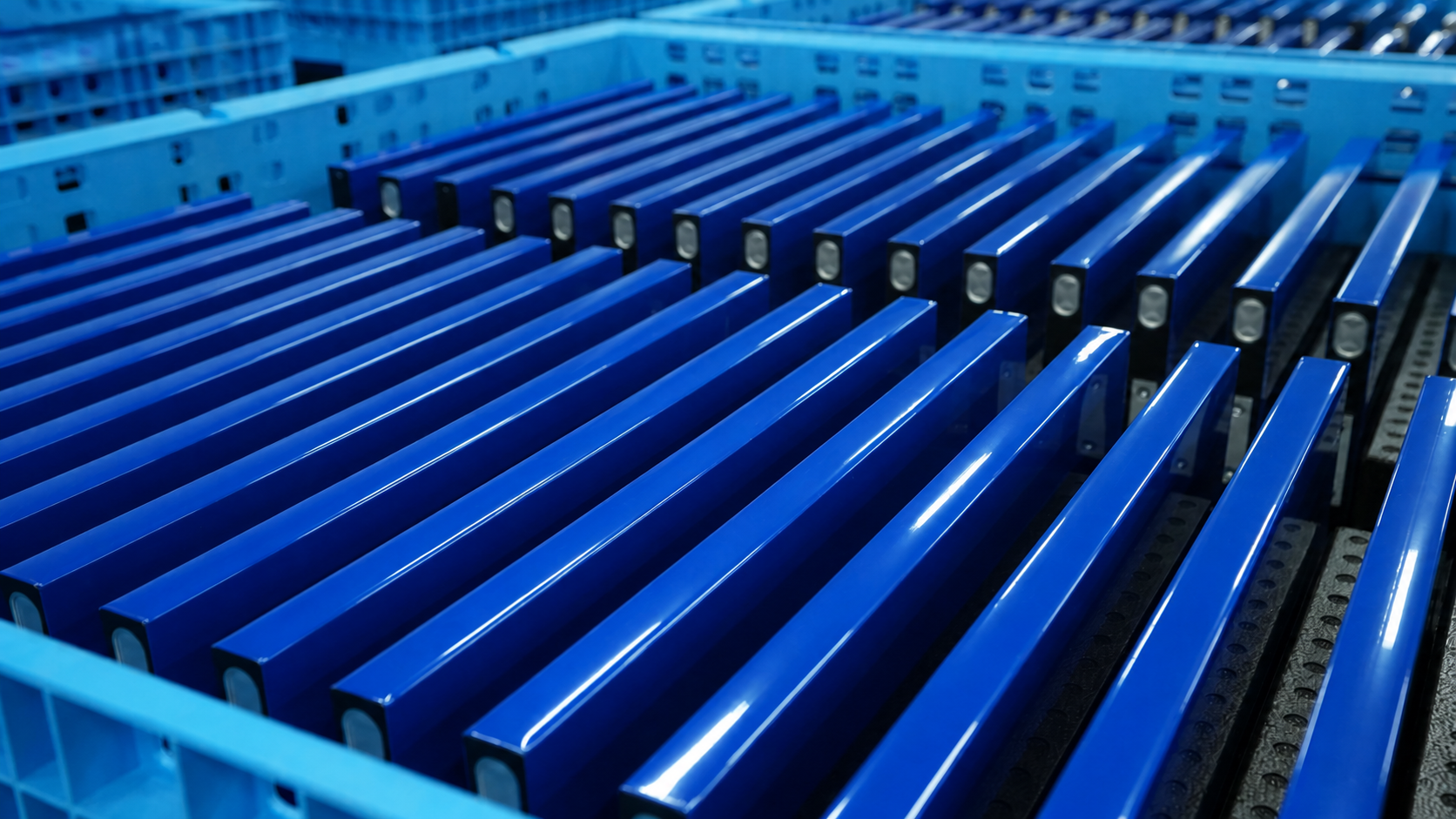
In a previous CVC Vietnam OEM case, a Ho Chi Minh City solar-storage integrator wanted to introduce its own private-label home battery brand. The first project was only 120 battery packs, so a completely new hardware platform would not have been commercially sensible. CVC coordinated an existing Anhui product platform, tropical-market adjustments, inverter compatibility work, and a certificate-derivative private-label route. The customer accepted the solution and the next-stage development plan.
That case matters for companies considering Vietnam because it changes the question from “Can we afford a large battery factory order?” to “Do we have the right channel and a product route that can be tested responsibly?”
For a new channel partner, the first objective does not have to be national scale. It can be a focused pilot with a small number of installers, retail locations, or solar retrofit customers. If those projects prove the product fit and after-sales process, the channel can then move toward repeat orders, a broader SKU range, or a private-label strategy.
Why Vietnamese households and small businesses are looking at home storage
1. Rooftop solar creates an evening energy problem
Many rooftop solar systems produce most of their energy during the day, while households use more electricity in the late afternoon and evening. A battery can move part of that solar energy to the period when the home needs it instead of sending all surplus power away or buying electricity later.
This is particularly relevant for homes with air conditioning, water heaters, refrigeration, pumps, home offices, or other loads that continue after the solar production curve drops. The right battery is not selected by capacity alone. The installer must compare the household’s daytime generation, evening load, backup requirement, and inverter operating mode.
2. Backup power has a value beyond electricity savings
Homeowners and small businesses do not always buy a battery only to reduce their monthly bill. They may want essential circuits to continue operating during an outage, protect internet equipment and refrigeration, or avoid interrupting work in a shop or home office.
This creates several product positions instead of one generic “home battery” offer:
- Solar self-consumption: store daytime solar energy for evening use.
- Backup power: keep selected loads operating during grid interruptions.
- Solar plus backup: use one system for both daily energy shifting and emergency power.
- Zero-export or controlled-export operation: use the battery to reduce unwanted export where the project rules or customer preference require it.
A channel partner that can explain these differences will usually have an easier sales conversation than one that quotes only a nominal kWh figure.
3. Vietnam’s policy direction is becoming more supportive of BESS
Vietnam’s current opportunity is policy-enabled, but it should not be marketed as a nationwide battery subsidy market.
Decree 243/2026/ND-CP, issued on June 26, 2026, changed parts of the renewable-energy and rooftop-solar framework. Under the normal mechanism, rooftop-solar surplus sales are generally capped at 50% of theoretical generation. Before December 31, 2030, a higher proportion may be negotiated where the grid can accept it. The surplus price is linked to the previous year’s average electricity market price and subject to the applicable ground-mounted solar price ceiling.
For a storage business, the practical message is that self-consumption, export control, and evening use matter more than a simple “sell all surplus solar” model. A battery can help a project use more of its own generation and reduce the amount of energy that needs to be exported.
Vietnam’s Ministry of Industry and Trade has also discussed support for household self-consumption solar and storage. However, the central cash-support or preferential-loan proposal had not become an effective nationwide program at the time of the August 26, 2026 policy review. A distributor should therefore avoid advertising a fixed battery subsidy unless the applicable province, utility, and program documents have been checked.
The direction is positive, but the sales message must remain accurate: Vietnam offers a policy environment that can support more distributed solar and storage, not a guaranteed national payment for every household battery.
Existing businesses that can enter Vietnam’s home storage channel
The strongest new entrants are usually not companies starting from zero. They are businesses that already own part of the customer journey.
Consumer-electronics and appliance distributors
Companies that distribute air conditioners, refrigerators, televisions, networking equipment, or smart-home products may already have:
– retail stores or dealer networks; – local sales staff and brand promotion experience; – relationships with homeowners and small businesses; – warehouse, delivery, and basic service capability.
Home storage can become a higher-value energy product in the same channel. The existing relationship is useful because the buyer already trusts the distributor for equipment that affects everyday life. The missing capability is usually system design: battery voltage, inverter matching, backup wiring, installation, and commissioning must be handled by a trained technical partner.
This route is more suitable for companies willing to sell a complete solution rather than place a battery on a shelf as an ordinary appliance.
Solar distributors and installation companies
Solar companies have the most direct connection to the opportunity. They already understand rooftop conditions, customer electricity use, inverter settings, roof or electrical constraints, and local permitting or utility communication.
Adding batteries can increase the value of an existing solar customer base. A company can start with retrofit projects, new rooftop systems that need evening self-consumption, or customers asking for backup power. Its main advantage is not simply access to solar leads. It is the ability to design, install, troubleshoot, and support the full system.
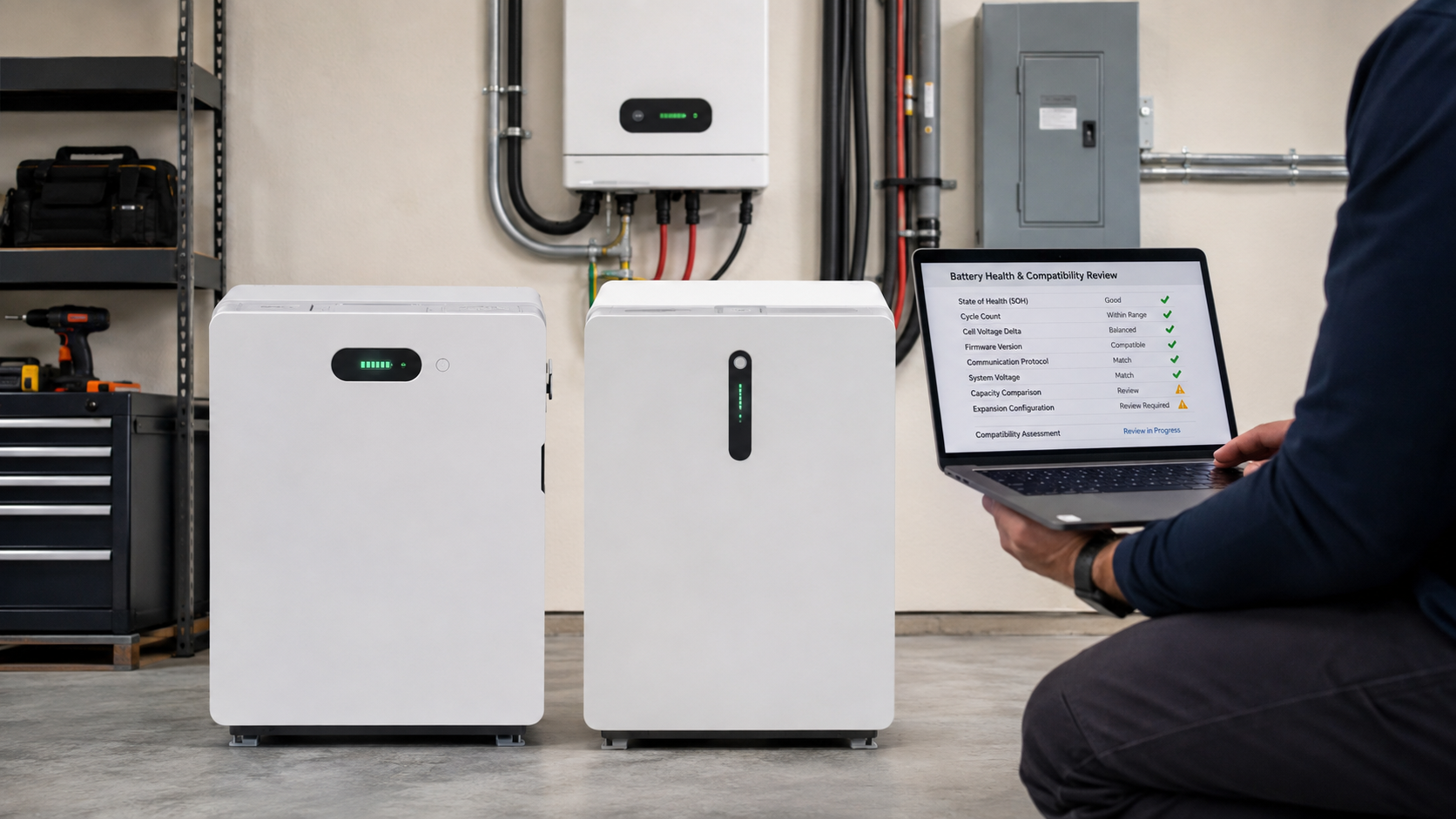
The main risk is assuming that any battery can be connected to any hybrid inverter. Communication protocol, firmware version, charge and discharge limits, SOC reporting, alarm handling, and EPS behavior must be checked before quoting.
Electrical contractors, UPS dealers, and generator replacement businesses
Electrical contractors and backup-power specialists already understand distribution boards, essential loads, changeover arrangements, protection devices, and outage-related customer concerns. These skills transfer well to home storage.
UPS dealers may find a new opportunity in larger residential systems or small shops that need longer backup duration. Generator dealers can position batteries as a quieter, lower-maintenance option for selected loads, while still being honest about runtime, recharge time, and high-power motor loads.
These companies need to build stronger solar knowledge, especially around PV input, battery charging strategy, and hybrid-inverter configuration. But they often start with an advantage in safety-critical electrical work.
Home-improvement, building-material, and property channels
Companies serving villas, new residential developments, renovation projects, and premium home upgrades can introduce storage as part of a broader energy package. Their advantage is timing: the battery and inverter can be planned before wiring, equipment rooms, and backup circuits are finalized.
This channel is better suited to integrated project sales than to low-price product distribution. The partner must be able to coordinate with electricians, solar installers, architects, and homeowners, and must set realistic expectations about noise, ventilation, equipment clearance, and maintenance access.
IT, telecom, and small-business infrastructure integrators
Network and telecom integrators already sell uptime. They may serve offices, shops, clinics, communications rooms, and other customers that cannot tolerate short interruptions. For these customers, home or small commercial storage can be introduced as a combination of backup power and solar self-consumption.
Their strength is load criticality and service contracts. Their gap may be PV design and residential installation. A partnership with a solar installer can close that gap without forcing the integrator to build an entire new operation immediately.
Importers and distributors that want their own energy brand
Some Vietnamese companies already have the commercial capability to import and build a local brand but do not yet have an energy-storage product line. They can begin with a small private-label pilot based on an existing platform, as the 120-unit case demonstrates. CVC’s energy storage OEM/ODM service can help map the private-label route and its technical boundaries.
However, a low-MOQ private-label route is not the same as a complete redesign. A certificate-derivative arrangement normally keeps the factory as the manufacturer, while the customer becomes the brand owner. Hardware, BOM, BMS parameters, and firmware cannot be changed casually without affecting the product’s certification basis. Those boundaries should be clear before the first quotation.
Capabilities channel partners must add before selling batteries
Existing distribution reach is valuable, but it is not enough by itself. A responsible home-storage offer needs five additional capabilities:
- A defined use case: self-consumption, backup, zero export, or a combination.
- A technical design process: load assessment, battery sizing, inverter selection, protection, and backup-circuit definition.
- A compatibility workflow: confirmed battery-inverter models, communication protocol, firmware, and operating limits.
- A service plan: commissioning, remote support, replacement parts, warranty handling, and fault escalation.
- A local sales explanation: a simple way to show what the system can power, when it charges, and what it cannot do.
The companies that build these five pieces are more likely to create repeatable projects. Those that only add a battery SKU to an existing catalog may generate inquiries, but they will struggle when the first installation has a communication fault or a customer expects the battery to run every load in the home.

Battery and inverter product screening for Vietnam
The product-selection process can be kept practical if it follows the order in which project risks appear.
Start with the operating mode
Decide whether the system is grid-connected self-consumption, backup-only, zero-export, or a hybrid of these. The operating mode affects inverter functions, CT or meter configuration, backup output, and the way the battery is charged.
Match voltage, power, and usable energy
Check the battery’s nominal voltage, operating voltage range, continuous charge and discharge current, usable capacity, depth-of-discharge conditions, and the inverter’s battery-window requirements. A battery that has enough nominal kWh may still be unsuitable if its continuous power is too low for the proposed loads.
Treat communication protocol as a core selection item
CAN or RS485 communication is not a minor accessory. The installer should confirm:
– the exact battery and inverter models that have been tested together; – the communication protocol and firmware version; – charge and discharge current limits; – SOC, SOH, temperature, alarm, and contactor-status reporting; – communication timeout, CRC, pre-charge, and restart behavior; – the process for firmware updates and fault records.
CVC’s battery-and-inverter compatibility list is a useful starting point, but the final project configuration still needs to match the country version, system voltage, phase arrangement, and intended operating mode. Our earlier Southeast Asia battery and inverter checklist explains the communication checks in more detail.
Check tropical installation boundaries
Vietnam projects may face high temperature, humidity, heavy rain, insects, salt air, and lightning exposure depending on the site. Product evaluation should therefore include the 45°C power target, temperature derating curve, IP rating, condensation controls, corrosion protection, SPD arrangement, cable-entry design, and installation clearances.
The goal is not to choose the product with the longest marketing specification. It is to make sure the battery and inverter can operate predictably in the actual room, garage, rooftop, or outdoor enclosure where the installer will place them.
Review documents before the quotation
Before presenting a final offer, the channel partner should request the datasheet, installation manual, single-line diagram, compatible-inverter list, communication description, certification scope, warranty terms, and service procedure. For a private-label product, the partner should also confirm how the manufacturer and brand owner appear on the nameplate, certificates, import documents, and customer-facing materials. The CVC Downloads area provides a starting point for document review, while the exact project package still needs confirmation.
A practical entry path for new Vietnam channel partners
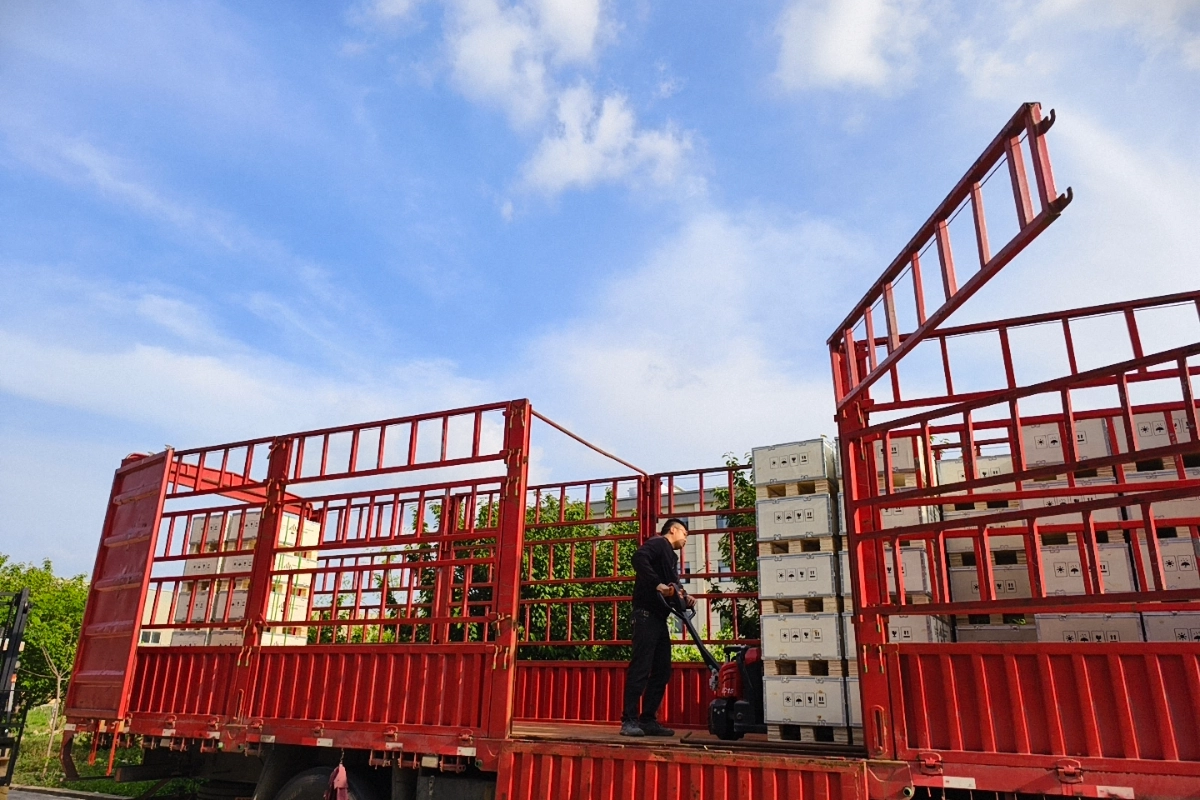
Vietnam does not require every new energy-storage entrant to begin with a national product launch. A more controlled route is:
- Map the existing customer channel and identify one strong use case.
- Select two or three battery-and-inverter combinations that can be supported locally.
- Run sample installations with documented commissioning and customer feedback.
- Build a service, spare-parts, and warranty process before expanding the catalog.
- Decide whether to sell an established product brand, use a low-MOQ private-label route, or develop a deeper OEM project after repeat demand is proven.
This staged approach allows an appliance distributor, solar installer, electrical contractor, or importer to enter the market without pretending to have capabilities it has not yet built.
Conclusion: the opportunity belongs to channel partners that can deliver a complete system
Vietnam is worth serious attention for home energy storage because several forces are moving in the same direction: rooftop solar needs better self-consumption, households and small businesses value backup power, and policy is becoming more supportive of distributed solar-plus-storage even though a nationwide household battery subsidy is not yet in force.
The best-positioned entrants are not necessarily the largest battery companies. They are the distributors, solar companies, electrical specialists, appliance channels, backup-power dealers, and local brand builders that already understand Vietnamese customers and are prepared to add system design, compatibility verification, installation, and after-sales support.
The first step is not to order the largest container. It is to choose a customer problem, a compatible product platform, and a local delivery process that can be tested and improved.
If you are evaluating a Vietnam home energy storage opportunity, CVC’s distributor cooperation program and technical review can help you assess the battery-and-inverter combination, private-label route, documentation package, and first-order plan before you commit to a larger channel investment.
Sources and policy boundaries for this draft
– Vietnam Government Gazette: Decree 243/2026/ND-CP – Vietnam Ministry of Industry and Trade: Q2 2026 press conference – Vietnam Ministry of Industry and Trade: Directive 10/CT-TTg
Policy wording in this draft follows the August 26, 2026 internal policy review: Vietnam’s direction is supportive of rooftop solar paired with BESS, but a central nationwide household battery cash subsidy or preferential-loan program was not treated as effective. Province-level and utility-level requirements must be checked before commercial quotations.

Peter Yin
Discuss a Vietnam Home Energy Storage Opportunity
Send us your target market, channel type, expected volume, inverter preference and installation scenario. We will map the most practical product and service route.