
A customer from Nigeria recently asked me a simple question: how long can a portable power station run lights, fans and a router?
It is a fair question. In Nigeria and many other selected African markets, buyers are often not trying to power a whole house with a small unit. They want the practical things to stay on during an outage: a few LED lights, one fan, WiFi, and phone charging.
Short answer: a 1kWh portable power station can usually run lights, one fan and a router for about 8 to 12 hours. With two fans, the estimate is closer to 5 to 7 hours. The exact number depends on the real load and the usable battery energy.
The simple runtime formula
To estimate runtime, start with one basic formula:
Runtime hours = usable battery capacity / total device power
A 1000Wh portable power station does not always deliver the full 1000Wh to connected devices. Some energy is lost through the inverter, BMS, heat and AC/DC conversion. For early planning, it is more realistic to use 80% to 90% as usable capacity.
That means a 1000Wh unit may provide around 800Wh to 900Wh of usable energy. If the connected devices use 80W in total, the rough estimate is 850Wh / 80W, or about 10.6 hours.
For a portable model comparison, see the APEXC-GS1020 2000Wh portable power station and match its output and capacity to the essential-load list.
Typical power use of lights, fans and routers
| Device | Typical power use |
|---|---|
| LED bulb | 5W to 12W |
| Small table fan | 25W to 45W |
| Standard standing fan | 45W to 70W |
| WiFi router | 8W to 15W |
| Phone charging | 5W to 20W |
| Laptop charging | 45W to 90W |
The fan is usually the largest load in this group. A router uses very little power. LED lights are also light loads unless the customer connects many of them at the same time.
Three practical runtime examples
Example 1: lights and router only
| Device | Quantity | Estimated power |
|---|---|---|
| LED lights | 3 | 30W |
| WiFi router | 1 | 10W |
| Total | 40W |
With about 850Wh usable energy, runtime is roughly 850Wh / 40W, or about 21 hours. If the load is only LED lights and a router, a 1kWh portable power station can often last through the night and into the next day.
Example 2: lights, one fan and a router
| Device | Quantity | Estimated power |
|---|---|---|
| LED lights | 3 | 30W |
| Standing fan | 1 | 55W |
| WiFi router | 1 | 10W |
| Total | 95W |
With about 850Wh usable energy, runtime is roughly 850Wh / 95W, or about 9 hours. This is one of the most realistic backup scenarios for homes in Nigeria: lighting, airflow and internet during evening outages.
Example 3: lights, two fans and a router
| Device | Quantity | Estimated power |
|---|---|---|
| LED lights | 4 | 40W |
| Standing fans | 2 | 110W |
| WiFi router | 1 | 10W |
| Total | 160W |
With about 850Wh usable energy, runtime is roughly 850Wh / 160W, or about 5.3 hours. This is where many buyers overestimate a small backup unit. Two fans can reduce runtime quickly.
Quick runtime table for a 1000Wh unit
The table below uses about 850Wh of usable energy from a 1000Wh portable power station.
| Total load | Example use | Estimated runtime |
|---|---|---|
| 30W | 2 LED lights + router | About 28 hours |
| 50W | 4 LED lights + router | About 17 hours |
| 80W | 2 LED lights + small fan + router | About 10.5 hours |
| 100W | 3 LED lights + standing fan + router | About 8.5 hours |
| 150W | Lights + 2 fans + router | About 5.5 hours |
| 200W | Lights + fans + laptop/router | About 4.2 hours |
These are estimates, not fixed promises. Real runtime depends on device efficiency, inverter loss, battery age, ambient temperature and whether the devices run continuously.
Recommended CVC products for this use case
For lights, one fan, a router and phone charging, the main product we recommend is the IESS-05K10N 1kWh Portable Power Tank. It uses a 1000Wh LiFePO4 battery, a 500W AC output, 400W maximum PV input and AC/PV charging, which makes it a practical fit for essential household backup and small mobile-power applications.
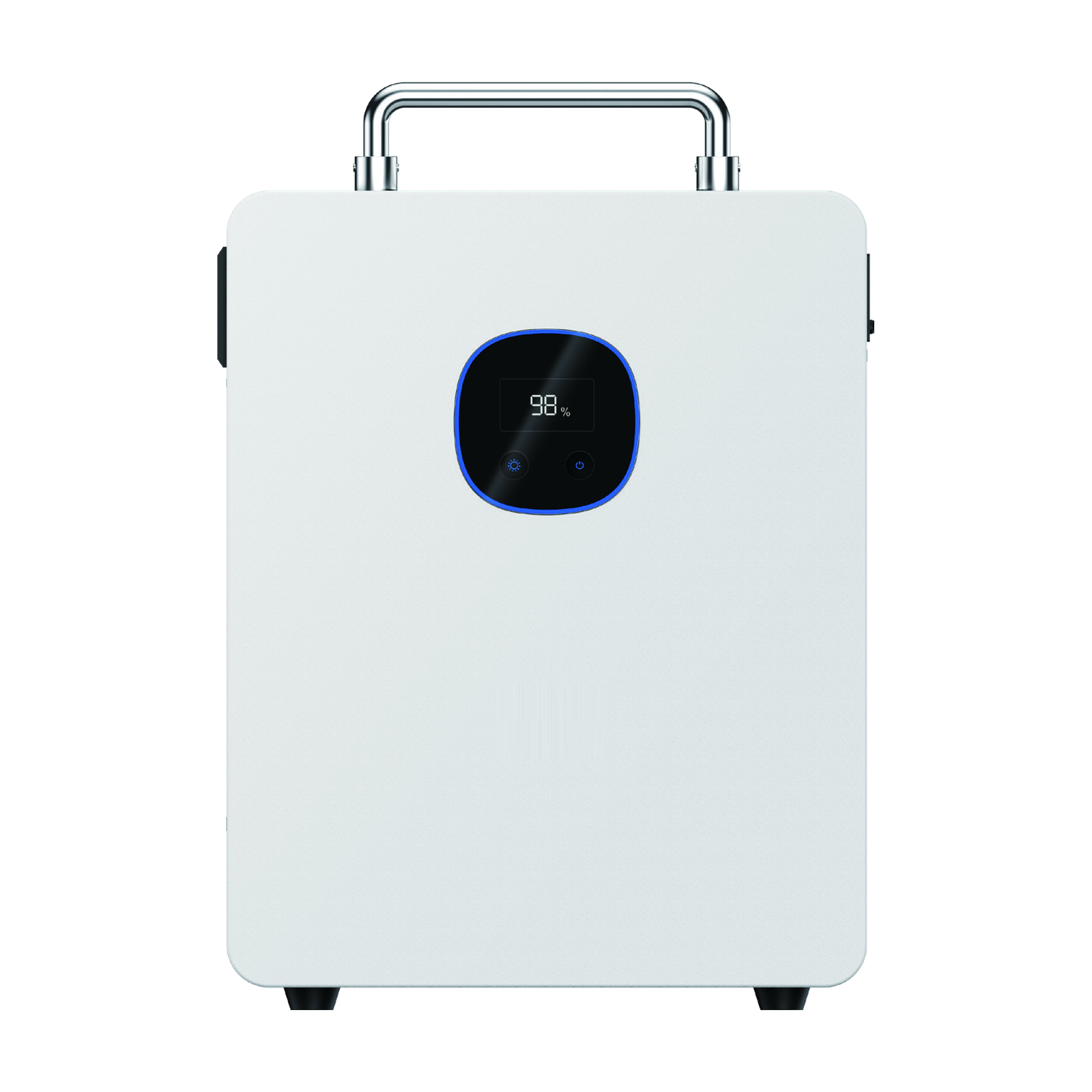 |
IESS-05K10N 1kWh Portable Power TankBest fit: lights, router, phone charging and one compatible fan for basic backup. It is especially relevant for distributors and importers serving selected African backup-power channels where customers ask for a compact, easy-to-explain product.
|
If the expected load is higher than lights, one fan and a router, the right next step is not to guess from the headline capacity. Send the load list, target runtime and charging method so CVC Energy can confirm whether IESS-05K10N still fits, or whether the customer should move to a larger portable power configuration.
What size portable power station do you need?
| Capacity | Best for |
|---|---|
| 300Wh to 500Wh | Router, phones and a few lights for short outages |
| 700Wh to 1000Wh | Lights, one fan and router for evening or overnight backup |
| 1200Wh to 2000Wh | Longer fan use, more rooms, laptop and small appliances |
| 2000Wh+ | More demanding multi-device backup or longer outage scenarios |
For many African households, a 1kWh portable power station is a good entry point. It is easier to move than a larger home battery system, simple to demonstrate in-store, and clear enough for channel sales teams to explain.
What distributors should check before choosing a model
A customer may ask only about runtime, but distributors need to check the whole product fit. Before choosing a portable power station for Nigeria or another target market in Africa, review:
- Battery capacity in Wh, not only marketing runtime
- Rated AC output and whether it matches common loads
- Surge power for motor loads such as fans or small compressors
- Battery chemistry and expected cycle life
- Solar charging input and local charging habits
- AC, DC, USB and Type-C output options
- Plug and socket requirements for the destination market
- Datasheet, user manual, certificates and shipping documents
- Warranty, spare parts and after-sales communication process
You can compare the broader range through our portable power product collection, review available product downloads, check broader Africa backup power applications, or use our case studies page as a reference point when evaluating product fit.
Final answer
A portable power station can run lights, fans and a router from a few hours to more than a full day. For a 1000Wh model, a realistic estimate is about 17 to 28 hours for lights and router, about 8 to 12 hours for lights, one fan and router, and about 5 to 7 hours for lights, two fans and router.
For the Nigeria customer who asked this question, the main model to review is the IESS-05K10N 1kWh Portable Power Tank. If two fans, a laptop, TV or longer backup time are expected, we would first check the load list and runtime target before recommending a larger portable power configuration.

Peter Yin
Send a Portable Power Inquiry
Tell us your country, expected devices, required runtime, charging method and estimated quantity. We will help you review whether a 1kWh or larger portable power station is the better fit.