
Can a larger battery alone keep a home powered through several days of outage? No. A larger battery extends the first discharge period. Multi-day backup also needs a clear load list and a way to put energy back into the system through solar, a generator or the grid when it returns.
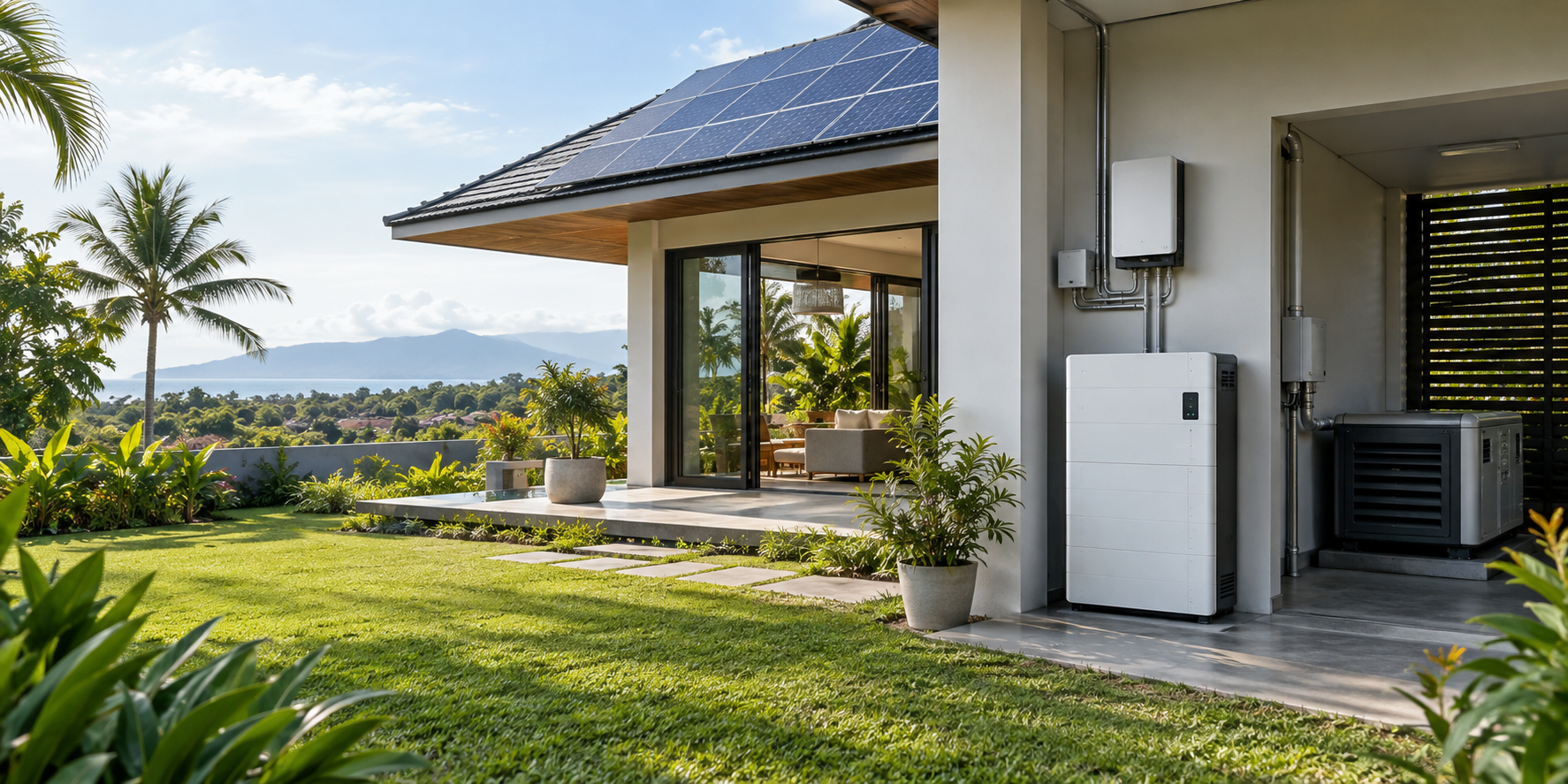
1. Start with the loads, then size the battery
The first step is not choosing a battery model. It is deciding what must stay on when the grid is down. A refrigerator, freezer, router, lighting circuit and fan may belong on the critical-load panel. An air conditioner, water pump or workshop tool may need a separate decision because its starting demand can be much higher than its running demand.
| Load | Record this first | Why it matters |
|---|---|---|
| Refrigerator or freezer | Running watts, compressor start, hours per day | It cycles, but the motor start still affects inverter and battery power. |
| Router and modem | Watts and required backup hours | A small continuous load can matter over a long outage. |
| LED lighting | Number of lights and hours of use | Lighting can be kept on by selecting only the essential rooms. |
| Fan | Running watts and daily operating time | Several fans running overnight add to the daily energy total. |
| Water pump or air conditioner | Running watts and starting demand | Motor loads must be checked against inverter surge and BMS current limits. |
Use the appliance nameplate, a plug-in meter or the installer’s measured load data. The four fields that matter are running power, daily operating time, starting power and whether the load must run continuously.
2. Turn the load list into usable battery capacity
For each appliance, calculate:
Daily energy (kWh) = Power (kW) × operating hours per day
Then multiply the daily critical-load energy by the target backup days. The battery nameplate capacity still needs to be adjusted for the usable discharge window and system losses.
Battery capacity is measured in kWh. Inverter output and battery charge/discharge power are measured in kW. A 20 kWh battery does not automatically deliver 20 kW, and a 5 kW inverter cannot run a load above its output or surge limit just because the battery is large.
For a project quotation, record the inverter rated output, peak output, battery continuous charge/discharge power, maximum current, battery voltage range and BMS current limit alongside the load list.
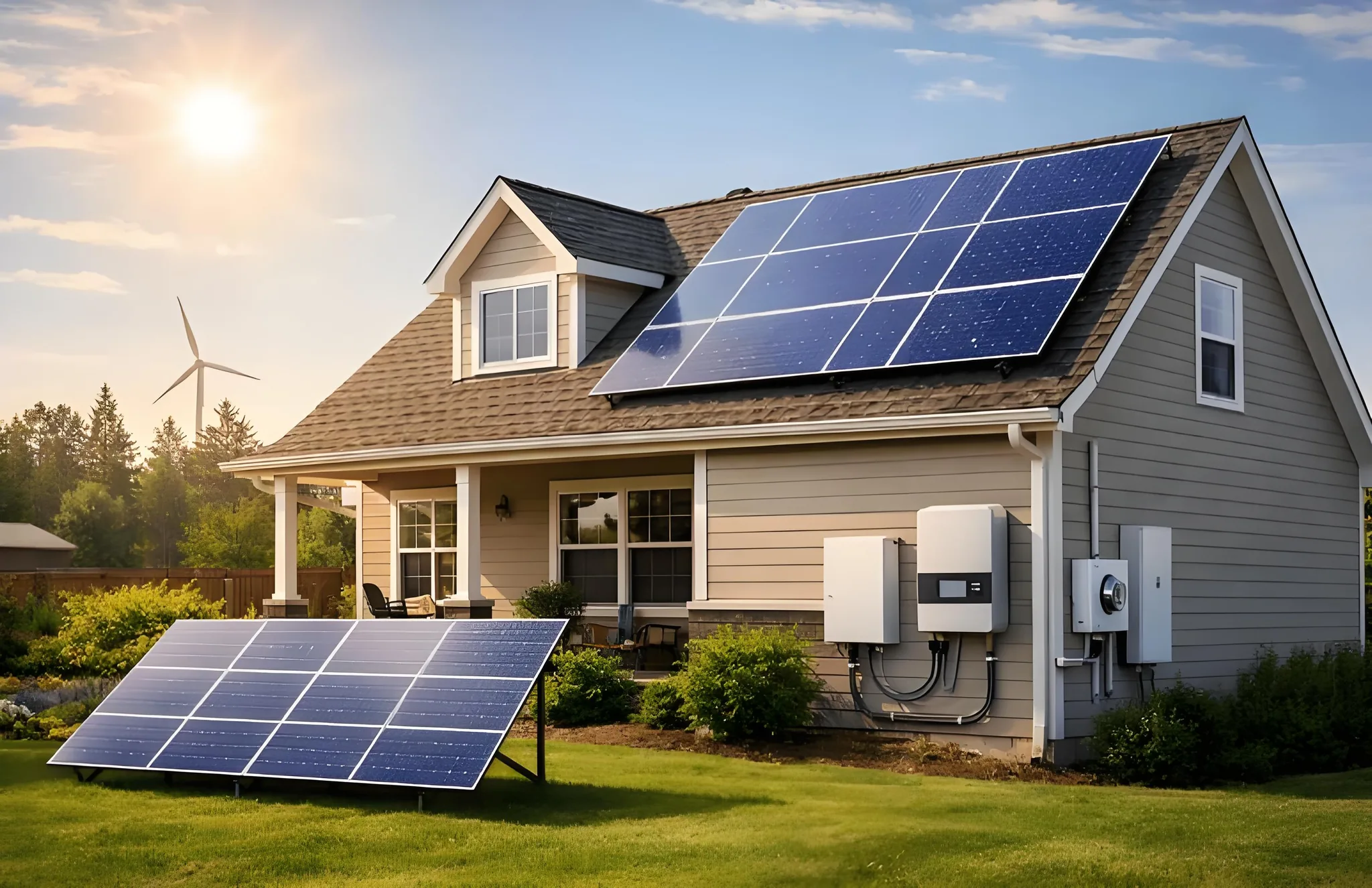
3. Plan where the energy will come from
A multi-day system needs an energy input plan:
Solar PV and generator → inverter or charger → battery → critical loads
When solar production is higher than the day’s critical-load consumption, the remaining energy can recharge the battery. During several cloudy days, the battery may lose more energy each day than the PV system restores. A generator or the returning grid can then provide the additional charging path.
| Input source | What to check | What it answers |
|---|---|---|
| Solar PV | PV size, orientation, shading, MPPT range and expected sunlight | How much energy can return to the battery during the day? |
| Generator | Rated power, voltage, frequency, stability and AC charging limit | Can the generator recharge the battery without unstable operation? |
| Grid recovery | Inverter charging mode and recovery settings | How quickly can the system rebuild usable SOC after the grid returns? |
The customer feedback in PP3-04 shows why a generator cannot be judged by its kW label alone. Voltage dips and high-surge loads can make a power system change operating mode or transfer to UPS behavior.
4. Use one home scenario to make the decision
Take a critical-load group made up of a refrigerator, router, LED lighting, fans and a freezer. If the measured or documented daily energy is about 3–5 kWh, compare three project cases:
| Project case | Battery question | Recharge question |
|---|---|---|
| One-day backup with daytime PV | Can usable battery energy cover the night and early morning? | Can daytime PV restore the energy used overnight? |
| Two-day backup without a generator | Can the usable battery window cover both days? | What happens if cloudy-day PV is below daily consumption? |
| Two-day backup with generator support | Can the battery handle the critical load and motor starts? | Can the generator and inverter recharge at a stable, controlled power? |
This is a planning example, not a guaranteed runtime. The final result depends on the measured load curve, SOC limits, temperature, inverter standby use, cable losses and the real solar or generator conditions. The same battery can produce a different backup result in a different home.
5. How CVC builds the quotation list
CVC starts the quotation with the project conditions, not with a battery kWh number copied into a product list. We organise the request around:
- Destination country and grid conditions.
- Longest expected outage and target backup days.
- Critical loads with running and starting power.
- Daily energy use and the required usable battery energy.
- Existing or planned PV capacity.
- Generator requirement and generator output details.
- Inverter brand, exact model, output power and charging limits.
- Battery rated capacity, usable capacity, continuous power, voltage and BMS limits.
- Critical-load panel or backup-output arrangement.
- Expected quantity, delivery timing and project stage.
With these fields, CVC can match a suitable home battery, hybrid inverter, portable power solution or generator-supported configuration. For country-specific procurement questions, see the Indonesia home battery buying guide and the Philippines home energy storage procurement guide.
If you are preparing a distributor or installer quotation, send the load list, inverter model, destination market, PV condition, backup target and expected quantity through the CVC contact page. We can organise the product-matching and supplier follow-up around the actual project.

Peter Yin
Need a Multi-Day Home Battery Backup Quote?
Send the destination market, critical-load list, backup target, PV condition, inverter model and expected quantity. CVC can organise a product match and supplier follow-up.