
Do not quote a 10 kWh battery for a Philippine home until the operating mode and critical load are fixed. A 600 W critical-load circuit running for eight hours needs 4.8 kWh on the AC side. After allowing for 90% usable depth of discharge and 94.5% battery charge-discharge efficiency, the first-pass nominal requirement is about 5.64 kWh.
Classify the project first: grid-tied, hybrid backup, or off-grid island. Then size the inverter, check the battery current and BMS protocol, and plan the delivery route. This is the information a distributor, installer, EPC contractor, or importer needs to send with a serious RFQ.
Short answer: classify the project before choosing the battery
Classify every Philippines residential storage request into one of three routes:
- Grid-tied or self-consumption: the battery stores solar energy and shifts energy use. Blackout backup requires the hybrid/EPS route.
- Grid-connected hybrid backup: the system uses the grid when available and keeps selected loads running through an EPS or backup output when the grid fails.
- Off-grid or island power: solar, batteries, and often a generator must work as one system for a site with limited utility supply.
Put the project location, utility or distribution company, phase, target backup loads, backup hours, PV size, inverter model, battery voltage, expected quantity, and installation environment into the RFQ. A complete RFQ produces a system quote; a battery-only request produces a battery price.
Why the Philippines needs more than one residential storage route
The Energy Regulatory Commission reported 23,684 net-metering prosumers with a combined capacity of about 232 MWp as of June 30, 2026. Use that figure as the grid-connected market context, then treat the project’s utility rules as a separate procurement input. ERC net-metering update
Apply Meralco’s net-metering requirements within its service area. Its application documents and capacity conditions belong in a Meralco project file; other distribution utilities need their own review. Meralco net-metering requirements
The physical environment matters too. PAGASA lists a mean annual temperature of 26.6°C, a wetter period that generally runs from June to November, and a high tropical-cyclone exposure, with July to October typically the peak period. Those conditions affect enclosure selection, ventilation, mounting, corrosion protection, maintenance access, and shipment planning. PAGASA climate information
For island projects, the energy question is more direct. The Department of Energy has been working on an off-grid island approach that combines renewable energy and storage to reduce dependence on costly diesel generation. A home project in that environment needs an operating plan for cloudy days, generator support, remote monitoring, spare parts, and the next boat or truck after delivery. DOE off-grid island initiative
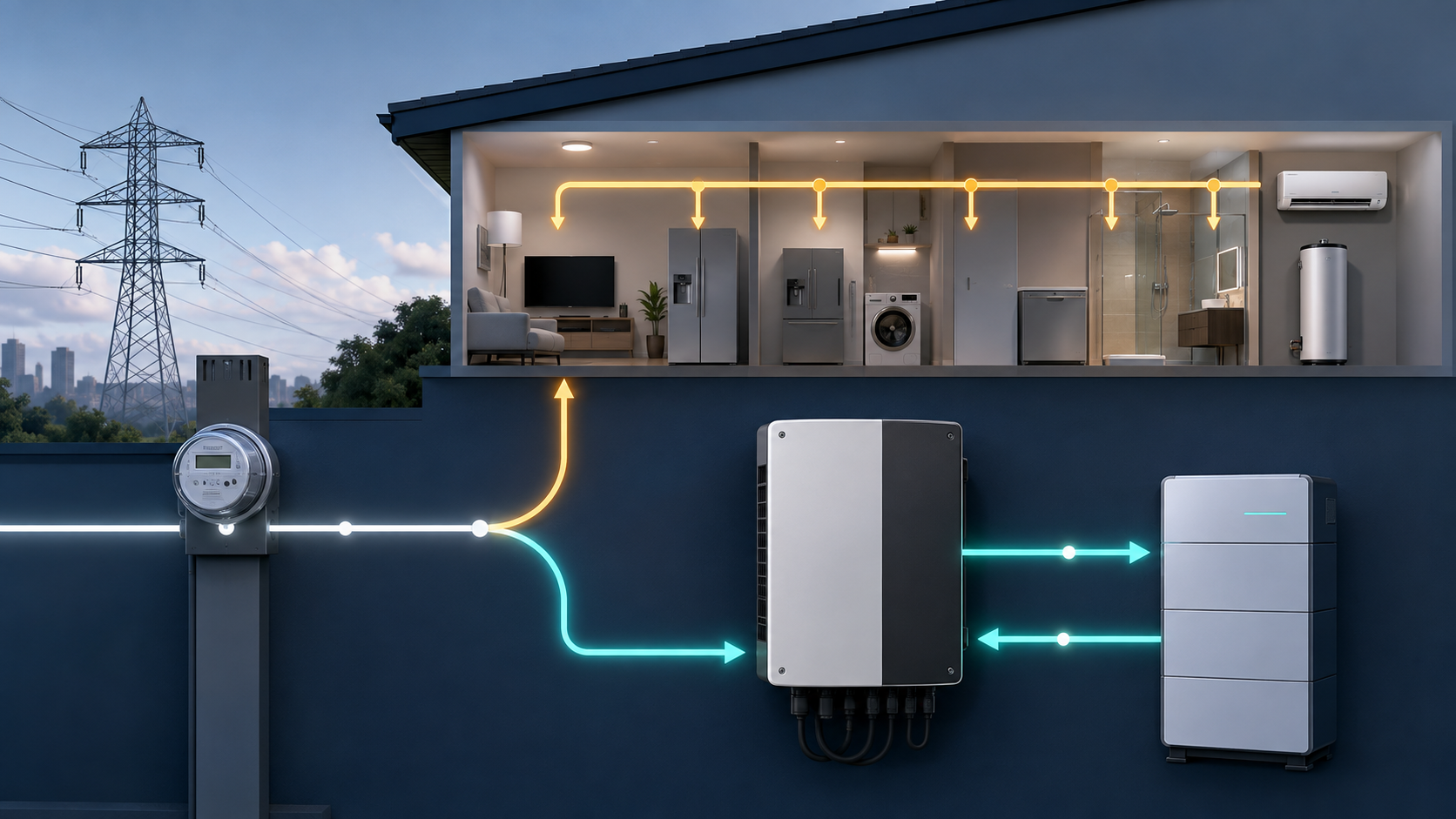
The three procurement routes
Route 1: grid-tied and self-consumption projects
Use this route when the home already has PV, or when the buyer wants to increase solar self-consumption and shift energy use after sunset.
Put these items in the quotation:
- the local utility and application boundary;
- whether export, zero-export, or net-metering operation is required;
- AC voltage, frequency, phase, and protection requirements;
- PV array size and MPPT voltage range;
- battery charge and discharge limits;
- whether the inverter continues operating during a grid outage;
- monitoring and data access requirements.
Keep the operating mode clear. A grid-connected inverter follows anti-islanding protection during an outage. Backup operation requires a hybrid inverter with an EPS or backup output, plus a correctly wired critical-load circuit.
Route 2: grid-connected hybrid backup
Use this route when the customer wants the lights, refrigerator, internet, and security system to stay on during an outage. Define the backup circuit instead of quoting the entire home.
State these values in the quotation:
- the continuous EPS output;
- the short-duration surge rating;
- the transfer time;
- the loads connected to the backup panel;
- the battery usable energy;
- the maximum continuous battery current;
- whether air conditioners, water pumps, or heating loads are included;
- the intended reserve SOC.
Use a 4.6 kW inverter for a defined critical-load panel and keep refrigerator, pump, and air-conditioner starting demand inside the inverter’s surge rating. Put essential loads on the backup panel and leave discretionary high-power loads outside it.
Route 3: off-grid and island homes
Use low-solar operating days as the sizing basis for an island home. The quotation needs:
- daily energy use and peak load;
- the longest expected low-solar period;
- PV array size and mounting conditions;
- battery reserve and usable SOC window;
- generator size and fuel plan;
- generator start or stop control;
- inverter overload and surge behavior;
- remote monitoring;
- equipment IP rating and corrosion exposure;
- port, island transfer, lifting, and service arrangements.
For detailed battery and inverter matching in Philippine island homes, see CVC’s separate guide on battery and inverter selection for island homes in the Philippines. This article handles the earlier procurement decision: classify the route, build the RFQ, and select the supply path.
Size the system from the load list
“10 kWh” describes stored energy. It says nothing about appliance starting power, inverter output, or real runtime until the load is known.
Separate kW, kWh, and surge power
- kW is the instantaneous power the inverter and battery system must deliver.
- kWh is the energy the battery can store and deliver over time.
- Surge power is the short starting demand from equipment such as refrigerators, pumps, and compressors.
Match energy, output, and current as one package. Battery kWh covers runtime; inverter kW handles simultaneous loads; battery current supports the DC side of that output.
Start with a critical-load list
The following planning ranges are useful for an initial screen. The actual nameplate and measured load should control the final design.
| Home load | Typical running range | Starting surge concern |
|---|---|---|
| LED lighting | 10-20 W per lamp | Usually low |
| Router and network equipment | 10-30 W | Usually low |
| Security and monitoring equipment | 20-80 W | Usually low |
| Refrigerator | 100-250 W while running | Yes |
| Fan | 40-100 W | Usually low |
| Television | 80-200 W | Usually low |
| Small computer and monitor | 100-300 W | Usually low |
| Water pump | 300 W and above | Yes |
| Air conditioner | Often 700 W and above | Yes |
| Water heater or induction cooker | Often 1,000 W and above | Usually unsuitable for a small critical-load circuit |
Ask the customer to mark three groups:
- Loads that must run during every outage.
- Loads that can run only when the battery SOC is high.
- Loads that should remain outside the backup circuit.
That simple separation often produces a better quotation than increasing battery size to cover every appliance.
Example: 600 W of critical loads for eight hours
Suppose the customer wants to keep a refrigerator, router, lights, fans, and monitoring equipment running. The combined measured load is 600 W, and the required backup time is eight hours.
AC energy demand = 600 W × 8 h = 4.8 kWh
Now allow for a 90% usable depth of discharge and a 94.5% battery charge-discharge efficiency:
Nominal battery estimate = 4.8 kWh ÷ (0.90 × 0.945)
                         ≈ 5.64 kWh
Use 5.64 kWh as the minimum calculation for this load. If the project needs reserve SOC, ageing allowance, or longer runtime, start the discussion with a 7.2 kWh class system and refine it against the measured load profile.
Check battery and inverter compatibility before quoting a package
Match the full voltage range
Match a 51.2 V battery to an inverter whose permitted range covers the battery’s 41.6-58.4 V operating window, then align the BMS charge and discharge settings.
CVC’s Firefly low-voltage home battery range is listed with:
- nominal voltage of 51.2 V;
- operating voltage of 41.6-58.4 V;
- 3.6, 7.2, 10.8, and 14.4 kWh configurations;
- CAN, RS485, and Wi-Fi communication;
- up to three units in parallel, for a total of up to 43.2 kWh in the listed configuration.
For package matching, use an inverter whose voltage window, charge voltage, low-voltage cutoff, communication protocol, and firmware align with the battery.
Check current as carefully as capacity
CVC’s Firefly Hybrid-4.6K provides a 4.6-5.0 kW output range, a 40-60 V battery operating range, CAN/RS485 communication, and a maximum battery charge and discharge current of 66 A. Its EPS output reaches 5 kVA, with a switching time of no more than 10 ms.
A simple ideal calculation gives:
4,600 W ÷ 48 V ≈ 96 A
Treat 96 A as the upper-bound DC calculation, then design the package around the inverter’s 66 A battery-current limit. PV contribution, grid support, efficiency, SOC, and the selected operating mode determine the actual battery draw. Set the battery’s continuous current, peak current, and BMS limits against that operating case.
CAN and RS485 require protocol matching
List a battery and inverter as one package only with these compatibility fields:
- the communication interface, CAN or RS485;
- baud rate and protocol name;
- RJ45 pinout or terminal definition;
- compatible inverter brand and exact model;
- BMS firmware version;
- inverter firmware requirement;
- charge and discharge current limits exchanged by the BMS;
- sample test results or a documented compatibility list.
The CAN port is only the interface. The protocol, pinout, firmware, and current limits establish the working connection.
Confirm the local electrical version
CVC’s Firefly Hybrid range uses 230 V input and supports 50/60 Hz configurations. For a Philippines project, specify the exact frequency version, phase, grid protection, and local approval route in the product request. Apply the same specification discipline to all-in-one systems.
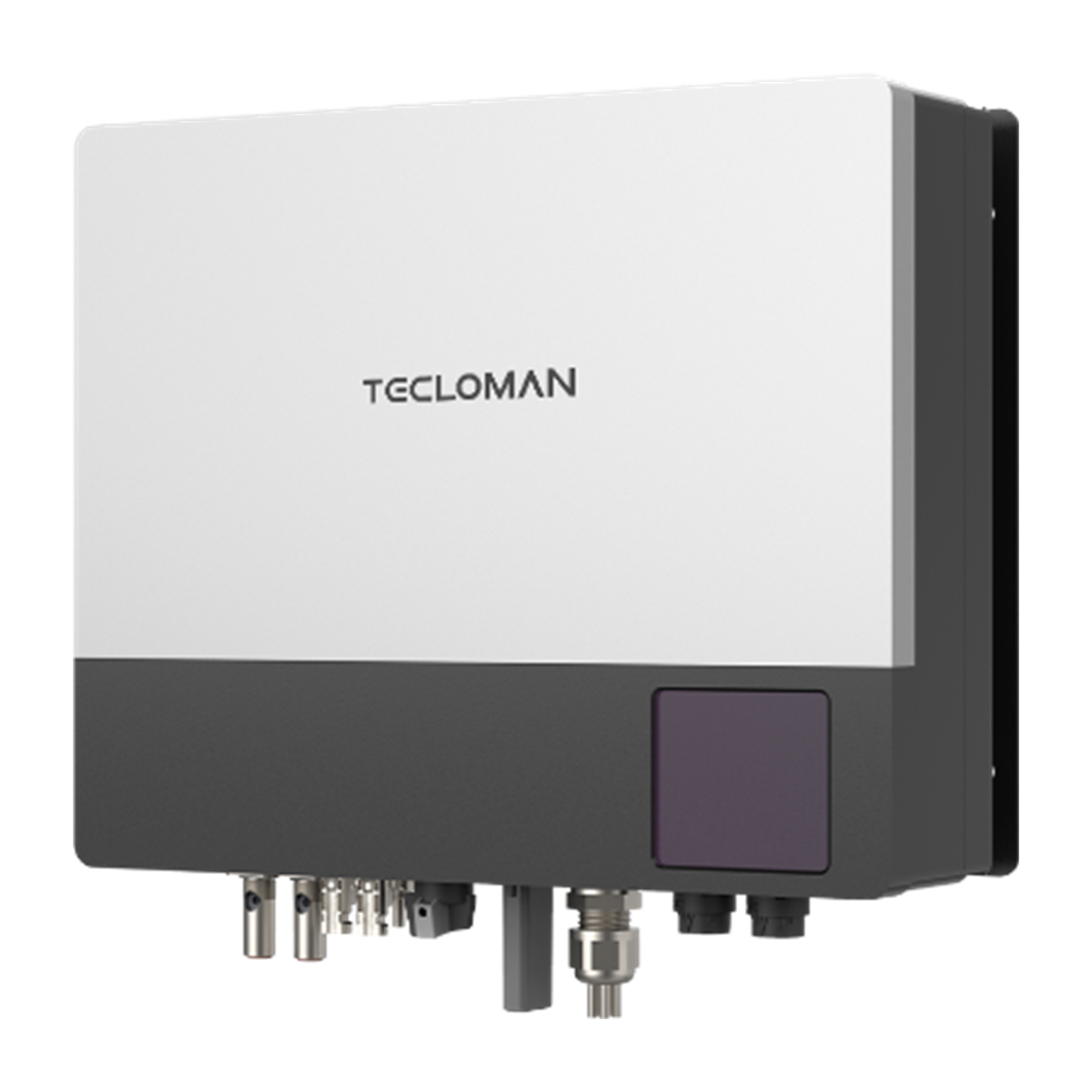
Three CVC product routes for Philippines residential projects
Choose among these three CVC supply routes according to the project size and operating mode. The product strengths are clear; the RFQ then sets the exact battery quantity, inverter version, communication setup, and installation format.
3-5 kW class backup: Firefly Hybrid with a low-voltage battery
Use this route for a defined residential critical-load panel or a standardized installer package.
CVC’s Firefly Hybrid range includes Hybrid-3K and Hybrid-4.6K versions. The range provides:
- 3.0 kW or approximately 4.6-5.0 kW rated output, depending on model;
- 230 V grid input with 50/60 Hz configurations;
- maximum PV input of 6.6 or 8 kW, depending on model;
- maximum PV voltage of 550 V;
- MPPT range of 120-500 V;
- two MPPT trackers;
- 40-60 V battery range;
- CAN and RS485 communication;
- IP65 enclosure rating for the inverter;
- maximum efficiency of 97.9%.
Pair it with a 3.6-14.4 kWh Firefly low-voltage battery to create several residential capacity options. Choose the battery quantity around the critical-load panel, backup hours, continuous current, and communication setup.
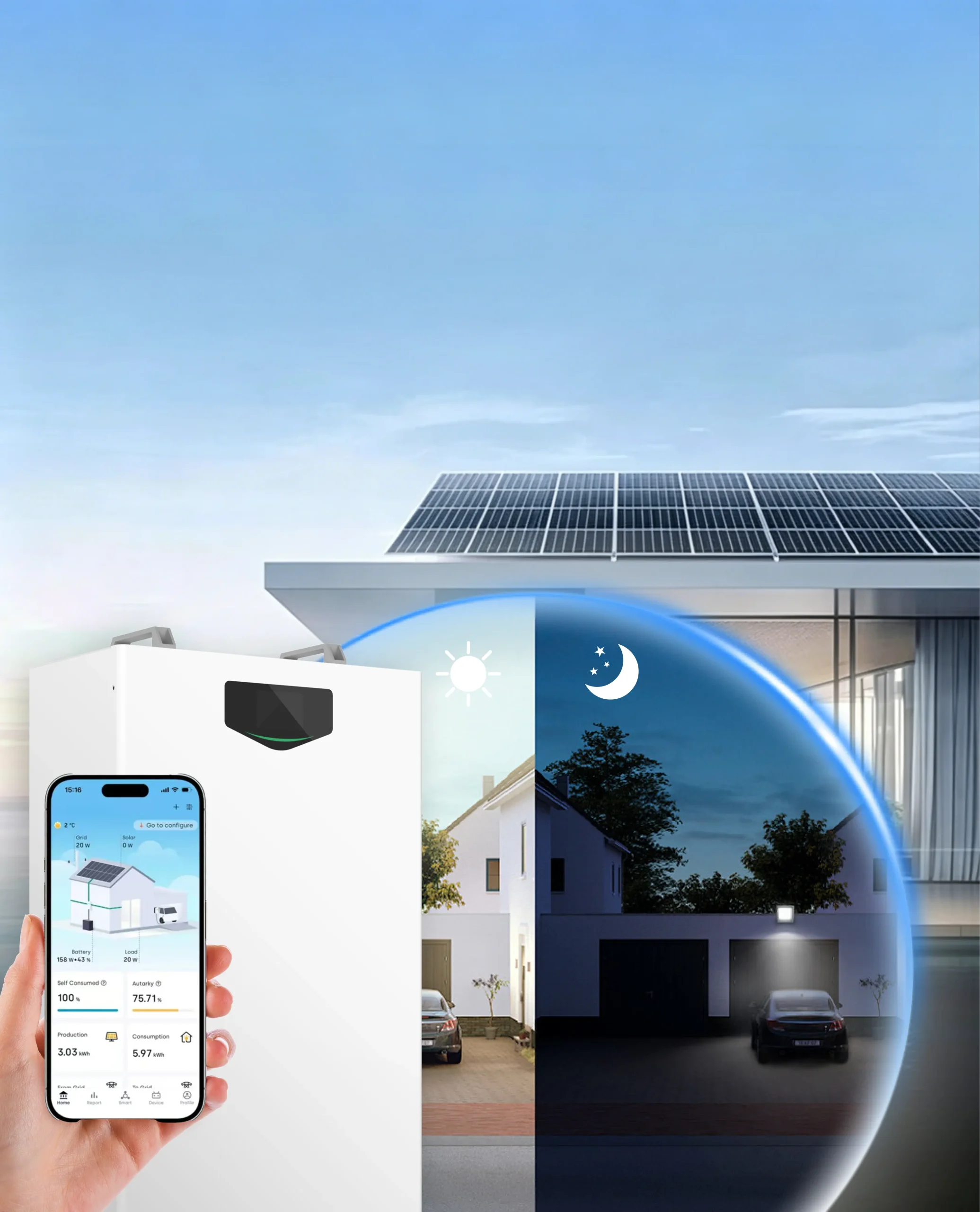
10-16 kWh class storage: M16S314BL-YV or a comparable battery platform
Choose a 16 kWh class battery for longer backup, a larger critical-load panel, or a higher-energy off-grid reserve. It gives the installer more energy headroom than a small wall-mounted unit.
CVC supplies the M16S314BL-YV with:
- 16.076 kWh nominal energy;
- 51.2 V and 314 Ah;
- maximum current of 200 A;
- at least 6,000 cycles under the 80% depth of discharge and 25°C test condition;
- RS485, CAN, and RS232 communication;
- charge temperature of 0-60°C;
- discharge temperature of -10-65°C;
- IP21 or optional IP65 enclosure versions;
- approximate dimensions of 805 × 475 × 240 mm;
- approximate weight of 123.5 kg.
Use the 200 A maximum-current figure when sizing the inverter and cable set. Add the required continuous current, peak current, inverter protocol, enclosure, pallet handling, floor loading, and delivery access to the project file.
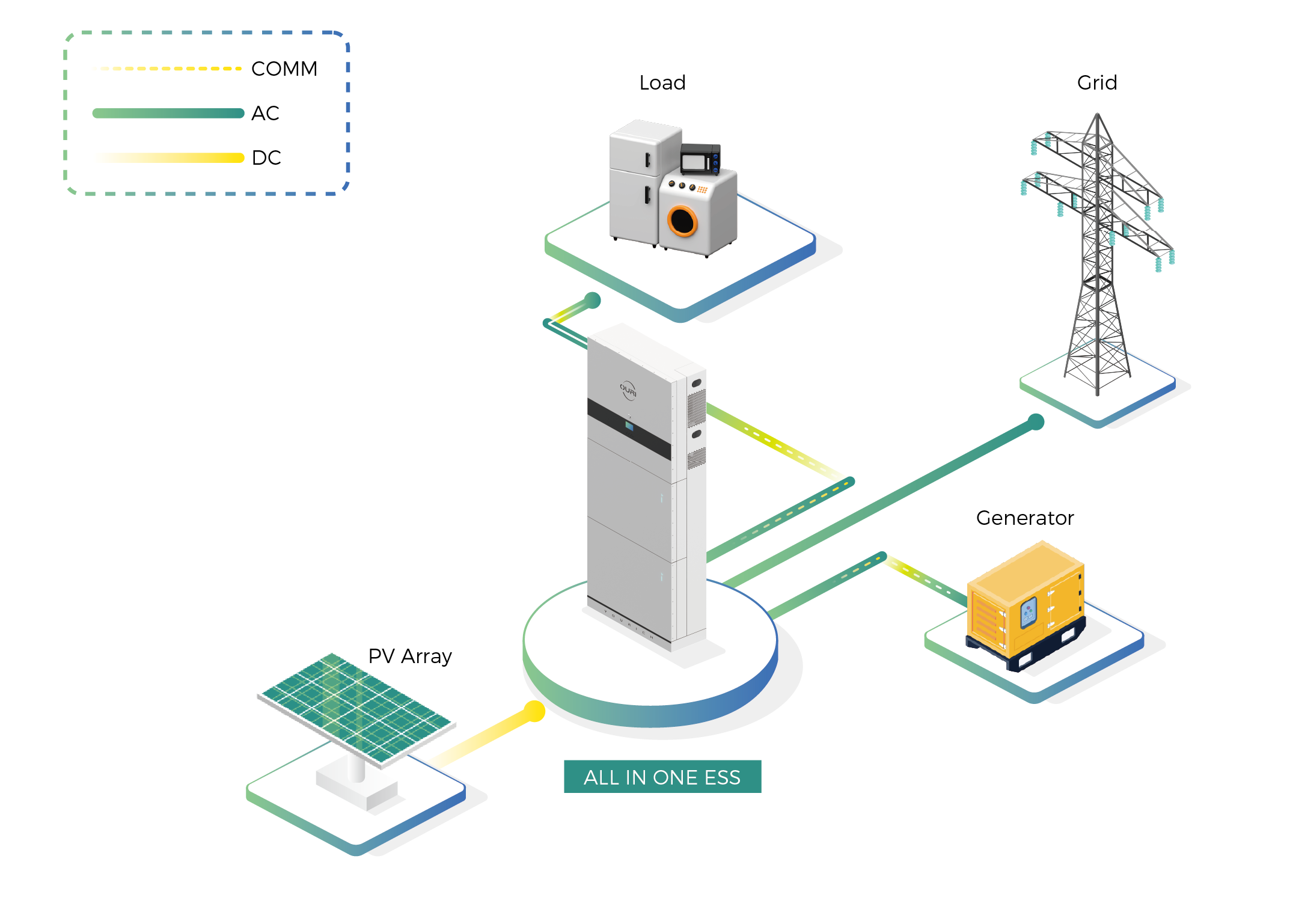
Integrated delivery: YR-AIO6.2-M16 and other all-in-one routes
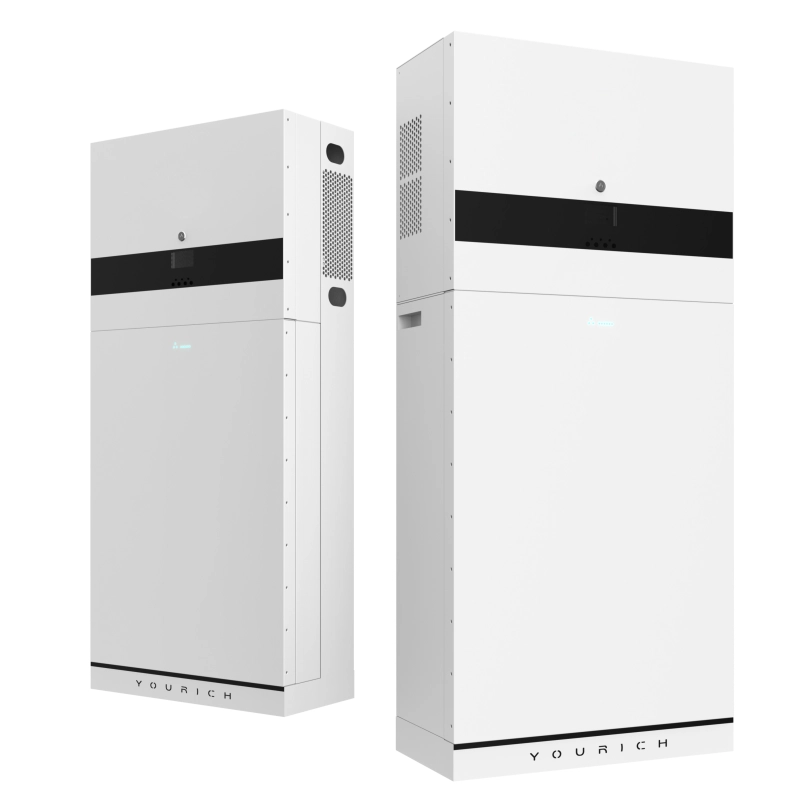
Choose an all-in-one system when the installer wants fewer separate components and a repeatable package. CVC’s YR-AIO6.2-M16 provides:
- 16.07 kWh battery capacity;
- 51.2 V and 314 Ah;
- 6.2 kW inverter rating;
- at least 6,000 cycles under the 80% depth of discharge and 25°C test condition;
- AC output options based on 220/230/240 VAC with a ±5% range;
- RS485, CAN, and RS232 communication;
- up to nine units in parallel in the listed configuration;
- IP55 for the battery section and IP20 for the inverter section.
The battery section carries an IP55 rating and the inverter section an IP20 rating. Place the system in a protected, ventilated installation area and use the correct frequency version, grid-tied function, PV interface, and generator interface for the project.
Tropical and island procurement checks
Temperature, rain, and ventilation
Use the datasheet temperature and humidity range to plan shading, ventilation, drainage, and service access. A protected installation keeps the battery and inverter within their rated operating environment.
Ask the installer to confirm:
- direct solar exposure and shading;
- air circulation around the inverter;
- wall or floor mounting;
- drainage and flood risk;
- whether the battery and inverter have the same IP rating;
- whether the humidity range is non-condensing;
- access for inspection and replacement.
Salt air and corrosion
Coastal and island homes need a defined corrosion specification. State the salt-spray exposure and request the factory’s corrosion or salt-mist requirement for the enclosure, fasteners, cable glands, and mounting structure.
Typhoon and transport conditions
Treat logistics as part of the island product package. Confirm that the battery can move through the port, reach the home, and receive service after a storm.
Confirm:
- crate dimensions and gross weight;
- dangerous-goods shipping documents;
- port and final-delivery responsibility;
- island transfer and lifting equipment;
- wall anchors or floor fixing;
- spare fuses, communication cables, and replacement parts;
- local service capability.
The information to send before requesting a supplier quotation
Use the following list as the minimum RFQ brief.
Project information
- City, province, or island;
- local utility or distribution company;
- grid-tied, hybrid backup, or off-grid operation;
- single-phase or three-phase;
- confirmed voltage and frequency;
- indoor or outdoor installation;
- heat, flooding, salt-air, and typhoon exposure;
- destination port and delivery method.
Load information
- appliances that must run during an outage;
- nameplate power for each appliance;
- measured running power where available;
- starting surge for compressors and pumps;
- required backup duration;
- generator loads and generator rating;
- whether air conditioning, water heating, or cooking loads are included.
System information
- PV array size;
- existing or preferred inverter brand and exact model;
- battery capacity target;
- required parallel quantity;
- generator interface requirements;
- monitoring platform;
- sample quantity and expected annual volume;
- required certifications and shipping documents.
The more complete this brief is, the less likely the supplier is to return a generic battery price that later changes after the inverter or installation details are revealed.
Documents to verify before the purchase order
Request the current version of:
- battery datasheet;
- inverter datasheet;
- user and installation manuals;
- CAN/RS485 protocol document;
- communication pinout;
- compatible inverter list;
- BMS and firmware information;
- UN38.3 and MSDS;
- applicable IEC, CE, CB, or other certification documents;
- warranty terms and exclusions;
- cycle-life test conditions;
- package dimensions and gross weight;
- MOQ and lead time;
- spare-parts list;
- after-sales escalation process.
Read the 6,000-cycle figure with its test condition: depth of discharge, temperature, charge-discharge rate, end-of-life definition, and warranty boundary. That gives the buyer a useful basis for comparing battery platforms.
Common questions from Philippines buyers
Can a grid-connected solar system power the home during a blackout?
Only a hybrid or backup-capable inverter can keep selected loads running during a grid outage. The system also needs anti-islanding protection and a correctly wired backup output. A battery alone is not an AC backup source.
Can a 51.2 V battery connect to a 48 V inverter?
Match the inverter’s permitted voltage window to the battery’s full operating range. Then align the BMS protocol, current limits, firmware, and compatibility test.
How long will a 10 kWh battery run?
Start with:
Runtime ≈ usable battery energy ÷ actual AC load
Calculate delivered energy after inverter losses, reserve SOC, depth of discharge, battery ageing, temperature, and load cycling. The 10 kWh nameplate becomes the usable energy figure only after those operating factors are applied.
Does an island home always need a generator?
A generator is not mandatory for every island home. Include one when the site has long low-solar periods, high critical loads, limited battery reserve, or a low tolerance for interruption. In those projects, generator control and fuel logistics belong in the system design.
Does IP65 mean the battery can be installed anywhere outdoors?
IP65 defines the enclosure’s ingress protection. Outdoor placement still needs shade, drainage, structural support, ventilation, corrosion protection, and local electrical safety measures.
Request a Philippines storage match
If you are preparing a Philippines residential, off-grid, or island project, send the project location, operating mode, target backup loads, inverter model, battery capacity, and expected quantity.
CVC matches the product route, compares battery and inverter options, prepares the technical document set, and coordinates supply for sample or volume orders.
Request a Philippines Storage Match
Recommended form fields:
- Project location;
- Customer type;
- Grid-tied, hybrid, or off-grid;
- Required battery capacity;
- Inverter brand and model;
- Estimated quantity;
- Email or WhatsApp.
Sources and product references
- Energy Regulatory Commission net-metering update
- Meralco net-metering requirements
- PAGASA climate information
- DOE off-grid island energy initiative
- CVC Firefly Hybrid home solar storage inverter
- CVC Firefly low-voltage home battery
- CVC M16S314BL-YV 16 kWh LiFePO4 battery
- CVC YR-AIO6.2-M16 all-in-one energy storage system
- CVC downloads

Peter Yin
Send a Philippines project inquiry
Tell us your location, operating mode, load list, inverter model, target battery capacity and expected quantity.