
Battery inverter selection for an island home in the Philippines starts with the site, the loads and the operating mode. A combination that works in a city home may not be the right choice for an island property.
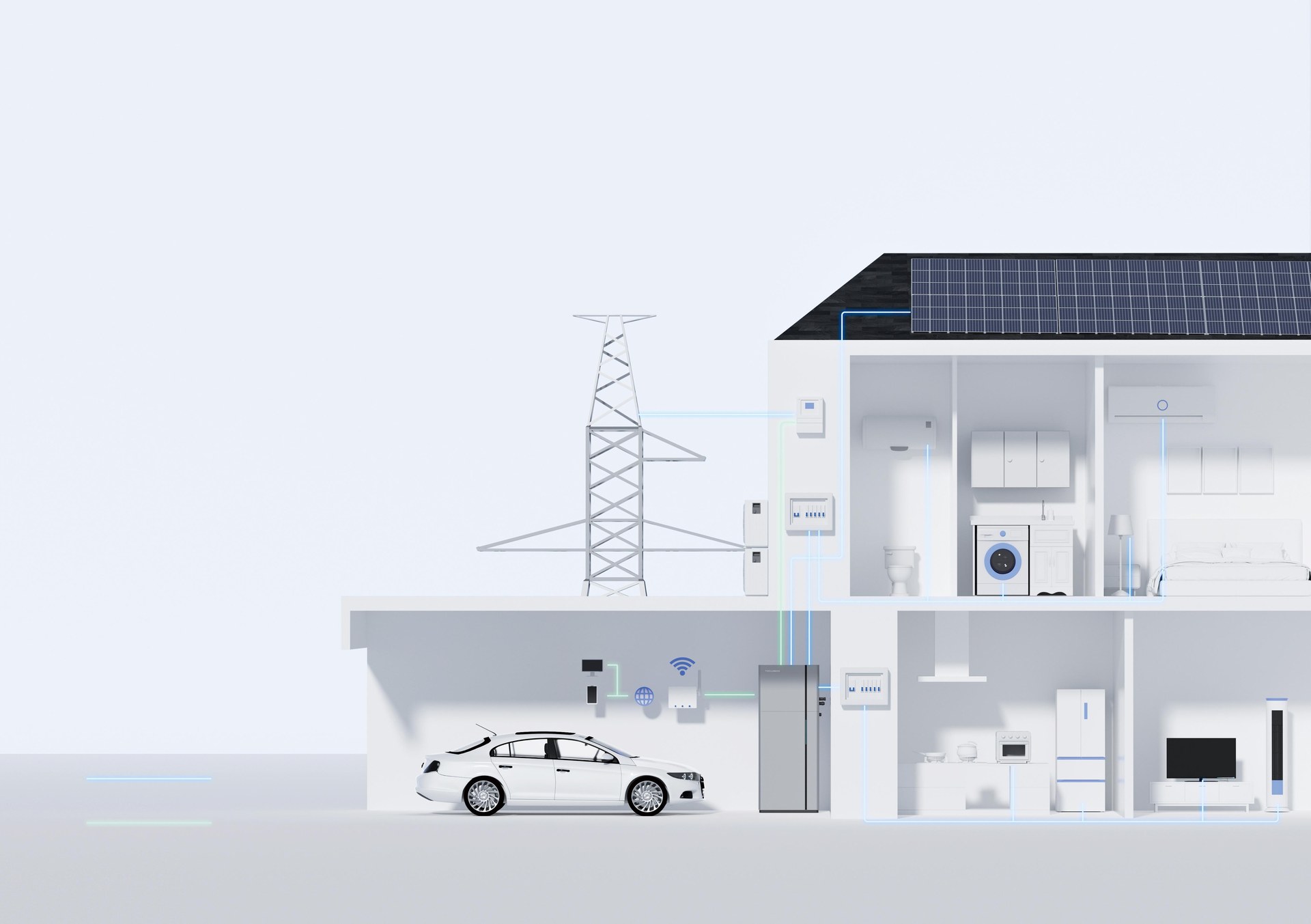
Island homes may face unstable or unavailable grid power, high humidity, salt air, heavy rainfall, limited local service and difficult product transportation. The system may need to run refrigeration, water pumps, fans, routers, lighting and other essential loads while solar conditions change throughout the day.
For distributors and installers, the selection process is simple: identify the power condition, define the essential loads, choose the inverter voltage and power range, then match the battery’s voltage, current and BMS communication.
The Philippine island environment changes the buying checklist
The Philippines has a tropical maritime climate. PAGASA reports a mean annual temperature of about 26.6°C, high relative humidity, annual rainfall from approximately 965 mm to 4,064 mm, and a rainy season from June to November. Typhoons also influence rainfall, cloud cover and humidity. PAGASA climate information provides the official climate reference.
| Local condition | Product and installation requirement |
|---|---|
| Humidity and salt air | Documented enclosure protection and corrosion-resistant hardware |
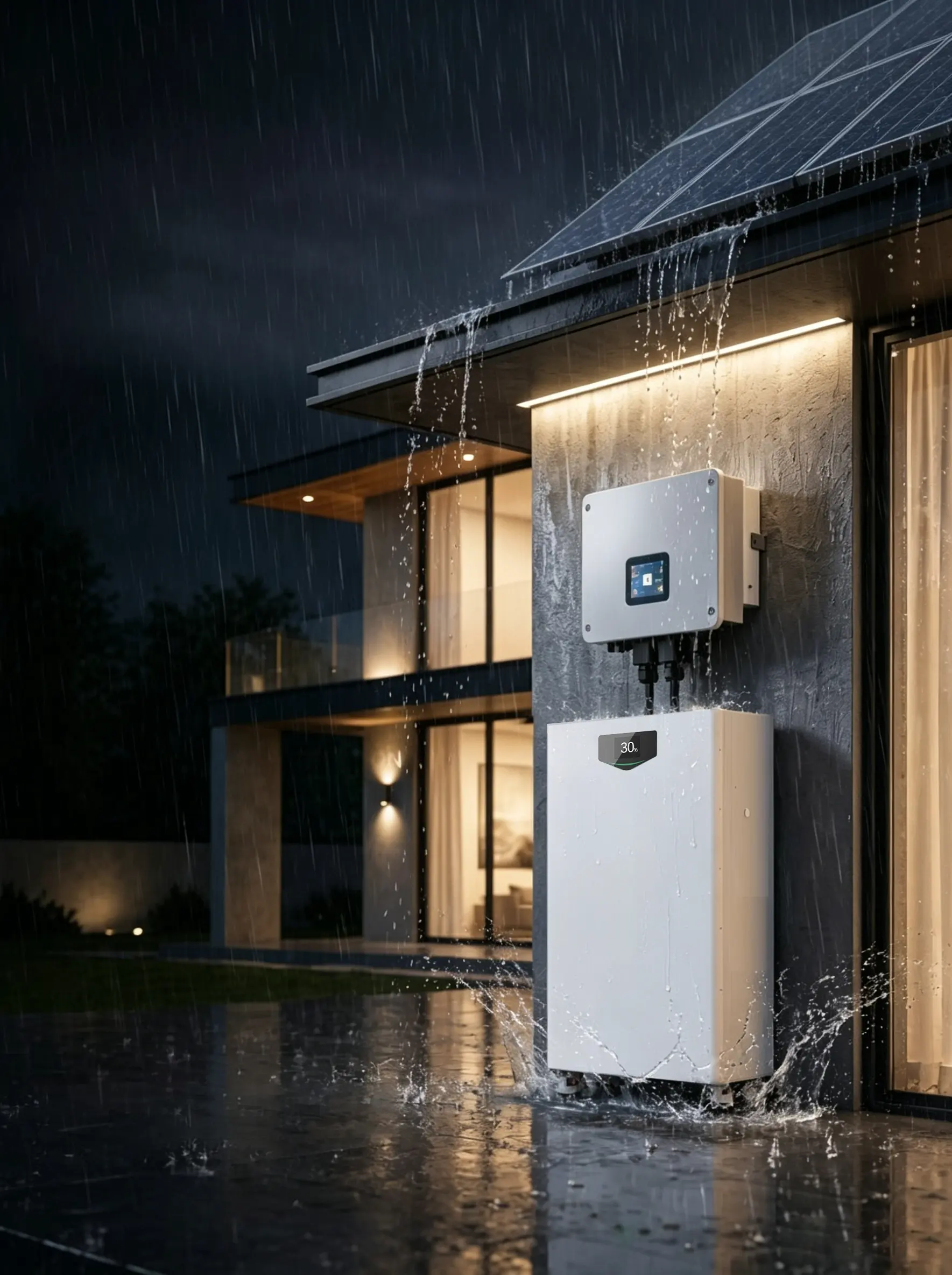
| Heavy rain | Suitable IP rating, sheltered placement and drainage planning |
| High ambient temperature | Operating-temperature range and power derating information |
| Typhoons and storms | Surge protection, grounding and secure mounting |
| Flooding or storm surge | Elevated installation and no direct water exposure |
| Remote logistics | Modular products, remote monitoring and spare-parts planning |
| Pumps and air conditioners | Inverter surge power and battery current checks |
These are procurement requirements derived from the environment, not blanket Philippine legal requirements. Final installation decisions should follow the product manual and local installer or authority requirements.
The policy signals that make storage more useful for consumers
Two practical policy developments matter when a consumer considers solar and storage.
Net metering supports solar self-consumption
The Philippines’ 2025 amended net-metering rules allow qualified end-users to bank and roll over net-metering credits across current and future billing periods. Distribution utilities must also publish application procedures and hosting-capacity information. The ERC announcement on the 2025 amended rules explains these changes.
This is not a nationwide cash rebate for household batteries. The practical benefit is that a solar home can store more daytime generation and use it during evening demand or an outage. Installers should still confirm the process and equipment requirements of the local distribution utility.
Off-grid island programs support renewable energy plus storage
The Energy Regulatory Commission’s 2026 Microgrid Systems Rules cover isolated microgrids and grid-tied microgrids operating in island mode. The framework includes requirements for reliable service, technical performance and consumer protection. ERC’s Microgrid Systems Rules announcement describes the framework.
The Department of Energy has also outlined renewable energy and battery storage for off-grid islands as a way to reduce dependence on diesel generation. For buyers, this supports demand for products that can work with solar charging, backup operation and, where needed, generator input. The financial result still depends on the local utility, load profile, solar resource and equipment cost.
Step 1: Identify the island home’s operating mode
Grid-connected solar backup
Review hybrid operation, solar self-consumption, battery backup, anti-islanding, the backup-load panel and the local utility process.
Weak-grid home
Check transfer behavior, solar and grid charging, generator input, surge power, remote monitoring and the selected essential loads.
Fully off-grid island home
Plan for daily load, poor-weather reserve, battery SOC limits, generator support, black-start behavior, expansion and local maintenance.
Microgrid or community project
A resort, clinic, group of homes or small commercial area may need a formal technical package and approval process. Do not assume a residential inverter is sufficient.
Step 2: Build the load list before choosing the inverter
Do not begin with a fixed package such as “5kW inverter plus 10kWh battery.” List the appliances that must remain available during an outage: refrigerator, lighting, router, fans, water pump, washing machine, air conditioner and any commercial equipment.
Record running power, starting or surge power and expected daily operating time. A refrigerator, pump or air conditioner may draw much more starting current than normal running power. The inverter must handle the running load and starting behavior. The battery must provide enough current at the expected DC voltage.
Step 3: Choose inverter power and voltage
Review phase configuration, 230V and frequency requirements, battery voltage window, charge and discharge current, PV input, generator input, backup behavior, parallel operation, surge power and remote monitoring.
A “48V” lithium battery is often a 51.2V-class battery, but actual operating voltage varies by cell count and BMS settings. For more inverter brands, product families and documents, see CVC Energy’s Inverter Solutions.
As one model-specific example, Deye’s residential storage solution lists the SUN-3.6K-SG04LP1-EU-SM2, SUN-5K-SG04LP1-EU-SM2 and SUN-6K-SG04LP1-EU-SM2 with a 40V to 60V battery range. The model, regional version and firmware must be checked before quotation. Deye residential storage solution
Step 4: Match the battery to the inverter
Compare the battery’s nominal voltage, minimum and maximum operating voltage, recommended charge voltage and BMS cut-off points with the inverter’s battery input range, start-up voltage, low-voltage shutdown and maximum charging voltage.
Power equals voltage multiplied by current. A 5kW inverter may need close to 100A from a 48V-class battery before inverter losses are considered. Compare continuous current, peak current and peak duration with the inverter’s maximum battery current, cable, fuse and breaker ratings.
CAN and RS485 identify communication interfaces, but they do not prove compatibility. Confirm protocol, baud rate, connector pinout, battery address, inverter profile, SOC data, charge and discharge limit messages, alarm behavior and firmware.
Some inverters require a lithium setting, a specific protocol selection or approved firmware. Growatt’s official SPF 3500 ES and SPF 5000 ES manual describes BMS communication through RS485 or CAN and protocol selection for lithium batteries. Growatt SPF user manual
Three reference routes for Philippine island homes
The following combinations are reference routes for distributors and installers. They are not universal compatibility claims. Confirm the exact model, battery version, firmware, cable pinout and approved communication profile before quotation.
| Inverter route | Battery reference | Communication and voltage check | Project direction |
|---|---|---|---|
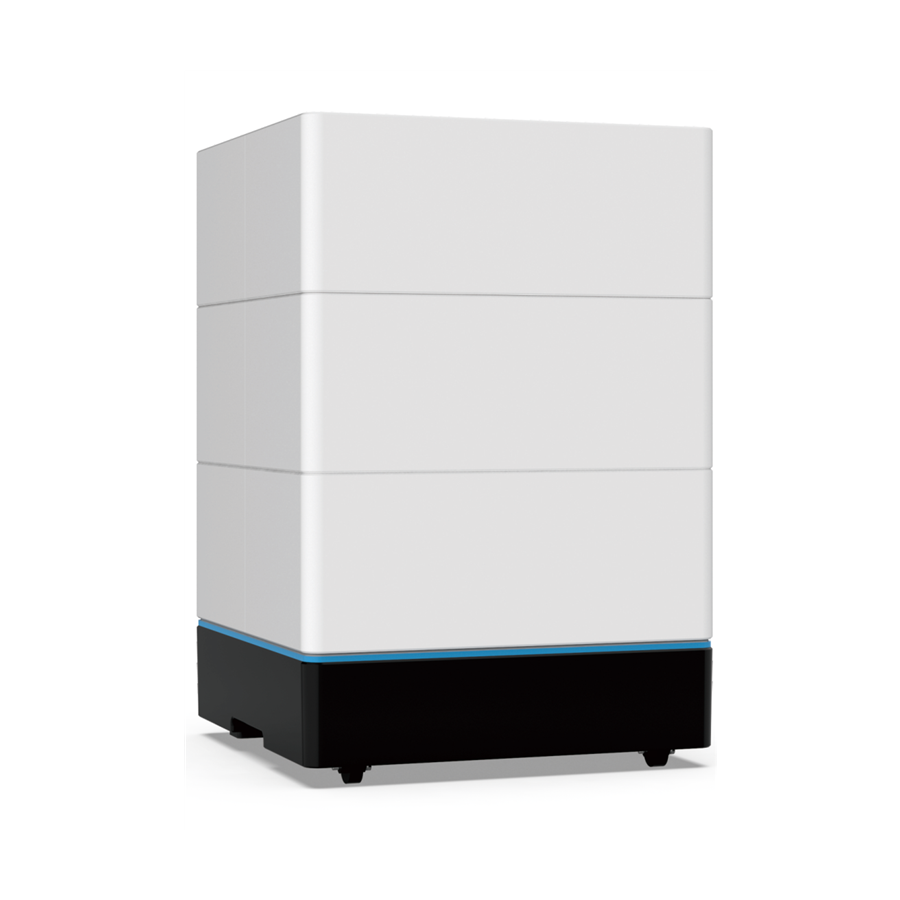
| Deye SUN-3.6K / 5K / 6K-SG04LP1-EU | CVC-supplied Firefly Low Voltage | 51.2V-class battery, CAN/RS485 profile, exact pinout and Deye list confirmation | Grid-connected backup and weak-grid home |
| Growatt SPF3500 ES / SPF5000 ES | CVC-supplied M16S314BL-YV or IPL-51314H | 51.2V battery, CAN/RS485, lithium setting and approved protocol profile | Off-grid island home and generator-assisted backup |
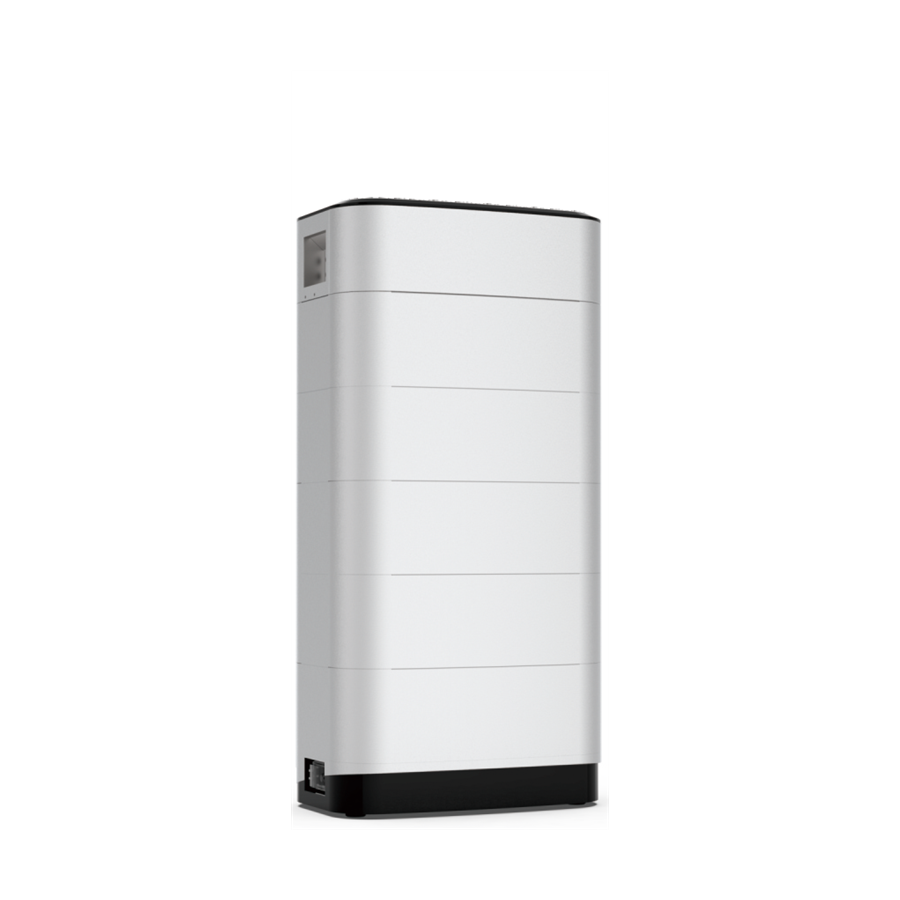
| GoodWe ET / EH / BH / BT | GoodWe Lynx Home F PLUS+ | High-voltage battery list, firmware and inverter-specific compatibility | High-voltage residential systems |
GoodWe’s official materials list Lynx Home F PLUS+ with BH, EH, BT and ET inverters, including models such as LX F6.6-H, LX F9.8-H, LX F13.1-H and LX F16.4-H. GoodWe battery compatibility overview and GoodWe Lynx Home F PLUS+
For a high-voltage CVC battery route, Firefly Pro High Voltage Home Battery can be evaluated during sourcing. It should not be presented as GoodWe, Deye or Growatt compatible until the exact battery model, BMS profile, inverter list and firmware combination have been confirmed.
Step 5: Screen the battery after compatibility
A battery that communicates with an inverter is not automatically a good procurement choice. Review usable energy, continuous and peak current, BMS protection logic, the exact datasheet and manual, warranty coverage, firmware support, enclosure, temperature range and sample-to-bulk consistency.
For coastal or outdoor installations, ask for the IP rating, temperature range, humidity conditions, corrosion protection details, grounding instructions and surge-protection requirements. An IP rating does not mean that a battery can be installed in floodwater. For lithium logistics, request the UN38.3 test summary, SDS or MSDS, packing instructions and the available certification package. See the CVC Downloads page for the document starting point.
Step 6: Give the supplier enough information
A useful inquiry should include the island and province, grid status, phase, exact inverter model, PV capacity, generator details, essential loads, surge power, exact battery model, target quantity and certification or shipping documents required.
CVC Energy can help distributors and installers compare available battery products, verify inverter-matching requirements, coordinate supplier documents and organize export options. Start with the Energy Storage Batteries range, Inverter Solutions and a compatibility review with CVC.
FAQ
Is a 48V battery suitable for a Philippine island home?
It may be suitable for a low-voltage system, but confirm actual operating voltage, current capability, inverter range and BMS communication.
Can I connect any 51.2V battery to a Deye inverter?
No. The BMS protocol, pinout, firmware and charge settings must match the exact Deye model.
Is Growatt SPF5000 ES suitable for an off-grid island home?
It can be considered, but the battery, generator, PV input, surge load and communication settings must be reviewed together.
Does a battery automatically qualify for Philippine net metering?
No. Net metering involves the renewable-energy installation and distribution-utility process. The installer must check the local requirements.
Should island homes always use a high-voltage battery?
No. The choice depends on inverter architecture, system power, battery current, installation scale, documents and service capability.
Final selection rule
For Philippine island homes, the right battery and inverter combination fits the actual site, load profile, operating mode and support plan.
Start with the power condition. Then check the load. After that, verify voltage, current, BMS communication, environmental protection and documents. Only then should the distributor finalize the battery brand, inverter model and order quantity.

Peter Yin
Send a Project Inquiry
Tell us your island location, grid condition, exact inverter model, expected loads, battery preference and estimated quantity.