
Two home batteries can use the same LiFePO4 chemistry and store a similar amount of energy, yet behave like different products once they reach the channel.
One looks clean on a showroom wall and frees the floor below it. The other arrives as a heavy cabinet on wheels or feet, needs no structural wall loading, and may carry substantially more energy in one enclosure. For a distributor, this choice affects the sales pitch, warehouse handling, installer training, delivery method, and the type of customer most likely to buy.
So the useful question is not, “Which form is better?” It is, “Which form fits the channel, the building, and the installation team?”
For a concrete high-capacity comparison, review the M16S280BL-YV 14.3kWh movable battery and M16S314BL-YV 16kWh LiFePO4 battery after calculating the required usable energy.
Form factor changes the commercial offer
End customers see appearance and occupied space. Professional buyers also see everything behind the installation: wall condition, product weight, lifting requirements, cable routing, service access, stock keeping, packaging, and return handling.
A channel portfolio built around only one form factor may work in a narrow market. It becomes restrictive when the distributor serves apartments, detached houses, small shops, island homes, weak-grid properties, and retrofit projects with very different site conditions.
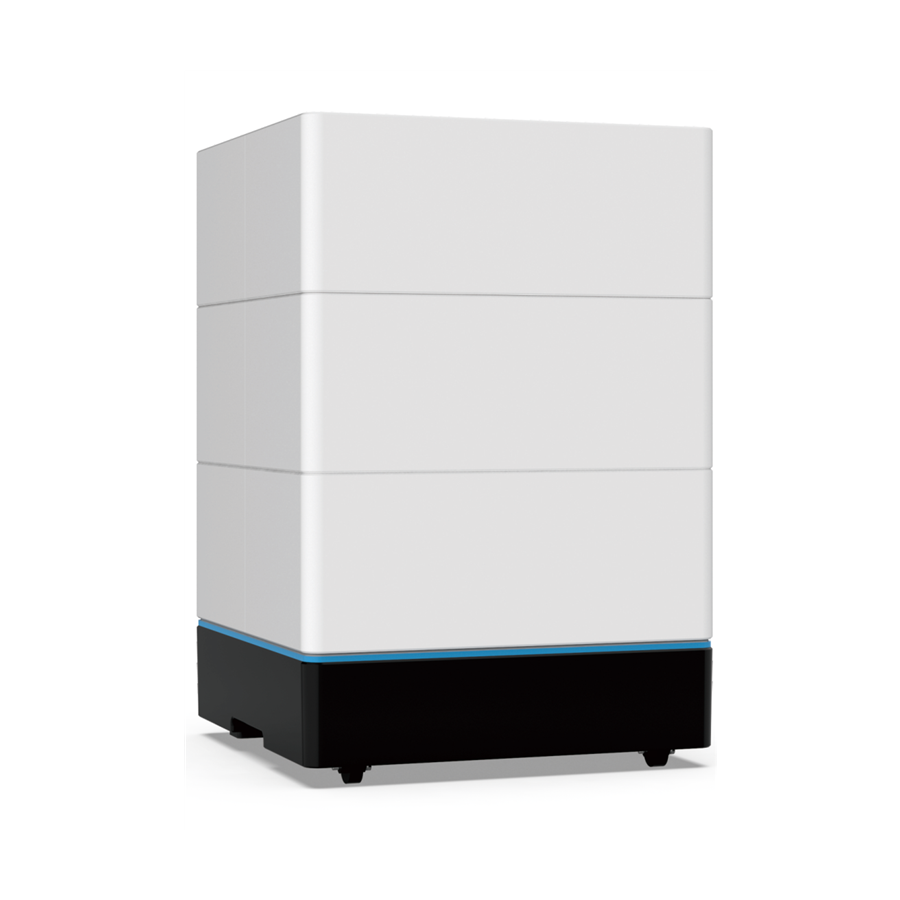
Where wall-mounted batteries fit
Wall-mounted batteries suit projects where floor space is limited and a compact residential appearance helps the sale. They can work well in utility rooms, garages, indoor technical areas, and showrooms, provided the wall and mounting system are suitable for the equipment weight.
Channel advantages often include:
- a familiar residential appearance;
- clear visual separation from floor equipment;
- easier showroom presentation at eye level;
- efficient use of floor space;
- a straightforward offer for standardised home installations.
The limitation is physical. Battery weight, wall material, anchor specification, mounting clearances, and the number of installers needed on site all matter. A good-looking wall battery is a poor choice when the wall cannot safely carry it or when service access becomes awkward.
Before adding a wall-mounted model to the catalogue, distributors should ask for the mounting template, approved fasteners or mounting requirements, unit weight, lifting guidance, clearances, cable exit position, and a photo of the installed product.
Where floor-standing batteries fit
Floor-standing batteries place their load on the floor rather than the wall. This can simplify projects with lightweight partitions, uncertain wall strength, or higher-capacity enclosures that are impractical to lift into a wall-mounted position.
They are often relevant for detached houses, larger backup requirements, small commercial loads, plant rooms, and retrofit sites where installers want accessible cabling and service space. Movable designs may use wheels, but “movable” should not be confused with portable. A battery weighing more than 100kg still needs a planned route, level floor, and controlled handling.
Channel advantages may include:
- fewer structural wall constraints;
- practical access to a larger enclosure;
- easier positioning of heavy, high-capacity units at floor level;
- a stronger visual fit for premium or higher-capacity home storage;
- simpler replacement when the installation route is properly planned.
Floor space is the trade-off. The installer must also address stability, clearance, protection from impact or water, cable routing, and the possibility that a wheeled unit could move after commissioning if it is not secured as specified.
The channel comparison
| Commercial and installation factor | Wall-mounted battery | Floor-standing battery |
|---|---|---|
| Typical sales appeal | Compact, residential, space-saving | Substantial, higher-capacity, accessible |
| Best site condition | Verified structural wall and limited floor space | Level floor and adequate equipment footprint |
| Installer concern | Lifting, anchors, wall strength, rear clearance | Delivery route, floor loading, stability, impact protection |
| Showroom display | Strong visual presentation on a clean wall | Easy to stage as a physical equipment unit |
| Warehouse handling | Flat or upright packaging still requires controlled lifting | Pallet, trolley, or forklift handling may be needed |
| Service access | Depends on mounting height and side/bottom clearance | Often easier at working level, but depends on cabinet layout |
| Capacity positioning | Common in compact residential offers | Often used for larger single-enclosure capacity |
| Return logistics | Wall removal and repacking need an installer | Heavy-unit collection and freight planning are important |
| Main sales risk | Chosen for appearance without checking the wall | Chosen for capacity without checking space and delivery access |
These are channel patterns, not fixed engineering rules. The actual product dimensions, weight, mounting method, ingress protection, and service instructions decide the installation.
Seven questions distributors should answer before choosing
1. Who is the target customer?
An apartment-focused installer may value compact wall use. A dealer serving detached houses and customers who want longer backup may prefer a larger floor-standing model. The same distributor may need both.
Start with the building type, typical load, desired backup duration, installation space, and accepted price band. Do not select the enclosure before defining the customer segment.
2. Can the local installation team handle the product safely?
Ask how many people are needed, which lifting tools are required, and whether the product can pass through common doors, staircases, and site access routes. Packaging dimensions can matter as much as product dimensions.
For wall-mounted products, the team needs a repeatable method for checking wall construction and anchor suitability. For floor-standing products, it needs a delivery and positioning method that does not rely on manual lifting alone.
3. Does the product photograph well and display well?
Channel sales are visual. Dealers need clean front, side, interface, and installed-scene images. They also need accurate dimensions so a customer can understand the scale.
A wall-mounted product should be shown at a realistic mounting height with visible cable management. A floor-standing unit should be photographed in a real equipment position, not made to look smaller than it is.
4. How will the unit be stocked and transported?
Compare units per pallet, gross weight, stacking restriction, dangerous-goods documentation, packaging protection, unloading requirement, and the route from port to dealer warehouse. A form factor that is easy to install may still be expensive or awkward to distribute.
Ask how a damaged unit or warranty return will be collected. Reverse logistics exposes weak packaging plans very quickly.
5. Is capacity modular or fixed?
Some customers want one enclosure with a clear capacity. Others want a smaller starting point with room to expand.
Check the permitted parallel or series configuration, BMS architecture, maximum units, mixing rules, and how later expansion affects warranty and commissioning. A modular product also creates more SKUs, accessories, and training requirements for the channel.
6. Which inverter and communication options are supported?
Form factor does not solve system compatibility. The channel still needs the approved inverter list, voltage range, maximum current, CAN or RS485 protocol, cable pinout, and firmware requirements.
Bundle offers can reduce sales friction, but only when the battery and inverter pairing is documented. Otherwise, the distributor inherits the integration risk.
7. What happens after the sale?
Ask who diagnoses a communication fault, how logs are collected, whether remote support is available, which parts can be replaced locally, and how warranty claims are documented. The prettier enclosure will not matter when a dealer has no fault-code process.
A practical portfolio strategy
For many distributors, the strongest answer is not choosing one format. It is assigning each format a clear job.
Use a wall-mounted line for customers who prioritise compact installation, residential appearance, and limited floor space. Use a floor-standing line where capacity, wall limitations, accessible service, or retrofit flexibility carries more weight. If the market also wants simpler installation and fewer separately selected components, an all-in-one system can sit beside both as a third offer rather than being treated as another battery enclosure.
Keep the initial range tight. Too many similar capacities with unclear differences create dead stock and force sales staff to compete on price. A better launch assortment gives each SKU a reason to exist: target customer, capacity band, installation form, matched inverter path, and upgrade route.
CVC Energy product directions
CVC Energy’s Energy Storage Batteries range covers modular low-voltage, high-voltage, and larger-capacity residential battery requirements. Product selection should begin with the channel’s target customer and installation conditions, then move to voltage, capacity, inverter matching, and documents.
For a floor-standing example, CVC’s factory source record for the M16S314BL-YV lists a 51.2V, 314Ah LiFePO4 battery with 16.076kWh total energy. The source record, checked on August 15, 2026, gives dimensions of 805 x 475 x 240mm, a net weight of 123.5kg, CAN/RS485/RS232 communication, and a movable floor-standing form. Those figures show why delivery access and handling must be part of the quotation, not left for the installer to discover on site. The final commercial configuration and document set still need confirmation before this model is offered to a customer.
The Firefly Low Voltage Home Battery provides a modular 3.6 to 14.4kWh direction for channels that want capacity steps rather than one large enclosure. The Firefly Max 16kWh Home Battery is another larger-capacity option for buyers comparing residential backup products. Their exact mounting, floor placement, accessories, packaging, and matched inverter options should be confirmed from the current model documents before the channel assigns either product to a wall-mounted or floor-standing sales line.
For buyers serving Southeast Asia, the regional selection should also account for high temperature, humidity, island logistics, installation space, and local service capability. See CVC Energy’s home energy storage solutions for Southeast Asia for the broader product direction. Battery and inverter products are also relevant to African distributors when the local customer needs a fixed home storage system rather than portable backup.
Materials to request before placing a channel order
- current datasheet and installation manual;
- product and packaging dimensions and weights;
- mounting drawing or floor-positioning requirements;
- installed product photos and clean sales images;
- supported battery expansion rules;
- inverter compatibility list and communication guide;
- certificate and shipping document status for the destination country;
- sample terms, MOQ, lead time, and packaging options;
- warranty scope, fault diagnosis, and return process.
The list helps procurement compare products on more than enclosure style. It also gives the sales team material it can actually use after the shipment arrives.
FAQ
Are wall-mounted batteries always smaller than floor-standing batteries?
No. Form factor and capacity are related by practical design constraints, but there is no universal capacity boundary. Compare the exact dimensions, weight, mounting method, and usable energy of each model.
Is a floor-standing battery easier to install?
It avoids structural wall mounting, but the answer depends on weight, access route, stability, cable layout, and site clearance. A heavy cabinet may require a pallet truck, lifting equipment, or more than one installer.
Which type is easier for distributors to sell?
That depends on the customer segment. Wall-mounted products can appeal to buyers who value compact residential appearance. Floor-standing products can suit higher-capacity or retrofit projects where wall mounting is difficult. Sales materials and a documented inverter match matter in both cases.
Should we stock batteries and inverters as a bundle?
A documented bundle can reduce selection and support risk. Confirm voltage, current, protocol, firmware, operating mode, and destination-market requirements before presenting the pair as compatible.
What should we test with the first sample?
Check packaging, physical handling, installation process, communication setup, charge and discharge limits, noise, thermal behaviour, monitoring, fault reporting, manuals, and the handover process your local installers will use.
Build the product range around the customer, not the enclosure
Send CVC Energy your target country, channel type, preferred capacity range, typical building, installation conditions, inverter brands, expected quantity, and sample plan. We can help narrow the product direction and identify which technical or commercial documents still need confirmation.
Review available product documents or contact CVC Energy about channel product matching.

Peter Yin
Discuss a Home Battery Portfolio for Your Channel
Tell us your country, customer segment, preferred capacity, installation conditions, inverter brands, expected quantity and sample plan. We will help narrow the product direction and list the documents that still need confirmation.