
Short answer
If a Vietnamese customer asks for a "10kWh home battery," do not quote a battery from the capacity figure alone. Ask for the inverter model, essential-load list, required backup time, PV capacity, installation location and target quantity first.
A 5.1–5.12kWh battery can suit essential-load backup. A 10kWh class system gives more overnight reserve. A 15–16kWh system can support a larger backup plan or future expansion. None of these sizes is automatically correct. The battery voltage window, continuous current, inverter output, BMS communication and installation conditions must match the project.
For distributors and installers, the safest quotation is the one that confirms these limits before the price is sent.
Why Vietnam residential energy storage is becoming a procurement question
Vietnam is moving beyond rooftop solar as a daytime-generation product. In its March 2026 directive on electricity saving and rooftop solar, Vietnam Electricity reported that self-produced, self-consumed rooftop solar combined with suitable battery energy storage is being encouraged to reduce peak load and increase on-site energy self-sufficiency. The directive also set 2026 electricity-saving and demand-response targets, including a target to reduce 3,000MW of load capacity during peak periods when the system faces a supply-demand imbalance. Read the EVN summary of Directive No. 10/CT-TTg.
That direction creates more room for residential PV-plus-storage projects, but it does not remove the technical work. A buyer still has to answer four questions:
- Is the system for solar self-consumption, backup, or weak-grid/off-grid operation?
- Which loads must remain powered during an outage?
- Can the battery communicate with the proposed inverter at the required voltage and current?
- Who will provide the documents, commissioning support and after-sales response?
The rest of this guide follows that order.
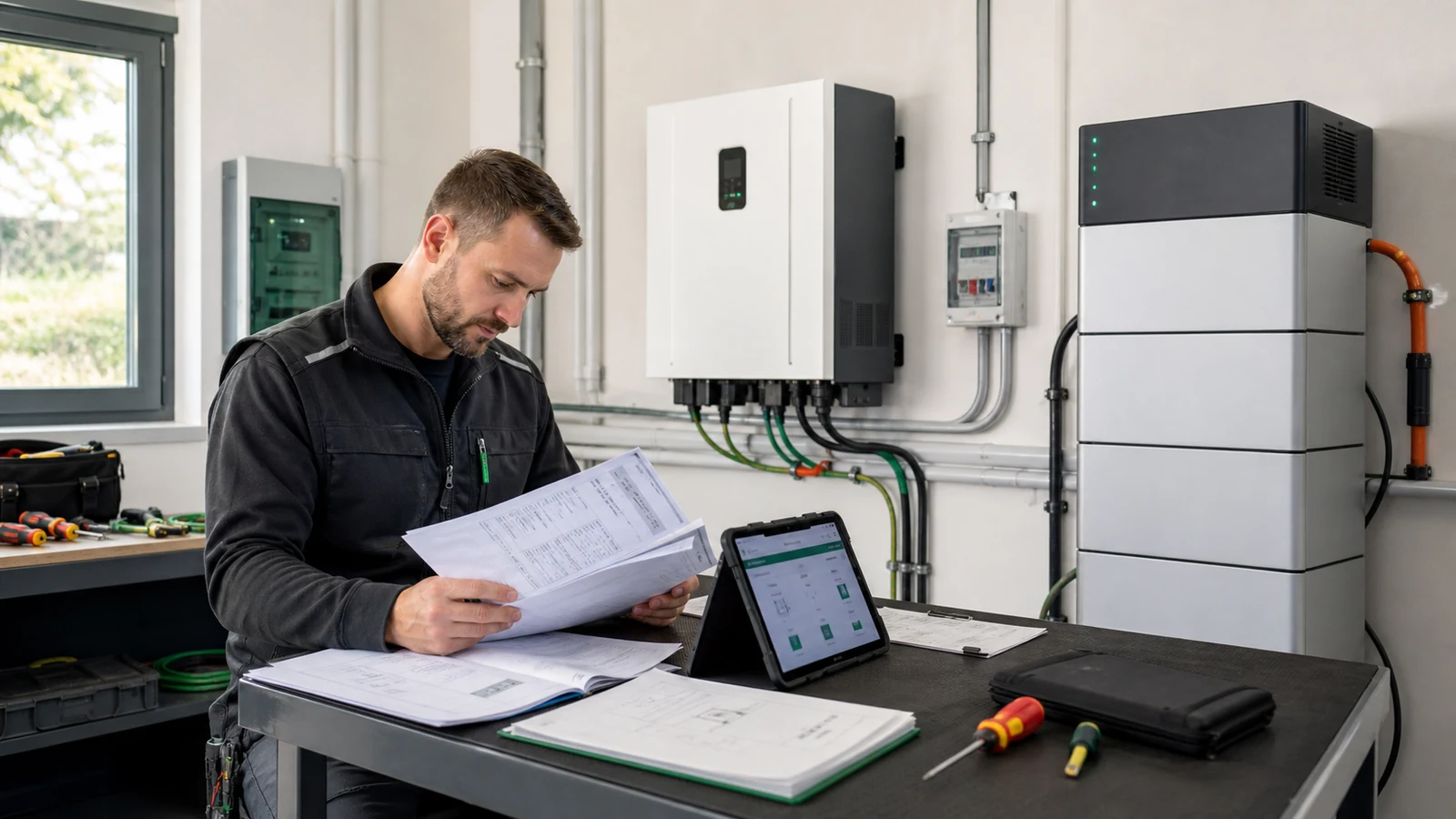
Start with the project type, not the battery size
| Project type | Main goal | Battery questions | Inverter and installation questions |
|---|---|---|---|
| Rooftop solar self-consumption | Move daytime solar energy into evening use | Usable energy, daily cycling, charge window and warranty conditions | PV input, battery charging power, export or load-control settings |
| Residential backup | Keep selected loads running during an outage | Required backup hours, reserve SOC, continuous discharge current | EPS output, transfer time, continuous power and motor-starting capability |
| Weak-grid or off-grid home | Operate with limited or unavailable grid supply | Seasonal autonomy, parallel expansion and low-SOC behavior | Off-grid control, generator interface, PV recovery and service access |
| Distributor or installer standard package | Repeat the same system across multiple projects | Stable model, documents, compatibility and replacement process | Approved inverter list, firmware control, training and RMA responsibility |
This table is a first filter. It is not a substitute for a load list and an inverter manual.
1. Rooftop solar self-consumption: size for the evening load
For a solar self-consumption project, the battery is usually not selected to run every appliance in the home. It is selected to absorb a useful part of daytime PV production and release that energy after solar output falls.
The first calculation is therefore not “How many kWh does the family use in one day?” It is:
How much energy can the customer use during the planned battery discharge window?
An installer should collect:
- average evening and night-time energy use;
- the largest continuous load;
- refrigerator, pump and air-conditioner starting behavior;
- PV array size and expected charging window;
- the inverter’s maximum battery charge power;
- the minimum SOC the customer wants to reserve for backup.
If the customer wants both self-consumption and outage protection, do not schedule the battery to reach 0% every night. A reserve SOC may reduce the energy available for daily bill reduction, but it gives the system a better chance of supporting critical loads when the grid fails.
The commercial question is also different from a residential engineering question. A distributor may prefer a standard 5kWh or 10kWh package because it is easier to stock and explain. That package still needs a compatibility list and a clear rule for when two units are required.
2. Residential backup: separate energy from power
Backup projects fail when the quotation only states battery capacity. A battery can have enough stored energy and still fail to start a pump, refrigerator compressor or air-conditioner because the inverter or battery BMS cannot deliver the required peak current.
Ask the customer to divide the home load into two groups:
Keep-on loads
- router and network equipment;
- selected lights;
- fans;
- refrigerator;
- security system;
- television or a small workstation.
Switch-off or non-essential loads
- electric water heater;
- induction cooker;
- large air-conditioners;
- electric vehicle charger;
- welding equipment and other high-surge loads.
Then calculate the system in two separate ways:
Energy requirement
Required battery energy = average AC load × backup hours ÷ usable battery fraction ÷ conversion efficiency
Power requirement
Required inverter output ≥ simultaneous running load + starting surge
The first equation helps select kWh. The second helps select the inverter and confirm whether the battery can supply the DC current. Neither equation can be skipped.
3. Weak-grid and off-grid homes: plan for the bad solar day
Off-grid and weak-grid projects need more than a larger battery. The installer must decide how the system will recover after several cloudy days, whether a generator is available, and which loads can be shed automatically.
Before requesting a quotation, collect:
- the minimum solar production expected in the difficult season;
- daily energy use and the night-time essential load;
- water-pump and compressor starting power;
- generator rating and generator-start control, if applicable;
- the number of consecutive days the customer expects to ride through;
- the location’s ventilation, humidity, dust and service-access conditions.
Do not describe an IP rating as proof that a battery can be installed outdoors. For example, the public TSYS-LD51 data on the SolaX Vietnam site lists IP40, while the Deye SE-G5.1 manual lists IP20. These ratings do not mean “weatherproof.” The enclosure, cabinet, roof, drainage and local installation instructions still need to be checked.
A worked 10kWh example for a Vietnamese home backup quote
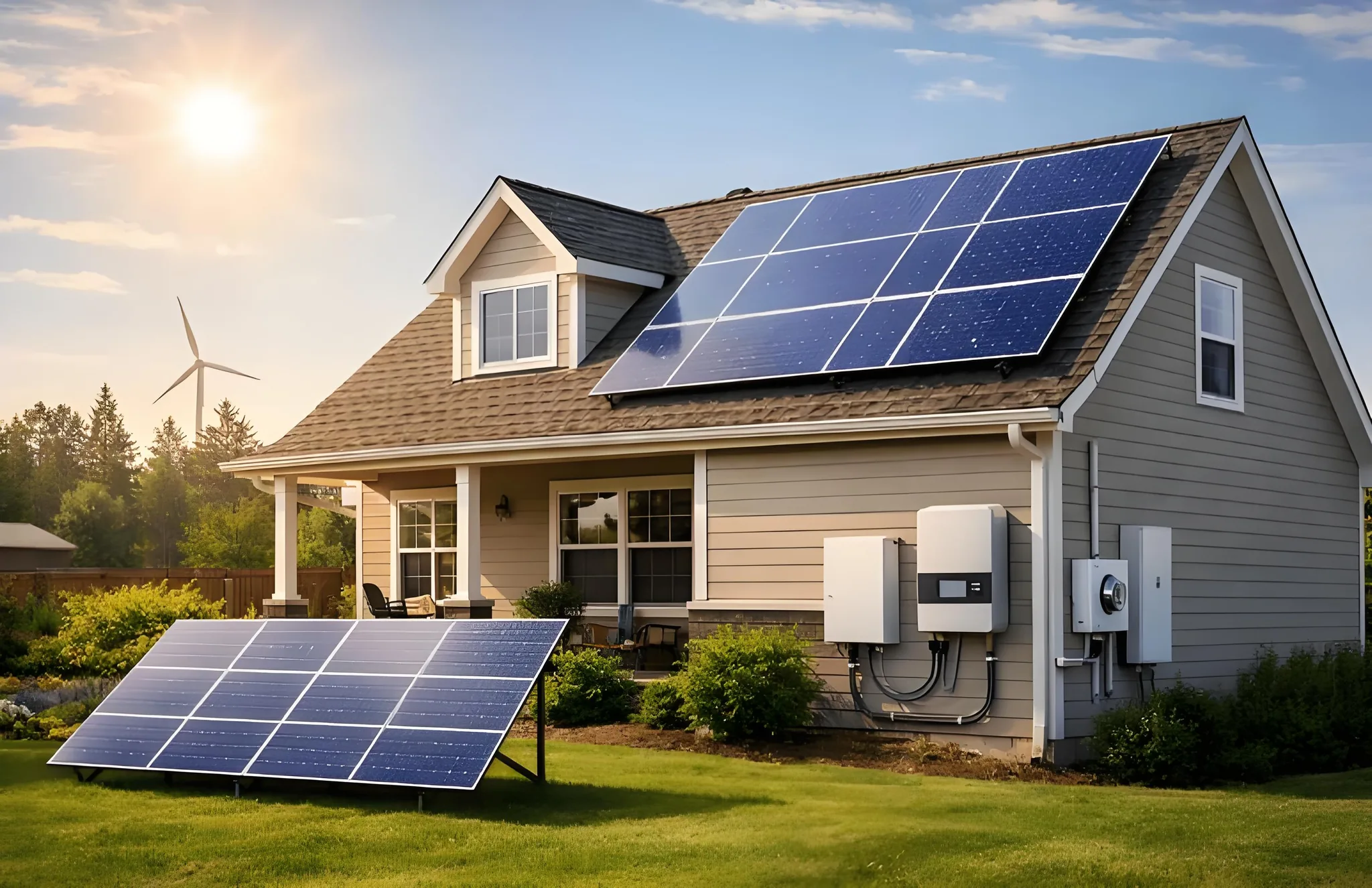
The following is a planning example, not a promised runtime or a customer case. The loads must be measured or confirmed with the installer.
| Load | Assumed average power | Notes |
|---|---|---|
| Router and network equipment | 15W | Usually continuous |
| Four LED lights | 40W | Actual use depends on rooms and hours |
| Two fans | 120W | Running load only |
| Refrigerator | 100W average | Compressor starting current is higher |
| Television | 100W | Depends on model and brightness |
| Control and standby loads | 15W | Inverter and small devices |
| Estimated average | 390W | Planning value only |
If these loads run for eight hours, the simple AC energy estimate is:
390W × 8h = 3.12kWh
Assume 80% usable battery energy and 92% conversion efficiency for a conservative planning calculation:
3.12kWh ÷ 0.80 ÷ 0.92 = approximately 4.24kWh nominal battery energy
On energy alone, a 5.1–5.12kWh battery class may cover this eight-hour essential-load example. That conclusion changes if the customer adds an air-conditioner, water pump, electric cooker or other high-power load. The refrigerator’s starting current must also be checked against the inverter’s surge rating.
For a 10kWh nominal battery, the same planning assumptions produce about 7.36kWh of AC energy after an 80% usable fraction and 92% conversion efficiency:
- at a 500W average load: about 14.7 hours on paper;
- at a 1,000W average load: about 7.4 hours on paper.
These are arithmetic estimates, not guaranteed runtime. Temperature, SOC limits, battery current limits, inverter standby consumption, cable losses and the actual load curve can reduce the result.
Practical capacity guide
| Nominal battery class | Example planning energy after 80% usable fraction and 92% conversion | Typical direction | Main warning |
|---|---|---|---|
| 5–5.12kWh | About 3.7kWh AC | Essential loads, small backup package | Check compressor start and inverter surge power |
| 10kWh | About 7.4kWh AC | More night-time use or longer essential-load backup | Do not assume it can run the whole home |
| 15–16kWh | About 11.0–11.8kWh AC | Larger backup plans, more reserve or future expansion | Inverter power and installation space still limit the system |
The figures use stated planning assumptions so that a buyer can reproduce the calculation. The supplier’s datasheet and the final inverter configuration control the actual usable energy.
Battery and inverter compatibility: the checks that must happen before quoting
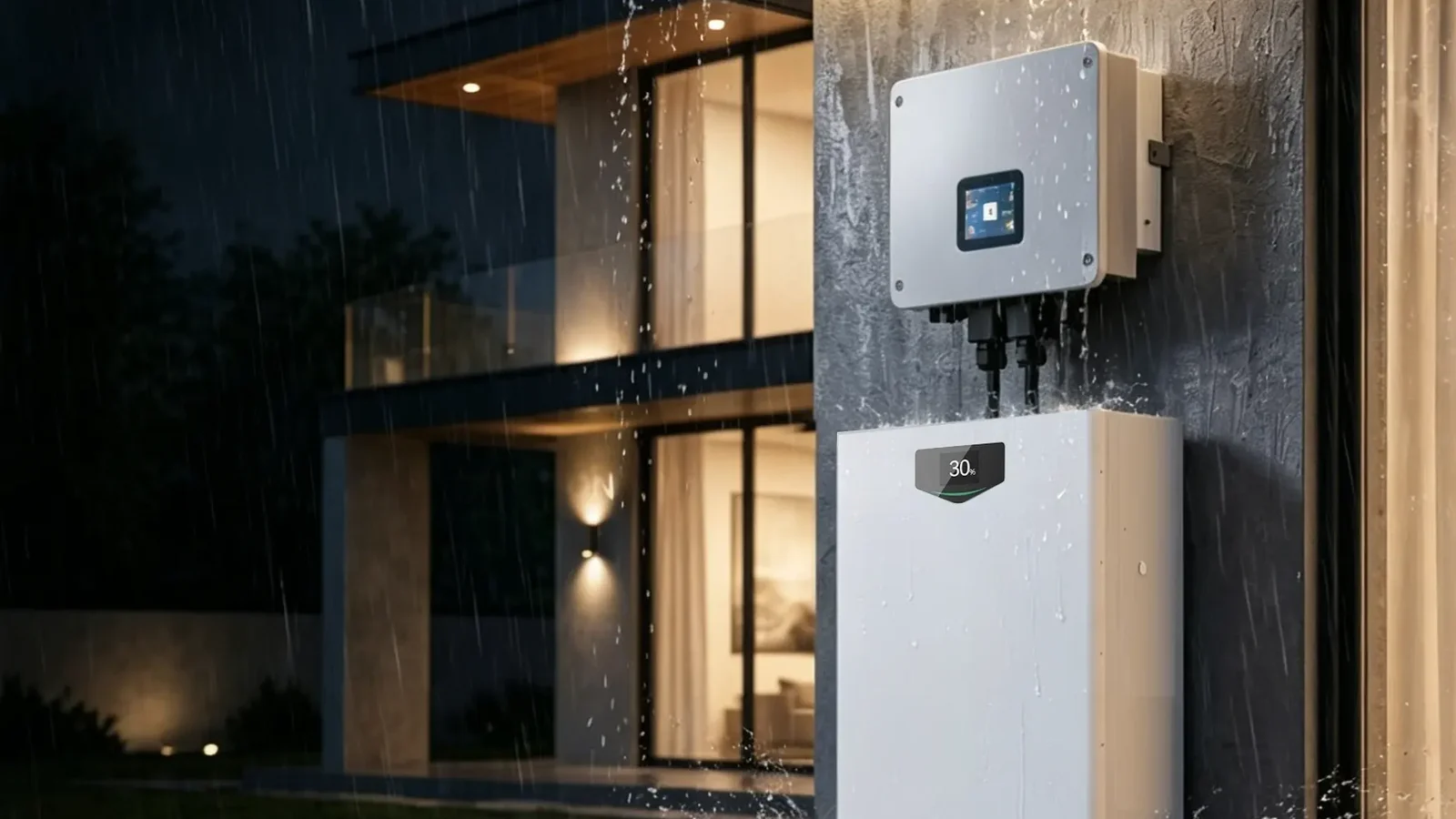
1. Check the complete voltage range
“48V battery” or “51.2V battery” is not a compatibility conclusion. Compare the battery’s operating range with the inverter’s battery input range.
The public TSYS-LD51 specification lists a 51.2V nominal voltage and a 42.4–57.6V operating voltage range. It also lists 100A maximum charge current and 135A maximum discharge current. The exact datasheet revision should be attached to the quotation.
The public SE-G5.1 manual lists 51.2V nominal voltage, 44.8–57.6V operating voltage and 5.1kWh energy. It also states that usable energy depends on system configuration and that current is affected by temperature and SOC. The exact inverter and battery documentation still needs to be checked together.
Those two batteries may look similar in a product list, but their voltage windows, current limits and installation documents are not identical. The exact inverter model must be checked against the exact battery model.
2. Convert current into a realistic power limit
Battery-side power is approximately:
DC power = battery voltage × battery current
At 51.2V and 100A, the theoretical DC value is about 5.12kW before losses and control limits. A battery with a higher current rating may support more power, but the inverter, cables, breaker, BMS and temperature limits may still reduce the permitted output.
For a CVC-listed 16kWh battery example, the published product record specifies 51.2V, 314Ah, 157A maximum continuous charge and discharge current, CAN2.0/RS485 communication and up to 32 units in parallel. That is a product direction for larger low-voltage storage projects, not a universal match for every 51.2V inverter. The final quotation must confirm the inverter model, protocol, protection settings and parallel configuration. Review the CVC IPL-51314H product direction.
3. Confirm CAN or RS485 at protocol level
A CAN port and an RS485 port are physical interfaces. They do not guarantee that the inverter understands the battery’s message format.
The Deye SE-G5.1 manual identifies CAN communication at 500kbps and RS485 at 9600bps for the inverter communication terminal. It also provides separate parallel communication terminals for multiple batteries. A quotation should therefore confirm at least:
- communication interface;
- protocol or battery-brand selection in the inverter menu;
- baud rate where applicable;
- RJ45 pinout and cable definition;
- master and slave battery arrangement;
- termination and parallel communication requirements;
- supported firmware version.
If a supplier only writes “CAN/RS485 supported,” ask for the compatibility list or written confirmation for the proposed inverter model.
4. Check current derating, SOC limits and temperature
The maximum current printed on a datasheet is not always available at every SOC and temperature. The Deye manual expressly notes that current is affected by temperature and SOC. This matters in a Vietnamese installation where the battery room, cabinet and ventilation conditions can change the operating temperature.
Ask the supplier:
- At what temperature is the stated charge and discharge current available?
- Does the BMS reduce current near full or low SOC?
- Is charging restricted below a certain temperature?
- Does the inverter receive the derating status through CAN or RS485?
- Does adding parallel batteries increase usable power, or only energy?
Do not promise the customer that adding a second battery will double every system limit. The inverter and communication architecture must support that configuration.
5. Confirm the parallel limit and commissioning sequence
The SolaX TSYS-LD51 page states expansion up to 16 units in parallel. The Deye SE-G5.1 manual states a maximum of 64 packs in parallel, but that does not mean a particular hybrid inverter can operate 64 packs. The battery limit and inverter limit are separate.
The quotation should state the planned number of batteries, master battery, cable set, breaker or cabinet requirements, firmware, commissioning sequence and the party responsible for start-up.
Battery plus hybrid inverter or all-in-one ESS?
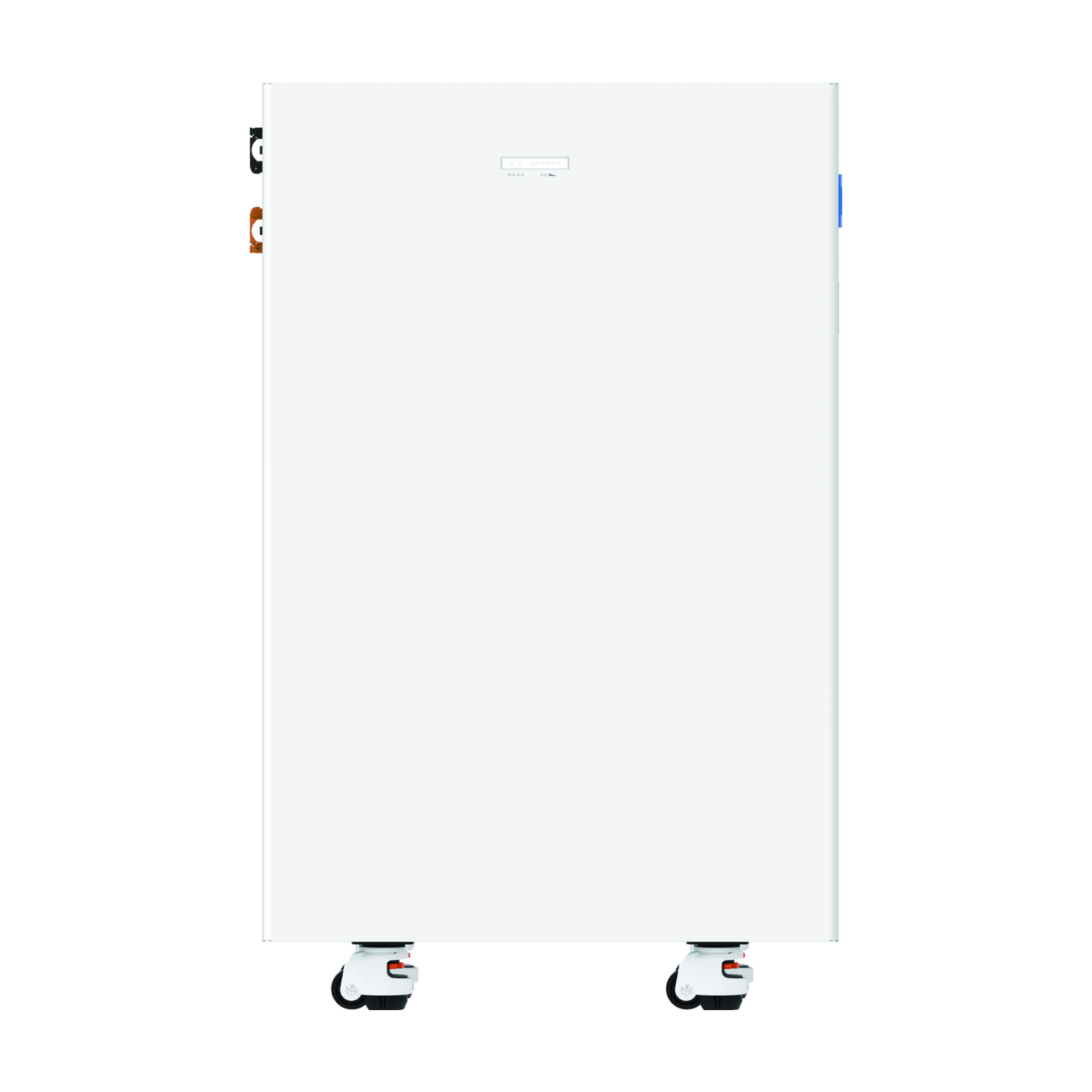
Choose a separate battery and hybrid inverter when:
- the installer already has a preferred inverter platform;
- the project needs a wider range of PV and AC power options;
- the distributor wants to combine several battery sizes with one inverter family;
- service teams can handle separate battery, inverter and communication checks.
Consider an all-in-one ESS when:
- the target customer values a shorter installation process;
- the supplier can provide the complete system configuration;
- the product’s local service and replacement process is clear;
- the installer wants fewer separate components to stock.
An all-in-one system can simplify the sales conversation, but it does not remove the need to verify output power, usable energy, EPS behavior, firmware, protection settings and local service. A separate battery can provide more sourcing flexibility, but it creates more compatibility work. CVC can review both energy storage battery and inverter solution options against the same project brief.
For a distributor, this is also a channel decision. The lowest factory price is not necessarily the lowest delivered project cost if the installer must solve communication faults without a clear responsibility split.
The Vietnam procurement document pack
Before placing a sample or bulk order, request the following documents from the supplier.
Product documents
- current datasheet with model number and revision date;
- user manual and installation manual;
- dimensions, weight and mounting method;
- charge and discharge current conditions;
- usable energy test conditions;
- parallel expansion instructions.
Compatibility documents
- inverter compatibility list;
- CAN and RS485 protocol information;
- communication cable pinout;
- required inverter firmware;
- battery-brand selection or setup instructions;
- commissioning and fault-code guidance.
Certification and shipping documents
- UN38.3 test summary or applicable transport documentation;
- MSDS;
- certificate files and their covered model or configuration;
- packaging specifications;
- destination-market documentation requested by the importer or carrier.
Do not treat a certificate title as proof that every product variation is covered. Match the document to the model, cell configuration and shipment.
Commercial and after-sales documents
- sample price and sample lead time;
- MOQ and price breaks;
- production lead time after order confirmation;
- warranty terms and capacity-retention conditions;
- RMA process;
- spare parts and replacement policy;
- remote commissioning support;
- training materials and escalation contact.
This document pack is more useful than a generic factory presentation because it can be attached to a real quotation and reviewed by the installer before the order is released.
What to send a supplier in the first Vietnam RFQ
Send enough information for the supplier to select a system, not a price alone.
Country and city:
Buyer type: distributor / installer / EPC / project owner
Application: self-consumption / backup / weak-grid / off-grid
PV size:
Existing or proposed inverter brand and complete model:
Battery target: 5kWh / 10kWh / 15kWh / other
Essential loads and running power:
Motor or compressor loads and starting power:
Required backup time:
Installation location: indoor / cabinet / protected outdoor area
Target quantity: sample / pilot / bulk order
Required documents:
Required delivery timing:
After-sales expectations:
If the inverter model is unknown, say so. The correct next step is an inverter and battery matching review, not a random 51.2V quotation.
Final checklist for Vietnam residential energy storage procurement
Before sending the final price to the customer, confirm:
- the application type;
- the essential-load list;
- running and starting power;
- required backup time;
- nominal and usable energy;
- battery operating voltage range;
- inverter battery voltage range;
- continuous and peak current;
- CAN/RS485 protocol and cable definition;
- firmware and compatibility list;
- parallel configuration;
- installation environment;
- certification and shipping documents;
- warranty and RMA responsibility;
- sample, MOQ, lead time and delivery terms.
The right Vietnam residential energy storage quotation is not the one with the biggest kWh number. It is the one where the battery, inverter, load profile, documents and after-sales responsibility agree with one another before the order is placed.
Sources and technical references
- Vietnam Electricity: Directive No. 10/CT-TTg and rooftop solar with BESS
- Technical references checked during drafting: TSYS-LD51 public specification and SE-G5.1 user manual. Product URLs are intentionally omitted from the published article.
- CVC Energy: IPL-51314H 16kWh LiFePO4 home battery

Peter Yin
Send a Vietnam project inquiry
Tell us your city, application, PV size, exact inverter model, target battery capacity, load list and expected quantity.