
Here are the top 10 energy storage BMS manufacturers in China by 2025 shipment capacity.
Top 10 Energy Storage BMS Manufacturers in China in 2025
| Rank | Manufacturer | Business type | Base | 2025 share / position | Strength in energy storage BMS |
|---|---|---|---|---|---|
| 1 | CATL | Integrated cell, system and BMS | Fujian | About 31.5% | Full-stack control and liquid-cooled large-scale storage |
| 2 | BYD | Integrated cell, system and BMS | Guangdong | About 19.3% | Blade Battery BMS, grouping efficiency and thermal consistency |
| 3 | Huawei Digital Power | Integrated system and BMS | Guangdong | About 11.2% | Distributed BMS, AI control and digital energy management |
| 4 | GaoTe Electronics | Independent third-party BMS | Zhejiang | Third-party No. 1 | Active balancing, safety diagnosis and large-storage BMS |
| 5 | CALB | Integrated cell and BMS | Jiangsu | Top 10 | LFP cells, shared storage and long-cycle applications |
| 6 | EVE Energy | Integrated cell and BMS | Guangdong | Top 10 | Large cylindrical cells and overseas energy-storage growth |
| 7 | Sungrow | Integrated inverter, system and BMS | Anhui | Top 10 | PCS, inverter and energy-storage system integration |
| 8 | LIGOO | Independent third-party BMS | Guangdong | Top 10 | Residential and C&I BMS with flexible adaptation |
| 9 | KELONG | Independent third-party BMS | Guangdong | Top 10 | High-voltage BMS for grid-side large storage |
| 10 | Genway | Independent third-party BMS | Guangdong | Top 10 | Low-voltage residential to high-voltage utility applications |
The Top 10 Manufacturers in Detail
1. CATL
CATL ranks No. 1 in this 2025 China energy storage BMS shipment-capacity ranking. Its integrated model covers cells, battery packs, storage systems and BMS, giving it strong control over the full battery data chain. CATL is especially strong in liquid-cooled utility-scale storage, where the BMS must coordinate cell monitoring, thermal management, rack control and system-level safety.
Want your battery with CATL BMS? Contact us
2. BYD
BYD ranks No. 2. Its Blade Battery platform brings cell design, pack structure and BMS logic into one integrated system. The source data highlights about 12% higher grouping efficiency and cell-temperature uniformity within about ±1.2°C in the referenced system context. This supports stable operation across large battery clusters and high-utilization storage projects.
Want your battery with BYD BMS? Contact us
3. Huawei Digital Power
Huawei Digital Power ranks No. 3 with a system-led approach to BMS and energy management. Its distributed BMS architecture and AI-enabled digital controls are designed for large fleets of connected storage assets. The source material cites SOC and SOH errors of no more than about 1.2% in the relevant platform context and more than 18.6 GWh of connected storage assets.
Want your battery with Huawei BMS? Contact us
4. GaoTe Electronics
GaoTe Electronics ranks No. 1 among independent third-party BMS manufacturers and No. 4 overall. The company focuses on BMS rather than owning the complete cell-to-system stack. Its 2025 energy-storage BMS revenue reached about RMB 1.255 billion, and the source material places its third-party share above 30%. Active balancing, thermal-runaway warning and multi-layer storage control are key strengths for integrators that need a BMS platform adaptable to different cell and system suppliers.
Want your battery with GaoTe BMS? Contact us
5. CALB
CALB ranks No. 5. Its integrated cell-and-BMS capability is centered on LFP energy-storage applications, including shared storage and large battery systems. The source material highlights a cycle-life reference of about 6,200 cycles for the relevant LFP storage route. CALB also strengthened its BMS and electronics capability through the acquisition of Shanghai Zhuoyi Electronics, supporting tighter coordination between cells, packs and system controls.
Want your battery with CALB BMS? Contact us
6. EVE Energy
EVE Energy ranks No. 6. Its energy-storage portfolio combines large-format and large cylindrical LFP cells with an integrated BMS and system-development capability. The company has continued to expand overseas energy-storage projects, making its BMS and battery platforms relevant to distributors and system integrators building export-oriented supply chains.
Want your battery with EVE BMS? Contact us
7. Sungrow
Sungrow ranks No. 7. Its strength is the coordination of PCS, inverter, energy-storage system and BMS in one system platform. This is valuable for utility-scale and C&I projects where the BMS must work with power conversion, EMS dispatch and plant-level controls. Sungrow’s integrated approach reduces interface work for system projects built around its own equipment ecosystem.
Want your battery with Sungrow BMS? Contact us
8. LIGOO
LIGOO ranks No. 8 and is one of the independent third-party BMS suppliers in the top 10. Its products cover residential and C&I storage, with an emphasis on flexible adaptation to different battery packs and inverter environments. This model suits distributors and integrators that need a shorter development path across several storage SKUs and export markets.
Want your battery with LIGOO BMS? Contact us
9. KELONG
KELONG ranks No. 9. Its independent BMS capability is focused on high-voltage energy storage, especially grid-side and large-scale systems. Hardware, firmware and high-voltage rack control are developed as one platform, helping integrators manage large battery clusters and connect them with PCS and plant controls.
Want your battery with KELONG BMS? Contact us
10. Genway
Genway ranks No. 10. Its BMS range extends from low-voltage residential storage to high-voltage utility applications. The company supports both standard products and project-specific customization, making it relevant to C&I projects and distributors that need a BMS platform adjusted to different battery capacities, communication protocols and system architectures.
Want your battery with Genway BMS? Contact us
How This Ranking Was Calculated
This ranking uses 2025 China energy-storage BMS shipment capacity as its core metric. It covers utility-scale, C&I and residential storage, and includes both integrated manufacturers and independent third-party BMS suppliers. EV and consumer-electronics BMS shipments are excluded.
The ranking weights the China energy-storage market by application: utility-scale storage 60%, C&I storage 25% and residential storage 15%. Shipment and market-share ranges were cross-checked against company annual reports and investor materials, tender and project records, channel research, and the 2025 China energy-storage market baseline. The listed shares are rounded reference values; the ranking is a shipment comparison, not a certification or product-quality award.
- Integrated manufacturers: companies that develop BMS for their own cells, battery packs, inverters or complete energy-storage systems.
- Independent third-party suppliers: companies whose core business is supplying BMS hardware, firmware and control platforms to battery and system integrators.
One More Thing: What Is a BMS and Why Is It Important?
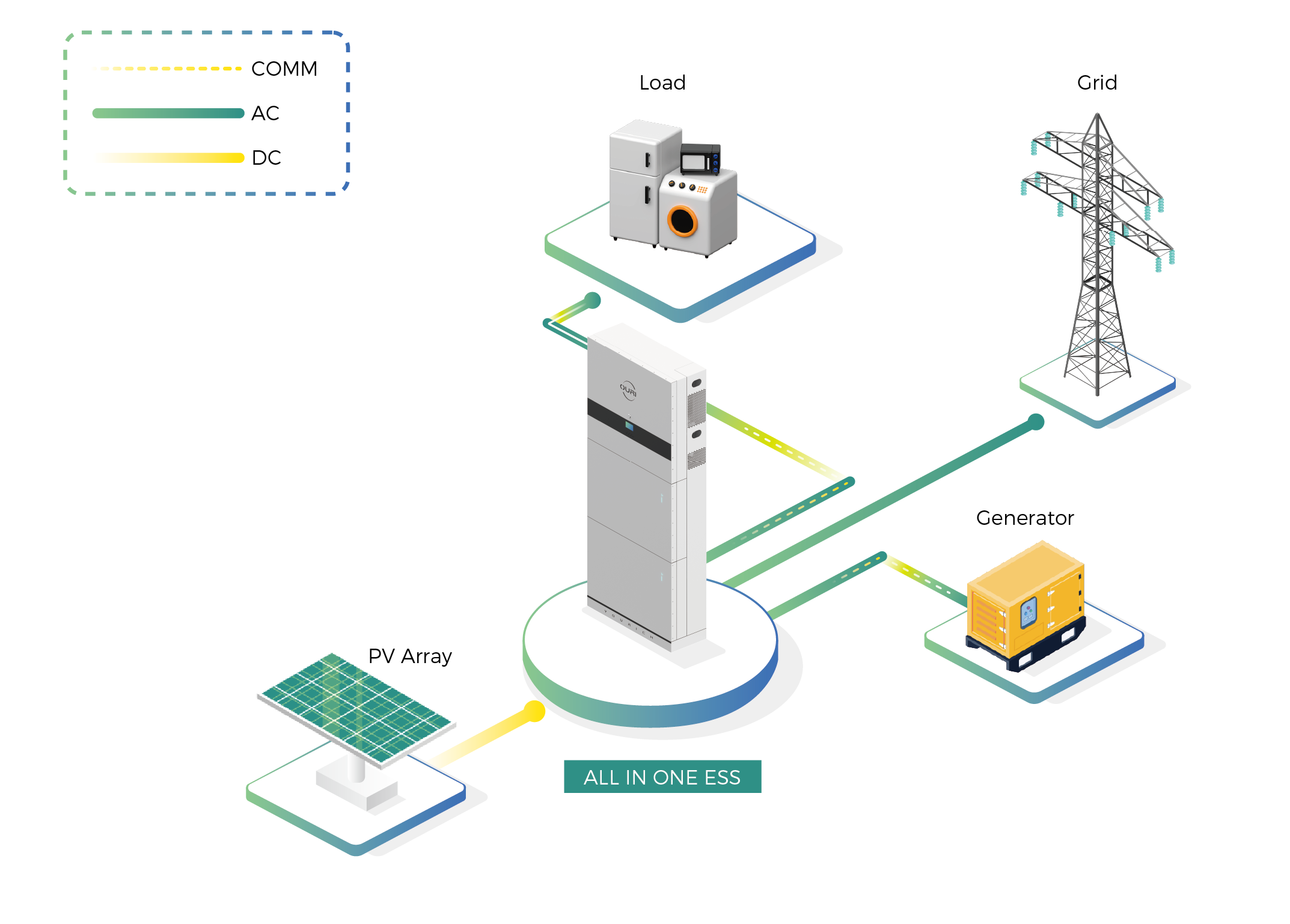
A battery management system monitors cell voltage, temperature, current and state data. It balances cells, calculates SOC and SOH, controls charge and discharge limits, and sends protection or fault signals to the inverter and energy-management system.
In an energy-storage battery, the BMS is the control layer that keeps thousands of cells operating inside their safe electrical and thermal limits. Its communication with the battery pack, inverter and system controller directly affects usable capacity, power availability, fault response and long-term stability.
Conclusion
CATL leads the overall 2025 China energy-storage BMS shipment ranking. GaoTe Electronics leads the independent third-party segment. BYD, Huawei Digital Power, CALB, EVE Energy, Sungrow, LIGOO, KELONG and Genway complete the top 10.
For a complete storage battery, the BMS brand should be evaluated together with the cell supplier, inverter communication, system voltage, current limits and after-sales responsibility. CVC can help distributors and integrators match the battery, BMS and inverter package with the right factory supply.
Find a suitable BMS battery solution
Ranking Data Sources
The ranking is based on a CVC cross-check of industry research, company disclosures, project and tender evidence, and channel research. The source organizations and market references are listed below:
- GGII — Gaogong Industry Research Institute, including its energy-storage BMS industry and shipment research.
- GGII research methodology, covering industry databases and cross-checking across the supply chain.
- China Energy Storage Alliance / CNESA research platform, used for China energy-storage market and project references.
- CNESA DataLink research reference, used for energy-storage market data cross-checking.
- National Energy Administration, used for national energy-storage development context.
These links document the source categories and market context. The TOP10 order follows the metric, scope and weighting rules stated above.

Peter Yin
Request BMS battery sourcing support
Send your battery capacity, BMS brand preference, inverter requirement and target market. CVC can help connect the project with a suitable factory supply.