
When Indonesian homeowners, business owners and distributors look for backup power, the requirement is usually straightforward: keep essential equipment running when PLN power goes off.
They are not necessarily looking for a genset diesel. They are looking for reliable electricity for refrigerators, lighting, internet equipment, fans, water pumps, security systems and office equipment.
This is why solar-plus-battery storage is becoming a practical alternative for daily backup. The most useful transition is often not to remove every generator immediately, but to let solar and batteries handle short and frequent backup events while the genset diesel remains available for long-duration emergencies.
Why Genset Diesel Is Still Common in Indonesia
Indonesia’s geography includes many islands and remote communities. In locations where grid access or reliability is limited, diesel generators have been used because they can operate independently of the PLN network.
That availability makes a genset diesel useful. It does not mean that users prefer its operating experience. In many projects, the generator was selected because it was the familiar way to solve a backup problem.
Today, PV panels, hybrid inverters and modular batteries make it possible to separate two jobs: using clean solar energy and stored energy for regular backup, while keeping the generator for longer periods when solar production and battery capacity are not enough.
The Real Need Is Power Continuity
When a customer asks about a backup system, we translate the request into operating conditions. We confirm which circuits must stay online, whether the transfer should be automatic, and how long the critical loads need to run.
- Can refrigerators and freezers continue operating during a PLN outage?
- Will lighting, internet, fans and security systems remain available?
- Can water pumps and other motors start normally?
- Does the system transfer automatically without manual rewiring?
- How many hours of backup are required?
- Should the existing genset diesel be retained for extended outages?
This list changes the design. A system intended for lighting and networking has different power and capacity requirements from a system that also supports pumps, compressors or workshop equipment.
What Makes Genset Diesel Difficult to Use Every Day?
Indonesian users commonly identify several practical problems with diesel or fuel-powered generators.
| Operating issue | What the user experiences | How battery storage changes the routine |
|---|---|---|
| Noise and vibration | Engine noise is inconvenient at night and near homes, hotels, offices or shops. | Battery backup operates quietly without a running engine. |
| Odor and exhaust | Fuel odor and exhaust require ventilation and careful exhaust routing. | No direct exhaust is produced while the battery is discharging. |
| Fuel cost | Every operating hour consumes fuel, even when the load is relatively small. | Solar can recharge the battery and reduce generator operating hours. |
| Fuel logistics | Fuel must be stored, transported and protected from leakage or contamination. | The system removes fuel handling from short-duration backup events. |
| Maintenance | Oil, filters, engine testing and mechanical servicing are required. | Maintenance focuses on electrical protection, inverter operation and battery condition. |
| Partial-load operation | A generator may run inefficiently when only a few small loads are connected. | Battery output can follow the actual critical load. |
Why Solar + Battery Storage Fits the Daily Backup Role
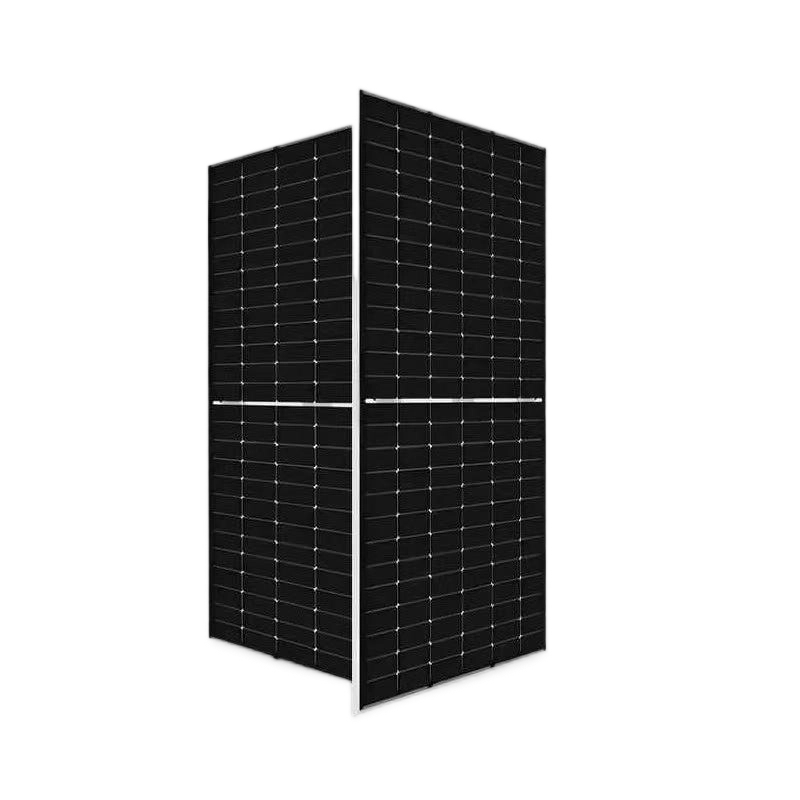
A properly designed solar battery system can support selected circuits when PLN power fails. The hybrid inverter isolates the backup loads from the grid and supplies them from the battery. During normal operation, solar energy can serve the active loads and recharge the battery.
| Factor | Genset diesel | Solar + battery storage |
|---|---|---|
| Energy source | Requires diesel supply during operation. | Solar can recharge the battery; no fuel is required during battery operation. |
| Response | Requires generator start-up and source transfer. | Can provide automatic backup through a properly configured hybrid inverter. |
| Daily operating cost | Fuel is consumed whenever the engine runs. | Stored solar energy can cover repeated short outages. |
| Site experience | Noise, vibration, odor and exhaust are part of operation. | Battery operation is quiet and produces no direct exhaust. |
| Scalability | Higher demand may require a larger or additional generator. | Modular batteries and inverter capacity can be expanded when the design allows. |
Three Practical Transition Paths in Indonesia
Residential backup
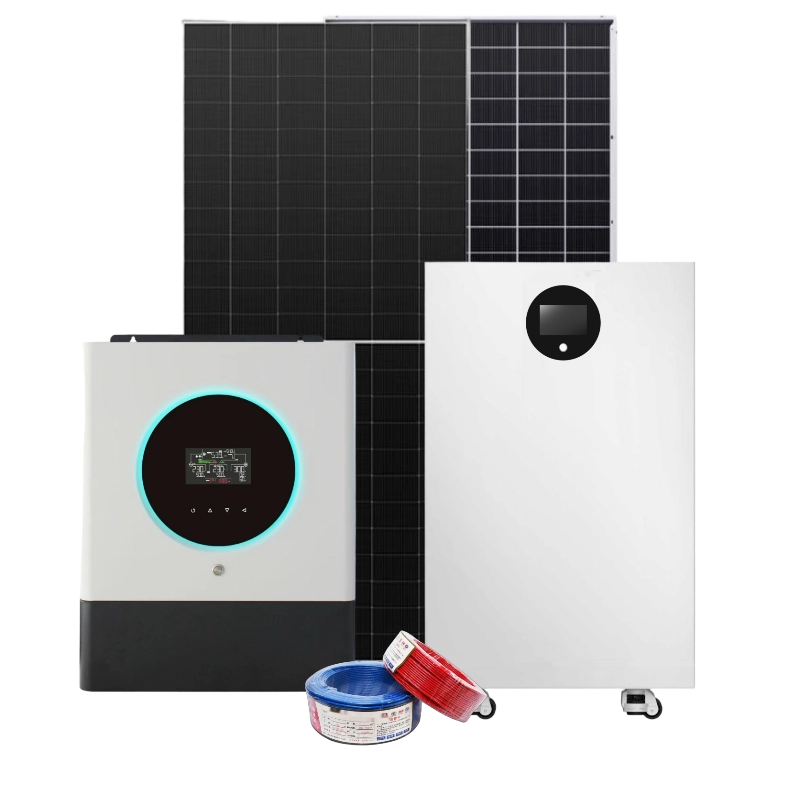
For a home, the system normally combines PV panels, a hybrid inverter, battery storage, protection devices and a critical-load distribution board. The battery can support lighting, refrigeration, internet equipment, fans and selected sockets. Non-essential loads can remain disconnected during an outage to extend runtime.
Small commercial backup
Shops, offices, clinics and restaurants should separate critical loads from non-critical loads. This keeps refrigeration, lighting, communications, payment equipment and security online without sizing the battery for every appliance in the building.
Remote island and off-grid hybrid systems
Remote facilities can combine PV, battery storage, a hybrid inverter or PCS, PLN where available, EMS control and a genset diesel. Solar and battery power take priority during normal operation. The generator starts when the battery reaches its operating limit, solar production is insufficient for an extended period, or the site requires long-duration backup.
How the Installation and Safety Questions Are Answered
Customers do not buy only a battery. They buy a system that must coordinate PLN, PV, battery storage, inverter output and, in some cases, a genset diesel.
How does the battery connect to the home distribution board?
The installer first identifies the critical circuits. The hybrid inverter supplies these circuits through a backup output or dedicated critical-load distribution board. The design must confirm cable sizing, protection devices, grounding, isolation and the inverter’s continuous and surge output.
Is ATS or AMF required?
ATS and AMF requirements depend on the architecture. ATS manages transfer between power sources. AMF can detect mains failure and control genset diesel start and stop. A battery inverter may manage its own backup transfer, but a system that includes PLN, battery and generator still needs coordinated source isolation and control.
How is reverse power flow prevented?
The design must include anti-islanding protection, correct isolation devices and appropriate inverter settings. The installer must verify that battery or generator output cannot feed back into the PLN network during an outage or outside the approved operating mode.
How is compatibility confirmed?
We match the battery and inverter using the actual electrical and communication requirements. The review covers nominal and working voltage, charge and discharge current, inverter power, CAN or RS485 communication, pin definition, protocol, firmware and the supplier’s compatibility list.
For a first technical reference, buyers can review CVC’s inverter solutions and compatibility information, then request model-specific confirmation before placing an order.
How are heat, degradation and replacement managed?
Indoor installation does not remove the need to check temperature, humidity, ventilation, clearance, protection rating and thermal protection. The battery warranty should also state the operating conditions, cycle requirements, end-of-warranty capacity, throughput limits and replacement process.
How to Size the Battery for Backup
Battery selection begins with the actual critical-load list, not with a preferred nominal capacity.
Required Battery Capacity = Critical Load × Backup Time ÷ Usable DoD ÷ System Efficiency
The calculation must also include continuous power, motor-starting surge, inverter efficiency, usable SOC range, temperature, battery aging and reserve capacity.
kWh describes stored energy. kW describes the power that the inverter and battery can deliver at one time. A battery may have enough kWh for several hours but still fail to start a pump if the inverter and battery current are not sufficient.
What to Check Before Choosing the Battery
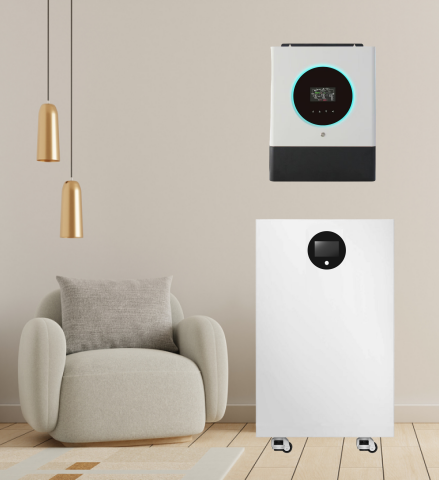
- Usable capacity: Confirm nominal capacity, usable capacity and the permitted SOC range.
- Continuous and peak current: Check whether the battery can support the inverter and motor-starting demand.
- Voltage range: Confirm nominal voltage, cell count, working voltage, maximum charge voltage and inverter battery window.
- BMS communication: Verify CAN or RS485, pin definition, protocol, firmware and alarm behavior.
- Compatibility documents: Request the battery datasheet, inverter list, installation manual, warranty and certification documents.
- Environmental fit: Check temperature, humidity, ventilation, clearance, protection rating and thermal management.
- Warranty and replacement: Confirm end-of-warranty capacity, operating conditions, throughput limits, spare parts and service process.
- Generator integration: If the existing genset diesel remains, confirm generator input, ATS/AMF control and EMS coordination.
How CVC Helps Indonesian Buyers Source the Right System
CVC is an energy storage trade company and supply-chain matching partner. Our role is to connect distributors, installers and project buyers with suitable battery and inverter manufacturers, then coordinate the technical and commercial documents needed for a real purchase decision.
For an Indonesian project, we can help organize:
- Battery and hybrid inverter supplier matching
- Low-voltage or high-voltage system comparison
- Deye, Growatt and other inverter compatibility checks
- BMS communication and model-specific document confirmation
- Datasheets, manuals, warranty and certification documents
- Samples, factory coordination, bulk quotations and export arrangements
Buyers can compare CVC’s energy storage battery range, review technical documents in Downloads, and send the country, load list, existing inverter or genset diesel information and target quantity through our project inquiry form.
Final Recommendation
Indonesia’s demand for genset diesel is driven by the need for backup power, not by a preference for noise, exhaust, fuel handling or engine maintenance.
Solar-plus-battery storage can take over the daily backup role for many homes, shops, offices and small commercial facilities. It can reduce generator runtime, lower fuel consumption and provide quieter automatic backup power.
The practical answer is often not “battery instead of generator.” It is:
The transition should be based on the critical-load list, outage pattern, inverter compatibility, transfer method, local installation requirements and long-term service plan.
FAQ
Can a battery system work during a PLN outage?
Yes, if the hybrid inverter and backup distribution system are designed correctly. The actual backup loads depend on the system capacity and circuit arrangement.
Does every battery system need ATS?
No. The requirement depends on the inverter, generator connection, source-isolation design and local electrical requirements.
Can an existing genset diesel be retained?
Yes. The battery can handle short outages while the generator remains available for extended backup periods.
How long will the battery provide backup?
Backup time depends on usable capacity and the actual critical load. The same battery can provide different runtimes in different buildings.
Is a 10kWh battery always enough?
No. Capacity must be matched with load power, backup duration, surge demand, usable SOC range and inverter output.

Peter Yin
Send a Project Inquiry
Tell us your country, critical loads, backup time, existing genset diesel or inverter, target capacity and estimated quantity.