
A supplier sends you a folder containing CE, UL, IEC, UN38.3, MSDS and ISO 9001. The quotation looks complete. But battery certification verification begins only when you compare every document with the exact battery being quoted.
The certificate says 51.2V 100Ah. The quotation says 51.2V 280Ah. The report covers a cell, while the supplier is selling a complete battery pack. The file may be genuine and still be the wrong document for your order.
Counting certificates is the wrong test. The only question that matters at this stage is:
Is this certificate for the exact battery model, configuration and market I am buying for?
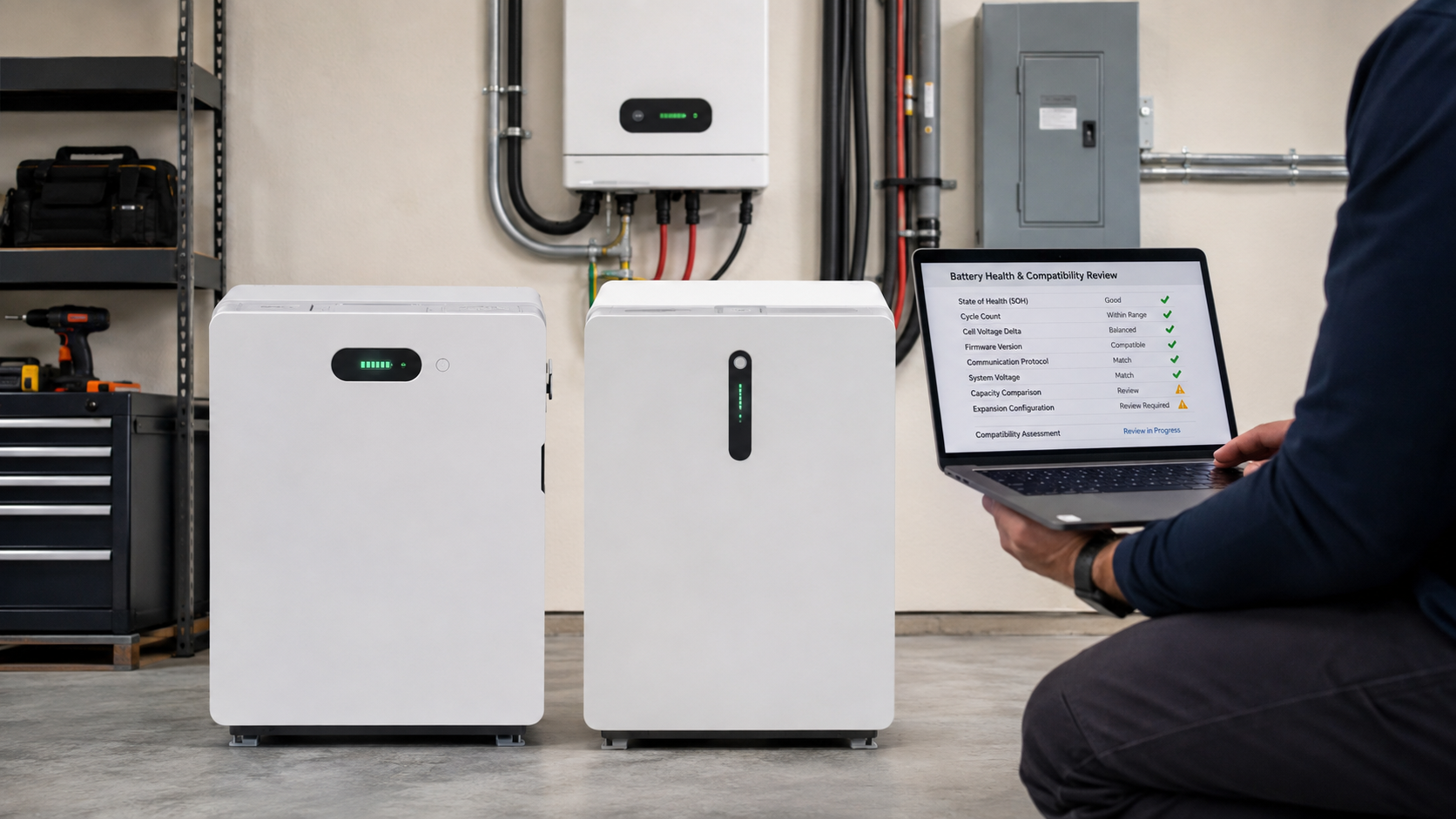
Start with the product identity
Before reading a certificate, write down the battery identity:
- model number;
- nominal voltage;
- capacity;
- chemistry;
- cell arrangement;
- BMS version;
- enclosure;
- communication interface;
- parallel configuration;
- target market.
A model name is the link between the datasheet, manual, test report, certificate and quotation.
Take a concrete low-voltage example: a published 51.2Vdc LiFePO4 specification may list 3.6kWh to 14.4kWh capacity options, a 41.6V to 58.4Vdc operating range, and CAN, RS485 and WiFi communication. Those figures define a battery platform; they do not prove that a certificate covers every capacity, enclosure or final system configuration. The exact model and configuration still have to match the quotation.
A document for one model should not automatically be used to prove compliance for the other.
A home battery has more than one evidence layer
The product itself is built in layers:
Cell → Module → Battery pack → Energy storage system
The same structure applies to technical documentation.
A cell test report describes the cell; it does not certify the complete battery pack. A battery-pack test does not automatically cover the final enclosure, BMS, communication board, parallel configuration, complete energy storage system or inverter connection.
Ask the supplier exactly what the document covers. That one question removes a surprising amount of confusion.
The datasheet comes before the certificate
A certificate cannot fix an incomplete datasheet. Before reviewing the certificate package, check whether the product data clearly states the following:
| Data field | Why it matters |
|---|---|
| Nominal voltage | Determines the basic battery system class |
| Operating voltage range | Must fit the inverter battery input range |
| Nominal and usable capacity | Separates stored energy from deliverable energy |
| Continuous charge current | Affects charging design and protection |
| Continuous discharge current | Affects inverter and load support |
| Peak discharge current | Affects short surge events |
| Recommended DOD | Affects usable energy and life |
| Cycle-life test conditions | Makes cycle claims comparable |
| Working temperature | Matters in hot and cold markets |
| IP rating | Helps define the installation environment |
| Dimensions and weight | Affects transport and installation |
| Communication interface | Affects inverter compatibility |
| Parallel limit | Affects system expansion |
If a supplier claims 6,000 cycles but does not state the charge rate, discharge rate, depth of discharge, temperature and end-of-life capacity, the number is incomplete. Without those conditions, the claim is not ready for comparison.

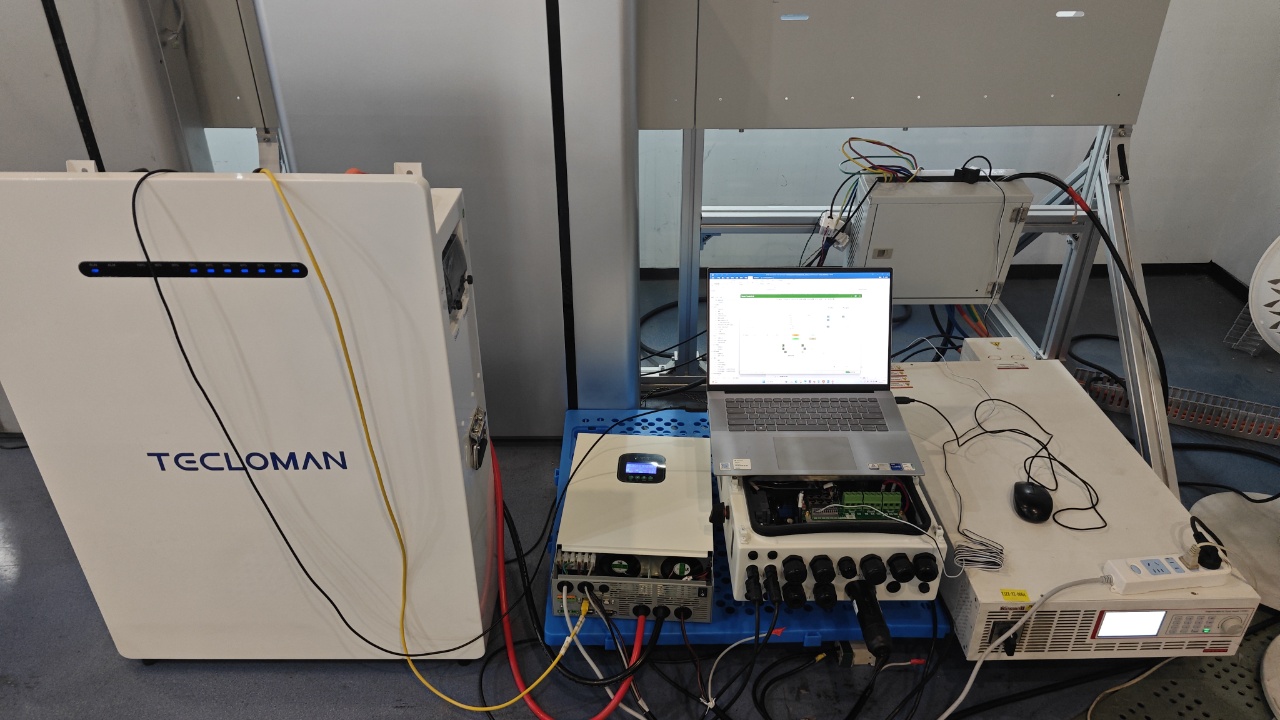
Certification names describe different jobs
| Document or reference | What it helps establish | What it does not prove by itself |
|---|---|---|
| Product safety test or certification | Performance against a specified safety standard | That every product in the supplier’s catalogue is covered |
| CE-related technical documents | A conformity route for applicable European requirements | That a CE logo alone proves every requirement |
| UN38.3 | Battery transport testing | Permission for home installation or grid connection |
| SDS/MSDS | Chemical, handling and transport information | Product safety certification |
| RoHS documentation | Restricted-substance compliance information | Battery performance or inverter compatibility |
| ISO 9001 | Quality management system | Certification of a particular battery model |
| BMS protocol document | Communication and control information | Electrical safety approval |
The target country matters. The battery model matters. The final system configuration matters. A supplier should confirm all three before quotation.
Ask these seven questions about every certificate
1. What is the exact model number?
Check every character. A different capacity, enclosure, voltage or product suffix may mean a different product.
2. Who is the certificate holder?
The holder may be the cell manufacturer, battery-pack manufacturer, brand owner, system integrator or trading company. The holder should make sense for the product being sold.
3. What product level does the document cover?
Ask whether it covers cells, modules, battery packs, cabinets or complete energy storage systems.
4. What standard and version were used?
“IEC tested” is not enough information. The document should identify the applicable standard and edition. The exact requirement depends on the market and product category.
5. Which body issued the document?
Look for the organization name, report or certificate number, issue date, verification method and scope statement.
6. What configuration was tested?
Check the voltage, capacity, cell arrangement, BMS, enclosure, number of modules, parallel operation and firmware where relevant.
7. Does the certificate match the rest of the file package?
The model, capacity, voltage and manufacturer should agree across the datasheet, installation manual, certificate, test report, quotation, packaging label and warranty.
If the files disagree, pause the quotation and ask for clarification.
Five supplier statements that require follow-up
“Our whole range is UL certified.”
Ask for the exact model list and certificate scope.
“We support CE, IEC and UN38.3.”
Ask which document belongs to which product and which requirement.
“The battery is compatible with all major inverters.”
Ask for the inverter brand, model, communication protocol, pin definition, baud rate, firmware requirement and matching record.
“The battery has 6,000 cycles.”
Ask for the charge rate, discharge rate, depth of discharge, test temperature, end-of-life capacity and whether the test was performed on a cell or the complete pack.
“The battery can be used directly in residential projects.”
Ask which country and which installation route the statement applies to.
A general sentence cannot replace a model-specific document package.
A 51.2V 100Ah quotation example
Imagine a customer requests a 51.2V 100Ah LiFePO4 battery, a 5kW hybrid inverter, CAN communication, multiple batteries in parallel and residential installation in a defined destination market.
The supplier should provide:
- Product datasheet;
- Installation and user manual;
- Continuous and peak current limits;
- BMS communication protocol;
- Inverter compatibility list;
- Parallel configuration instructions;
- Applicable test reports and certificates;
- UN38.3 transport documentation;
- SDS/MSDS;
- Warranty terms;
- Cycle-life test conditions;
- Confirmation that the documents cover the quoted model.
A single image showing “51.2V, 100Ah, 6,000 cycles, CE” is only a product card. It is not a complete technical package and it is not enough for engineering review, customs preparation or project approval.
What a credible document package looks like
A credible supplier should identify the responsible party, state the exact model scope and explain any destination-market limitation. If documents come from manufacturing partners, that relationship should be stated; final availability should be confirmed against the quoted model and market.
A public certifications library or downloads library is useful only when each file can be connected to the exact order. That is the level of detail a quotation process should reach.
Copy this document request to your supplier
Please provide the following documents for the exact battery model quoted:
1. Product datasheet
2. Installation and user manual
3. BMS communication protocol
4. Inverter compatibility list
5. Parallel connection instructions
6. Applicable test reports and certificates
7. UN38.3 test summary or report
8. SDS/MSDS
9. Warranty terms
10. Cycle-life test conditions
11. Factory quality-control and traceability information
12. Confirmation of certificate scope for the quoted model and destination market
Add the battery model, inverter model, target country and estimated quantity to the email.
Do not ask for “all certificates.” Ask for the documents that apply to the exact order.
Frequently asked questions
Does a CE logo prove that a home battery is certified?
No. Review the applicable technical documents, conformity information, product model and market requirements. A logo alone is not a complete verification package.
Is UN38.3 an installation certification?
No. It is associated with lithium battery transport testing. It should not be presented as proof that a battery is approved for every residential installation or grid connection.
Does ISO 9001 certify the battery product?
ISO 9001 relates to a quality management system. It does not, by itself, certify the performance or safety of a particular battery model.
Can a cell certificate be used for a complete battery pack?
Not automatically. The pack has additional components, including the BMS, wiring, enclosure and protection system. Confirm the document scope.
What information does CVC need before providing a document package?
Send the exact battery model, target country, inverter model, project type, requested capacity, estimated quantity and the documents required for customs, installation, bidding or sales.

Peter Yin
Request a model-specific battery document review
Send the exact battery model, target country, inverter model, project type, requested capacity and estimated quantity. We can help you identify which documents belong to the quoted battery and which items still need confirmation.