
Introduction: a 120-unit order can be a brand launch
This Vietnam home battery OEM project began with 120 battery packs, too small for a completely new platform but large enough to launch a private-label home storage brand because the buyer already had local channels and a clear product direction.
That was the starting point for a Ho Chi Minh City solar-storage integration and trading company. The customer serves villa renovation, rooftop solar retrofit, and residential grid-connected projects. It asked CVC to develop a private-label battery brand for a 120-unit pilot, with a commercial plan to build toward repeat orders of more than 500 units per year.
CVC turned that commercial plan into a controlled product project. Alongside our energy storage battery OEM/ODM service, we coordinated an Anhui manufacturing partner, selected an existing battery platform, defined the tropical-market modifications, checked inverter communication, and prepared the evidence package for certification and local project registration.
The important distinction is simple:
A 120-unit OEM project is a low-MOQ private-label or certificate-derivative launch based on an existing platform. It is not a complete hardware, BOM, or firmware redesign at the same volume.
The customer and the Ho Chi Minh market brief
The customer is a local, upper-tier solar-storage integrator and trading company in Ho Chi Minh City. It does not want to compete as a low-price volume seller. Its existing business is built around customers who need a complete residential energy solution and dependable local support.
The customer presented five commercial requirements, which became the project design brief:
- The first shipment is 120 customized battery packs for market testing.
- The target is 500 or more units in annual repeat orders after validation.
- The product must carry the customer’s own brand through a private-label arrangement.
- The battery must suit hot, humid, coastal and rainy-season conditions around Ho Chi Minh City.
- The system must be capable of working with rooftop PV, backup loads, and the customer’s EVN grid-connection process.
The brief also divides the target market into two product groups:
- Middle-income self-build homes: typically a 10-14 kWh low-voltage wall-mounted battery.
- Higher-end villas: a stackable system that can expand into the 15-28 kWh range.
In the customer’s sales discussions, planned summer outages made whole-home backup a primary buying reason. The second reason was using rooftop solar during the day and reducing evening grid consumption during the 17:30-22:30 peak period. These points shaped the product split for this project; they are not presented as a national market survey.
The customer also reports that local buyers worry about service failures, swelling, capacity fade, moisture damage, and difficult repairs. For this segment, stability and serviceability matter more than the lowest quotation.
What a normal home battery OEM or ODM project includes
Most energy storage OEM/ODM projects contain several layers. The buyer may ask for one layer or all of them:
- Brand name, logo, rating label, carton, manual, and local-language packaging.
- A proven battery platform with a defined capacity, voltage range, enclosure, and expansion method.
- BMS settings, communication protocol, inverter pairing, monitoring and alarm behavior.
- Environmental changes such as sealing, conformal coating, thermal management, corrosion protection, or cable-entry changes.
- Product samples, validation testing, certification documents, inspection records, and shipping files.
- A repeatable quality plan covering cells, incoming parts, production batches, spare parts, and after-sales support.
The depth of customization determines the certification and cost route. Logo, packaging and permitted certificate-derivative work can often be based on an existing product platform. A change to the cells, BOM, hardware, BMS strategy, enclosure topology or firmware is a different project. It may require new testing and a new certificate route.
How CVC handles a 100-120 unit private-label route
Our approach is deliberately practical. We do not present a 120-unit order as a miniature factory development program. We treat it as a controlled launch on a mature platform.
1. Start with the customer’s market and load profile
We separated the two use cases: low-voltage wall-mounted storage for typical homes, and expandable storage for villas. We confirmed backup loads, PV size, target inverter, required capacity, installation location, voltage, and local documentation.
2. Select a platform that already has usable evidence
We selected a platform with a stable cell and BMS configuration, an established production process, and a documented compatibility route for the selected inverter. This kept the pilot focused on the customer’s market instead of spending the budget on a new laboratory design.
3. Use a permitted private-label or certificate-derivative arrangement
For this project, the customer’s brand was recorded through the permitted private-label and certificate-derivative route. The Chinese factory remained the manufacturer shown in the required technical and marking documents. Manufacturer information was not removed.
The 120-unit route kept the approved hardware, BOM and firmware stable. The completed work included the customer logo, Vietnamese nameplate and packaging, model-specific parameter configuration, environmental validation, protocol matching and the supporting document set.
4. Validate the pilot before scaling
The pilot work closed the gaps between the quotation and the field through sample inspection, communication tests, high-temperature and humidity evidence, packaging review, installation feedback, fault records and after-sales response. The 500-plus annual plan now gives both sides a basis for the next certification and product roadmap review.
This is how CVC makes a small OEM order workable without confusing a low-MOQ brand launch with a full redesign.

The implemented Anhui battery package for Ho Chi Minh City
The following records the customer-specific package delivered through CVC’s home storage battery range. The final datasheet, test report and certification file remain the controlling technical documents.

| Project condition | Implemented customization direction | Project evidence |
|---|---|---|
| High temperature | BMS limits charge rate at or above 40°C; Southeast Asia wide-temperature LFP cells; 45°C continuous rated-operation target; high-temperature derating for BMS parts and capacitors | Model-specific temperature, derating and cycle-life records |
| High humidity and condensation | Thicker conformal coating on the cell compartment and BMS board; humidity-resistant cabinet seal; cabinet temperature/humidity monitoring; anti-condensation heater; corrosion-treated terminals and busbars | Coating, seal, dew-point, heater alarm and damp-heat records |
| Coastal salt exposure | C4-level corrosion design; stainless fasteners; neutral salt-spray test at 500 hours | Corrosion standard, sample condition, test method and acceptance record |
| Outdoor or garage installation | IP65 protection; protected airflow and rain/insect design; no unvalidated enclosure openings | IP, cable-gland, drainage, pressure-equalization and thermal-relief records |
| EVN-connected system | Stable BMS communication during grid changes and repeated on-grid/off-grid transitions; compatibility with the inverter’s zero-export control route | Model, firmware, protocol, anti-islanding and zero-export matching record |
| Two residential segments | 10-14 kWh low-voltage wall-mounted direction for standard homes; expandable 15-28 kWh direction for villas | Capacity, expansion, installation and configuration records |
High-temperature controls
The delivered battery is not simply a European model with a new logo. Its BMS strategy limits charging stress when cell temperature rises, and the 45°C operating target is recorded as part of the model-specific technical package.
Humidity and condensation controls
Ho Chi Minh’s risk is not only rain entering the cabinet. Day-night temperature changes can create internal condensation even when there is no obvious leak. The delivered design combines conformal coating, sealing, humidity sensing and surface-temperature control. The anti-condensation heater keeps boards, terminals and relays above the dew point; it is not a method for heating the cells.
Corrosion and outdoor protection
We set C4-level corrosion protection as the project requirement and used stainless fasteners and the agreed salt-spray test route. That does not turn the product into an automatic C4-M or C5-M field-life guarantee. C4 and IP65 describe the tested design scope, not every aspect of condensation or long-term field performance.
CR-Mark and EVN compliance work for the pilot
The compliance route agreed with the customer was staged and implemented:
- The 120-unit pilot used the CR batch COC route specified for the project and its exact battery category.
- The repeat-order roadmap above 500 units per year moves toward the longer-term type certification route agreed with the buyer.
- The Vietnamese buyer held responsibility for local certificate ownership, marking, customs and market compliance.
- The factory supplied samples, BOM information and technical documents and cooperated with the testing body.
- For EVN-connected projects, the local integrator handles project-level registration while the battery supplier provides the applicable certificate and technical file.
CVC prepared the test sample, BOM information and technical file for the agreed route. The project record keeps administrative timing, cost and validity tied to the issued local documents rather than presenting them as universal promises.
The delivered customer pack uses a Vietnamese-language nameplate for the Vietnam market.
Battery and inverter compatibility reference
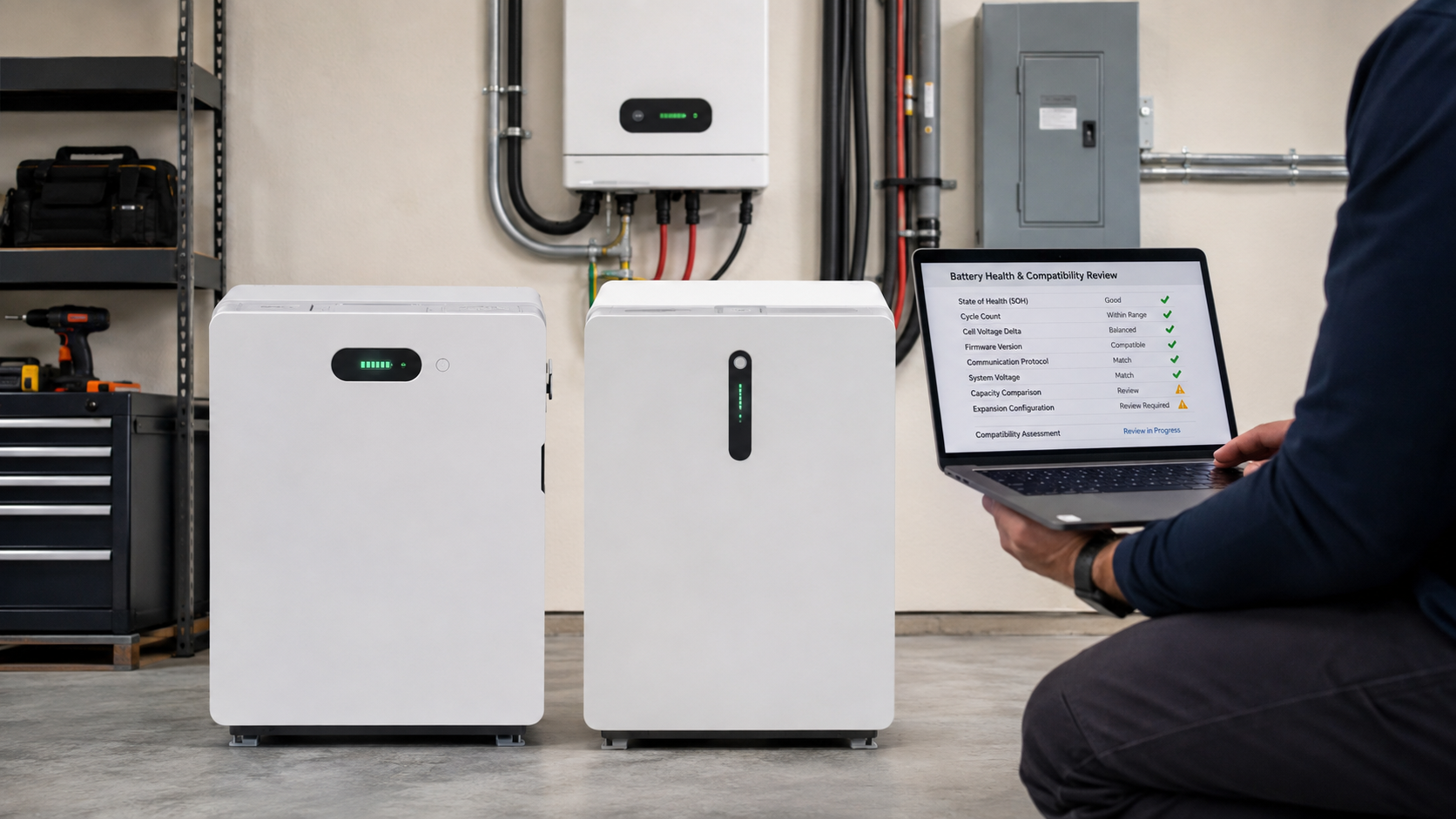
CVC’s Energy Storage Batteries page lists the compatibility starting points used for the project. We matched the selected battery route with the customer’s inverter requirements and recorded the relevant protocol information. The table does not mean that every battery model works with every inverter model, so the exact model, nominal voltage, BMS settings and firmware remain part of the project record.
| Inverter brand | Protocol or profile | Communication |
|---|---|---|
| Deye | Pylon | CAN / RS485 |
| Deye | Low-voltage hybrid inverter | CAN 500 kbps |
| Growatt | Growatt | RS485 / CAN |
| Growatt | Pylon | RS485 / CAN |
| GoodWe | GoodWe | CAN |
| GoodWe | Pylon | CAN |
| Ginlong (Solis) | Ginlong | CAN |
| Victron | CAB-BUS BMS Protocol | CAN |
| Victron | Victron | CAN |
| SMA | FSS-ConnectingBat-TI-en-10 | CAN |
| SMA | SMA | CAN |
| Luxpowertek | Luxpowertek | RS485 / CAN |
| MEGAREVO | MEGAREVO | RS485 |
| Voltronic | Pylon | RS485 |
| Voltronic | Voltronic | RS485 |
| Sofar | Pylon | RS485 |
| Sofar | Sofar | CAN |
| SRNE | Pylon | RS485 |
| SRNE | PACE | RS485 |
| SRNE | WOW | RS485 |
| Afore | Afore | CAN / RS485 |
| Aiswei | Aiswei | CAN |
| GT | RS485 Inverter | RS485 |
For the Vietnamese pilot, the matching file should also record zero-export requirements, transfer behavior, inverter firmware, battery voltage, required capacity, PV input, backup load and any generator requirement. A protocol name alone is not a commissioning approval.
What the delivered 120-unit route included and excluded
Included in the delivered route
- Customer logo, approved nameplate, carton, manual and brand presentation.
- A mature low-voltage wall-mounted platform and an expandable villa platform.
- Model-specific BMS parameters that are permitted within the existing product and certificate route.
- Tropical-market validation targets for temperature, humidity, condensation, corrosion and rain exposure.
- Battery-to-inverter communication testing and a model-specific compatibility file.
- A pilot inspection, spare-parts and after-sales response plan.
Kept outside the delivered scope
- A completely new cell selection, enclosure topology, BOM or firmware at the same 120-unit cost and timing.
- Removal of the Chinese manufacturer’s required information.
- Universal compatibility with all EVN-connected inverter combinations.
- A C4, IP65, CR-Mark or 500-hour claim without the corresponding evidence and acceptance criteria.
- A fixed certificate cost or approval period outside the issued local compliance documents.
If the next phase requires a new battery architecture, deep BMS changes, a customer-owned inverter design or a new all-in-one system, CVC will treat it as a separate engineering and certification workstream.
Client feedback and the next development plan
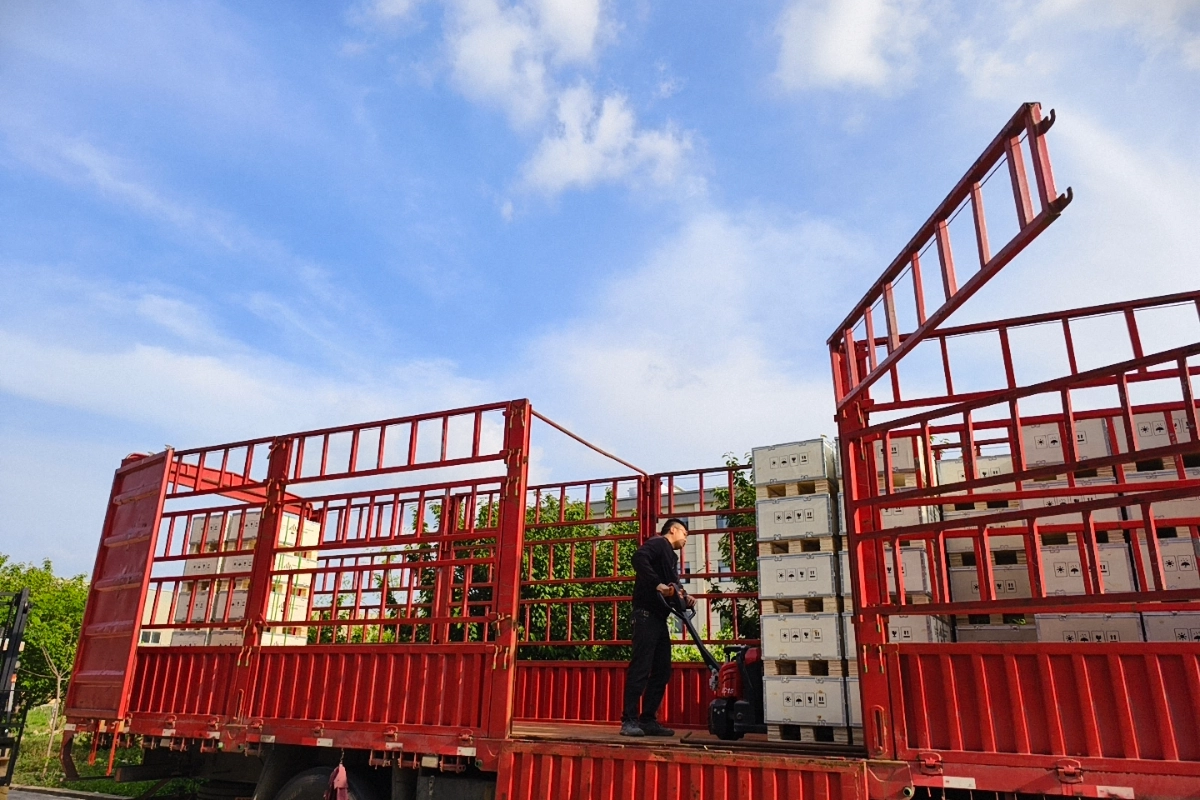
The customer recognized two parts of the completed project: CVC’s response speed and the practicality of the delivered solution. That mattered in a small pilot. A delayed answer on a protocol, seal, test report or label can hold up an entire local sales launch.
The customer’s next development interests include:
- Deeper battery product modifications after field data is available.
- Inverter customization and tighter zero-export or grid-control integration.
- A combined all-in-one battery and inverter product for selected residential segments.
These are the customer’s next development directions, not released products. The completed 120-unit route gives both sides the field data needed to lock the repeat-order configuration and decide which changes justify a separate engineering budget. The commercial roadmap can then move into distributor cooperation with a configuration that has real field feedback behind it.
FAQ
Can a Vietnamese brand start with only 120 battery packs?
Yes, when the project uses a proven platform and a permitted private-label or certificate-derivative route. It should not be presented as a complete hardware redesign.
Can the battery be used in an EVN-connected system?
The delivered battery package communicates with the selected inverter route and supports the required system logic. The local integrator remains the project-registration owner for each exact inverter, firmware and zero-export configuration.
Does IP65 or C4 prove that the battery will not fail in Ho Chi Minh City?
No. IP65 and C4 are design or test references, not a complete field-life guarantee. Sealing, condensation control, corrosion evidence, installation and maintenance all matter.
What should the buyer send before the pilot quotation?
Send the target capacity, voltage, backup loads, PV size, inverter model, communication protocol, installation location, local marking requirements, certification route, annual volume plan and after-sales expectations.
Can CVC also develop an inverter or all-in-one system later?
Yes. The customer has already asked CVC to scope deeper battery changes, inverter customization and an all-in-one system as separate validation and development workstreams.
Conclusion: build the first 120 units around a repeatable system
The value of this Anhui project is not the number 120 by itself. It is the fit between a Vietnamese customer’s existing channels, a clear two-segment product plan, a controlled private-label route, tropical environmental requirements, inverter communication and a staged compliance plan.
For a pilot quotation, send CVC the target battery capacity, inverter model, backup loads, PV input, installation environment, local marking requirements and expected repeat volume. You can also attach the first technical file through Downloads or contact CVC for a project review. We can then confirm which parts belong to the existing platform, which parts require additional validation, and whether the 120-unit route is commercially sensible.

Peter Yin
Discuss a Vietnam Private-Label Battery Project
Send us your target capacity, inverter model, backup loads, installation environment, local marking requirements and expected repeat volume. We will map the next technical and commercial step.