
A distributor receives a familiar request: “My customer wants a 10kWh home battery. What inverter should we quote, and how long will it run the house?”
The number sounds specific, but the request is not ready for a quotation. A 10kWh battery may be more than enough for lights, a router, fans, and a refrigerator. It may be inadequate if the customer also expects to run air conditioning, an electric water heater, or a large pump through a long outage. The answer changes again when solar charging, grid availability, starting surges, and the required battery reserve are included.
Professional buyers should therefore size the backup system from a critical-load schedule, not from the battery capacity printed in a competitor’s brochure. The objective is not to power every appliance without limits. It is to define which loads must stay on, how many hours they must operate, and which high-power loads should remain outside the backup circuit.
Start with the backup promise
For a concrete high-capacity comparison, review the M16S280BL-YV 14.3kWh movable battery and M16S314BL-YV 16kWh LiFePO4 battery after calculating the required usable energy.
Before calculating battery capacity, agree on what the end customer is buying. “Home backup” can mean several different things:
- keeping communications, lighting, refrigeration, and security online during an outage;
- supporting selected household loads overnight;
- increasing solar self-consumption in the evening;
- operating a weak-grid home with regular charging opportunities;
- supplying most household circuits, including one or more high-power appliances.
These are different system designs. They require different battery capacities, inverter ratings, switching arrangements, and customer instructions.
For distributors, the backup promise should be simple enough for the sales team to explain and precise enough for the installer to deliver. Terms such as “whole-home backup” should not be used until the backed-up circuits, simultaneous power, starting loads, and runtime target have been documented.
Build a critical-load schedule
List the appliances that must operate during the outage. For each load, record four values:
- running power in watts;
- quantity;
- expected operating hours during the backup period;
- starting or surge power, where applicable.
Do not rely only on the label on the front of the appliance. Use the manufacturer’s rated input, an installer measurement, or a realistic duty-cycle assumption. Refrigerators and pumps do not normally run at full power every minute, but their compressors or motors can create a short starting surge. A router may draw little power, yet it may need to remain online for the entire outage.
An illustrative critical-load schedule might look like this:
| Critical load | Quantity | Assumed running power | Use during outage | Energy for the period |
|---|---|---|---|---|
| LED lights | 8 | 10W each | 6 hours | 480Wh |
| Wi-Fi router and optical terminal | 1 set | 25W | 10 hours | 250Wh |
| Fans | 3 | 55W each | 8 hours | 1,320Wh |
| Refrigerator | 1 | 120W while running | 5 equivalent hours | 600Wh |
| Television | 1 | 100W | 4 hours | 400Wh |
| Phone and laptop charging | Mixed | 120W combined | 3 hours | 360Wh |
| Illustrative total | 3,410Wh |
This table is a calculation example, not a runtime guarantee. Actual consumption depends on the appliance model, operating mode, ambient temperature, user behaviour, and compressor or motor duty cycle.
Separate energy from power
Battery capacity and inverter output answer different questions.
- Battery energy, measured in kWh, affects how long the selected loads can run.
- Inverter power, measured in kW, affects which loads can operate at the same time.
- Surge capability affects whether motors and compressors can start without tripping the system.
A system can have enough stored energy for the night and still fail when a refrigerator and water pump start together. The reverse can also happen: a large inverter can start the loads, but a small battery may reach its reserve limit much earlier than the customer expects.
When reviewing a proposal, calculate both the total energy requirement and the highest realistic simultaneous load. Then compare the result with the continuous and peak limits of the inverter, battery BMS, cabling, breakers, and connectors.
Convert load energy into required battery capacity
A practical preliminary formula is:
Required nominal battery energy = critical-load energy / planned usable fraction / estimated system efficiency
The planned usable fraction keeps a reserve and avoids building the sales promise around complete discharge. System efficiency accounts for inverter conversion and other operating losses. Both values must be confirmed for the selected battery, inverter, settings, and operating mode.
Using the 3.41kWh illustrative load schedule above:
- at an 80% planned usable fraction;
- with an illustrative 90% overall conversion factor;
the preliminary nominal capacity would be:
3.41kWh / 0.80 / 0.90 = approximately 4.74kWh
That result does not mean a 5kWh product is automatically the correct quote. The buyer still needs to consider load uncertainty, battery ageing, reserve expectations, temperature, inverter self-consumption, future load growth, and whether the customer may experience a longer outage than the design period.
The useful commercial conclusion is a capacity band. For this example, an installer might evaluate products around 5kWh for a tightly controlled critical-load circuit, then compare a larger step if the customer wants more reserve or longer autonomy. The final model should be selected only after the real load schedule and product data are checked.
Check the loads that change the design
Several household loads can move a project into a different capacity or inverter class.
Air conditioning
Air conditioners add both substantial energy consumption and compressor starting requirements. Inverter-type units can behave differently from fixed-speed units. Record the exact model, rated input, starting behaviour, thermostat pattern, and required operating hours. “One air conditioner” is not enough information.
Water pumps
Pumps often run for short periods but can have a high starting current. Confirm motor power, starting method, lift or pressure conditions, and whether the pump can be scheduled separately from other large loads.
Electric heating and cooking
Kettles, induction cookers, ovens, water heaters, and space heaters can consume several kilowatts. They may be technically possible to run, but including them can increase inverter size, battery current, and storage capacity quickly. Many critical-load designs leave these circuits outside the backup board.
Refrigeration
Refrigerator energy use varies with ambient temperature, door opening, thermostat setting, and appliance condition. Hot climates can increase compressor operation. Use measured or model-specific data when refrigeration is business-critical or medicine-related.
Match the inverter after the load schedule
Once the critical loads are defined, check the inverter in five areas.
First, its continuous backup output must cover the expected simultaneous load with a sensible margin. Second, its surge specification and permitted surge duration must support motor and compressor starts. Third, the battery voltage and BMS current must support the requested AC power after conversion losses. Fourth, the EPS or backup circuit behaviour must match the required transfer and operating mode. Fifth, the model must suit the destination country’s phase, voltage, frequency, and applicable grid requirements.
Battery and inverter communication also needs model-level confirmation. A CAN or RS485 connector alone does not prove compatibility. Buyers should request the approved protocol, cable pinout, firmware requirements, commissioning steps, and current compatibility documentation before presenting a battery and inverter as a supported pair.
See the Battery and Inverter Compatibility Checklist Before Quoting for the technical checks that follow the initial load calculation.
Account for solar and charging windows
The same battery can deliver a different customer experience depending on when it can recharge.
For an overnight backup design, the battery may need to carry the selected loads until morning. In a daytime weak-grid scenario with adequate solar input, PV may supply part of the live load while also recharging the battery. During a multi-day period of poor solar production, the usable energy may need to be protected for the highest-priority circuits.
Ask:
- Is the battery normally charged from grid, PV, or both?
- What PV array and MPPT limits apply?
- Is generator charging required?
- How many hours of useful solar production are realistic at the site?
- Must the system preserve a minimum state of charge for outages?
- Is the customer’s priority backup, solar self-consumption, or both?
Do not subtract an assumed amount of solar energy from the battery requirement unless the solar design and operating conditions support it.
A capacity decision table for channel quotations
| Buyer question | Why it matters | Evidence to request |
|---|---|---|
| Which circuits are critical? | Prevents the quote from implying unlimited whole-home backup | Circuit list or load schedule |
| How long must each load run? | Converts appliance power into energy demand | Required backup hours |
| Which loads start together? | Sets continuous and surge power requirements | Simultaneous-load scenario |
| Is solar available during the outage? | Affects charging and daytime energy balance | PV module and string details |
| What reserve must remain? | Prevents runtime estimates from assuming full discharge | Agreed minimum state of charge |
| What is the installation environment? | Temperature and location affect selection and installation | Indoor/outdoor position and ambient range |
| Will capacity expand later? | Affects battery architecture and first-order design | Expansion target and timing |
| Which inverter is planned? | Determines voltage, current, protocol, and operating mode | Exact model and firmware |
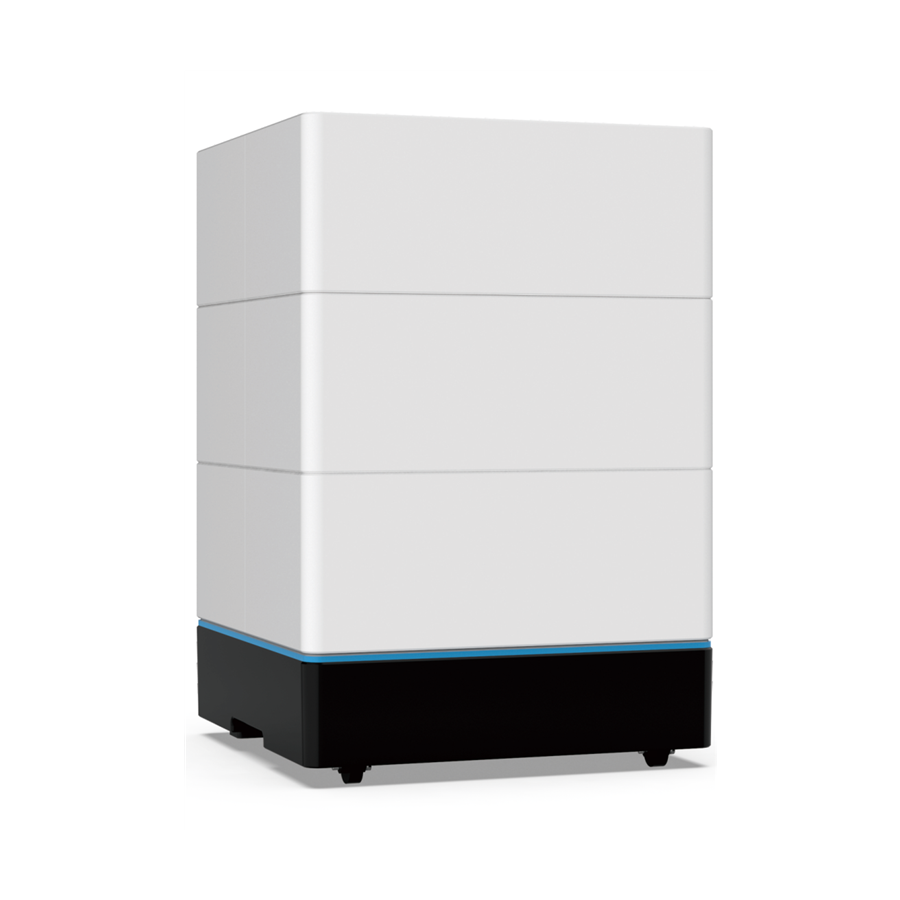
CVC Energy product directions
For low-voltage residential projects, the Firefly Low Voltage LiFePO4 Home Battery provides published modular capacity steps from 3.6 to 14.4kWh. This range gives distributors and installers several starting points for controlled critical-load offers, but the required module count still depends on the load schedule, reserve, current limits, and matched inverter.
For larger single-battery requirements, buyers can review the Firefly Max 16kWh LiFePO4 Home Battery or the IPL-51314H 16kWh LiFePO4 Battery. A larger battery can extend runtime, but it does not automatically increase inverter output or make every household circuit suitable for backup.
High-voltage projects can be evaluated through the Firefly Pro High Voltage Home Battery range. Low-voltage and high-voltage products are not interchangeable. The inverter platform, battery configuration, communication protocol, and installation design must be selected together.
Browse the full Energy Storage Batteries and Inverter Solutions categories before fixing the system architecture.
What distributors should collect before quoting
Send one structured request to the customer or installer:
- destination country and grid type;
- customer type and building type;
- critical appliance list with quantities and rated power;
- required hours for each load;
- motor, pump, compressor, air-conditioner, or heating loads;
- existing or proposed inverter model;
- PV array and generator information;
- indoor or outdoor installation conditions;
- preferred reserve and future expansion plan;
- sample quantity, expected order quantity, and documentation requirement.
This information allows the supplier and installer to challenge an unrealistic backup promise before it becomes a sales or warranty problem.
FAQ
Is a 10kWh battery enough for a home?
It may be enough for a defined set of critical loads, but “a home” is not a load specification. Calculate appliance energy, simultaneous power, surge demand, reserve, system losses, and charging opportunities before selecting the capacity.
Should battery capacity be based on average daily electricity use?
Average daily use can provide context, but a backup design should start with the circuits that must operate during an outage. Non-critical heating, cooking, or cooling loads can distort the capacity requirement if they are included without an agreed operating plan.
Does a larger battery require a larger inverter?
Not necessarily. A larger battery mainly adds stored energy. Inverter size is driven by simultaneous and surge power, while battery and BMS current limits must still support that inverter output.
Can solar panels reduce the required battery capacity?
They can supply daytime loads and recharge the battery when solar conditions and the system design allow it. Solar production should not be treated as guaranteed backup energy without a site-specific PV calculation.
What information is needed for a reliable runtime estimate?
Provide the exact load list, operating hours, duty cycles, surge loads, battery model, planned reserve, inverter efficiency, system settings, ambient conditions, and charging sources. Even then, present runtime as an estimate under stated assumptions.
Turn the load list into a defensible quotation
A good capacity recommendation starts with the loads the customer cannot afford to lose. Send CVC Energy the destination country, critical-load schedule, inverter requirement, PV details, reserve target, installation conditions, and expected quantity. We can help narrow the battery and inverter direction and identify the documents that still require confirmation.
Review available product documents or contact CVC Energy for system matching.

Peter Yin
Discuss a Critical-Load Home Battery Configuration
Tell us your country, critical-load schedule, backup hours, inverter requirement, PV details, reserve target, installation conditions and expected quantity.