
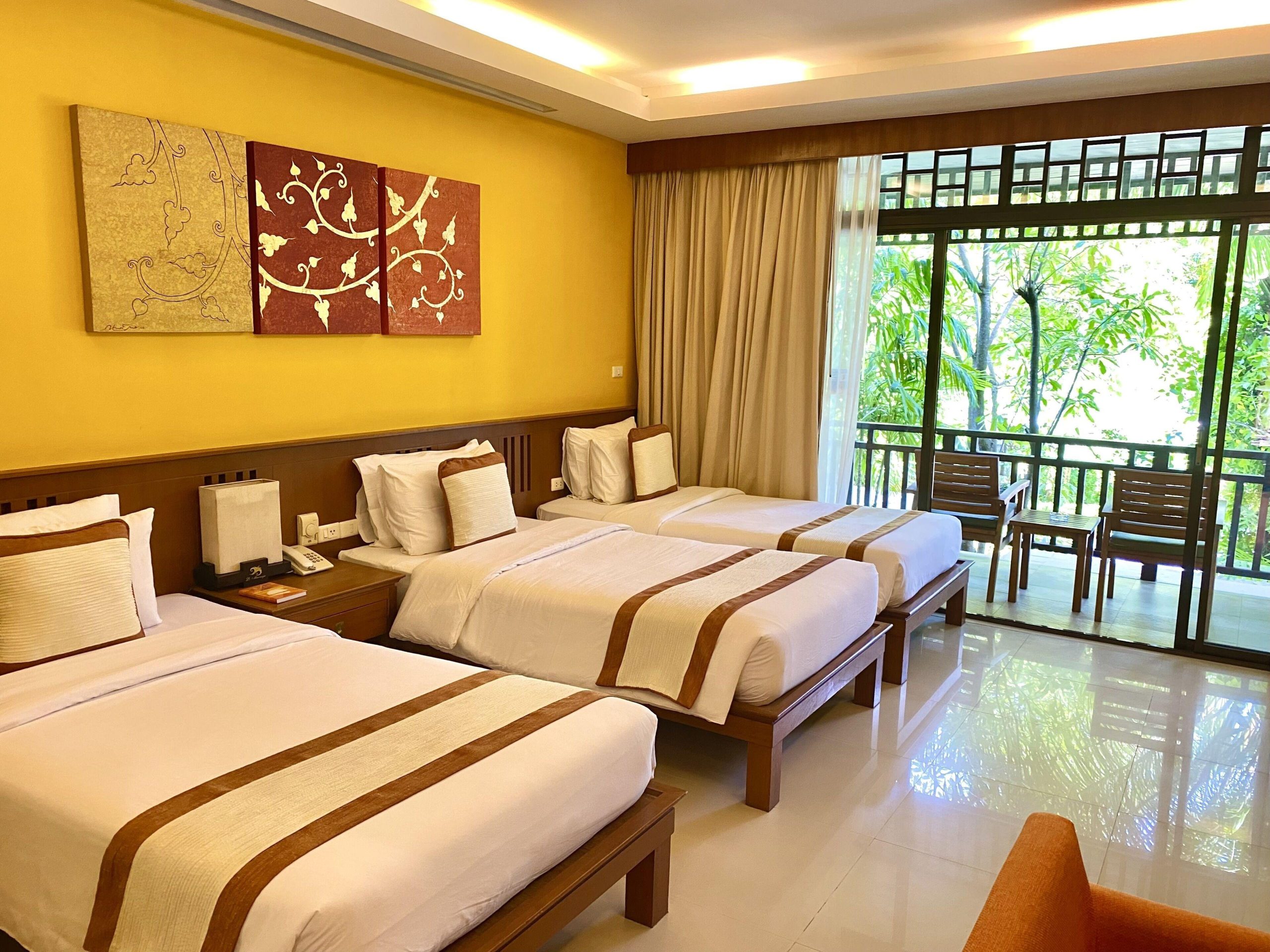
A Thailand distributor recently contacted us to source a 10kWh battery for a hotel group. The request was clear on capacity, but it did not yet describe the operating conditions that determine whether 5kWh, 10kWh or 15kWh is actually suitable.
After we reviewed the project, we found that the customer was serving a chain of hotels on a Thai island. Each hotel has around 30 guest rooms. The sites were previously using solar power directly through grid-connected systems, but the economics of exporting or relying on grid supply had changed. The customer was therefore replacing the original setup with storage for solar self-consumption and short-duration backup.
We checked the confirmed outage pattern, the loads included in the backup scope and the indoor installation environment. We then compared the practical energy requirement with the available battery platforms. The final recommendation was a multi-module system based on the M16S314BL-YV 16.076kWh LiFePO4 battery for each hotel, with the inverter selected by matching power, battery voltage and BMS communication.
The Original 10kWh Request Was Not Yet a Complete System Requirement
“We need a 10kWh battery” is a useful starting point for procurement, but it is not enough to size a hotel backup system. A battery must cover a defined load, for a defined duration, at a defined discharge power. It also needs to work with the selected inverter and the site’s daily solar pattern.
We therefore translated the customer’s purchase request into five measurable project inputs:
- one hotel with approximately 30 guest rooms;
- solar energy stored for later self-consumption;
- backup for temporary grid outages rather than full hotel operation;
- one to two outages per week, lasting approximately 30 minutes to 3 hours;
- indoor battery installation with air conditioning excluded from the confirmed backup load.
This changed the purchasing question from “Which 10kWh battery is available?” to “Which system provides enough usable energy and power for the confirmed loads, while leaving room for repeatable deployment across the hotel chain?”
Why the Island Environment Still Matters Even for Indoor Installation
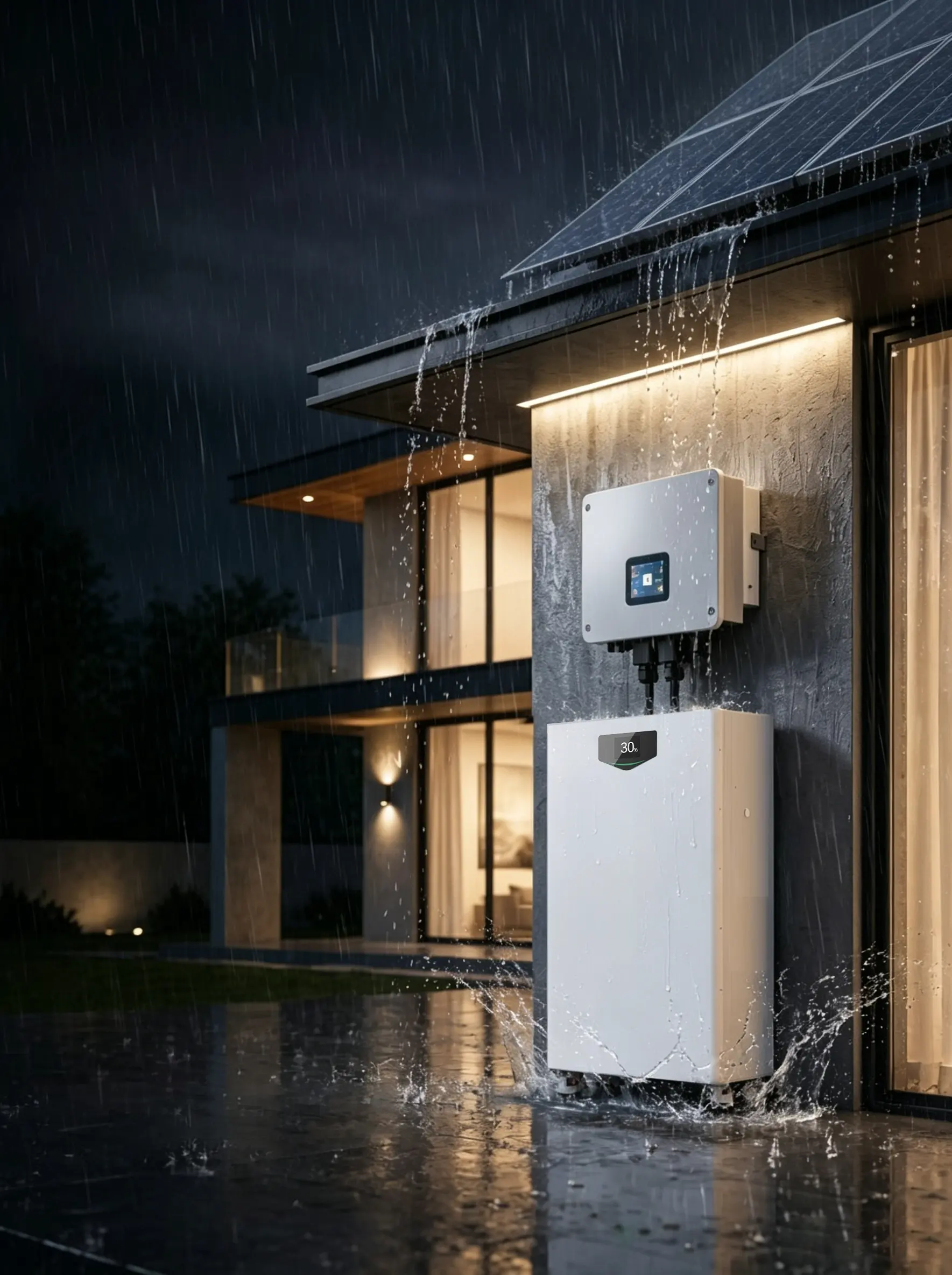
The battery is installed indoors, so direct rain and sunlight are not part of the battery enclosure’s operating exposure. That does not remove the local environmental requirements. An island hotel still operates in a hot, humid and salt-influenced environment, and the room used for the equipment needs to protect the system from condensation, water ingress, poor ventilation and corrosive air.
We checked the installation condition as an indoor deployment and applied the following product requirements:
- an indoor-rated enclosure suitable for a managed equipment room;
- stable ventilation and clearance around the battery and inverter;
- protection from condensation, standing water and direct sea-air exposure;
- documented operating temperature and humidity limits;
- clear maintenance access for repeated hotel-chain deployments.
For an island project, the room and installation method are part of the product selection. A technically suitable battery can still perform poorly when it is placed in a damp, unventilated or salt-contaminated space.
The Backup Load Excludes Air Conditioning

The hotel group confirmed that air conditioning would not operate during a grid outage. This is an important boundary because HVAC loads can dominate both inverter power and battery energy requirements.
The confirmed backup scope is the room-level essential load: lighting, communications, control devices, charging points and other low-power equipment needed to keep the guest rooms and basic service functioning during a temporary interruption. Non-room facilities and additional hotel equipment were not included in this calculation.
This boundary makes the system suitable for temporary backup and solar self-consumption. It does not represent a design for full hotel islanding with air conditioning, pumps, kitchens or other high-power equipment.
How We Estimated the Battery Capacity for 30 Guest Rooms
We used a practical room-level planning allowance to size the confirmed backup scope. The calculation was:
| Planning item | Project value | Meaning |
|---|---|---|
| Guest rooms | 30 | Rooms included in the scope |
| Room-level backup allowance | 100W per room | Lighting, communications and essential low-power use |
| Estimated simultaneous load | Approximately 3kW | 30 × 100W |
| Longest confirmed outage | 3 hours | Upper end of the stated outage range |
| Estimated backup energy | Approximately 9kWh | 3kW × 3 hours, before system reserves |
The 9kWh result is not the battery nameplate requirement. Conversion loss, minimum state of charge, battery ageing reserve and operating margin must also be covered. That is why a battery selected only because its label says “10kWh” leaves little practical margin for the longest outage.
We then reviewed the daily solar-storage role. The battery would not only wait for a blackout; it would also store surplus PV energy for later hotel use. This makes usable capacity, charge power, discharge power and inverter control equally important to the project.
Comparing 5kWh, 10kWh and 15kWh Batteries
| Battery size | Fit for this hotel case | Reason |
|---|---|---|
| 5kWh | Too small | It cannot provide a practical margin for approximately 3kW of room-level backup over a 3-hour outage. |
| 10kWh | Not the final recommendation | It is close to the calculated energy need before losses, reserve and ageing allowance, leaving limited headroom. |
| 15kWh class | Closer to the project requirement | It provides more useful reserve for temporary backup and daily PV self-consumption. |
| 16.076kWh M16S314BL-YV module | Selected platform | It gives the project a documented 16.076kWh module platform that can be configured as a multi-module system for each hotel. |
The key point is that the 10kWh purchase request was an initial commercial target, not a completed engineering specification. The hotel’s confirmed outage duration and room-level load justified moving to the 16.076kWh platform.
The Battery Solution: M16S314BL-YV 16.076kWh
For this project, we matched the confirmed load and outage profile to the M16S314BL-YV platform. The battery uses a 51.2V LiFePO4 architecture with 314Ah capacity and 16.076kWh nominal energy. It is an indoor floor-standing platform with communication ports and a BMS designed for integration with compatible low-voltage hybrid inverters.
| Item | M16S314BL-YV project reference |
|---|---|
| Battery chemistry | LiFePO4 |
| Nominal voltage | 51.2V |
| Nominal capacity | 314Ah |
| Nominal energy | 16.076kWh |
| Cell configuration | 16S1P |
| Maximum current reference | 200A |
| Communication | RS485, CAN and RS232 interfaces; final inverter port mapping must follow the approved compatibility configuration |
| Installation | Indoor floor-standing installation with controlled room conditions |
Product details and the current product platform are available on our M16S314BL-YV 16.076kWh LiFePO4 battery page. That page provides the product-level reference; the hotel project still requires a site-specific configuration and commissioning record.
Inverter Matching: Power and Communication Requirements
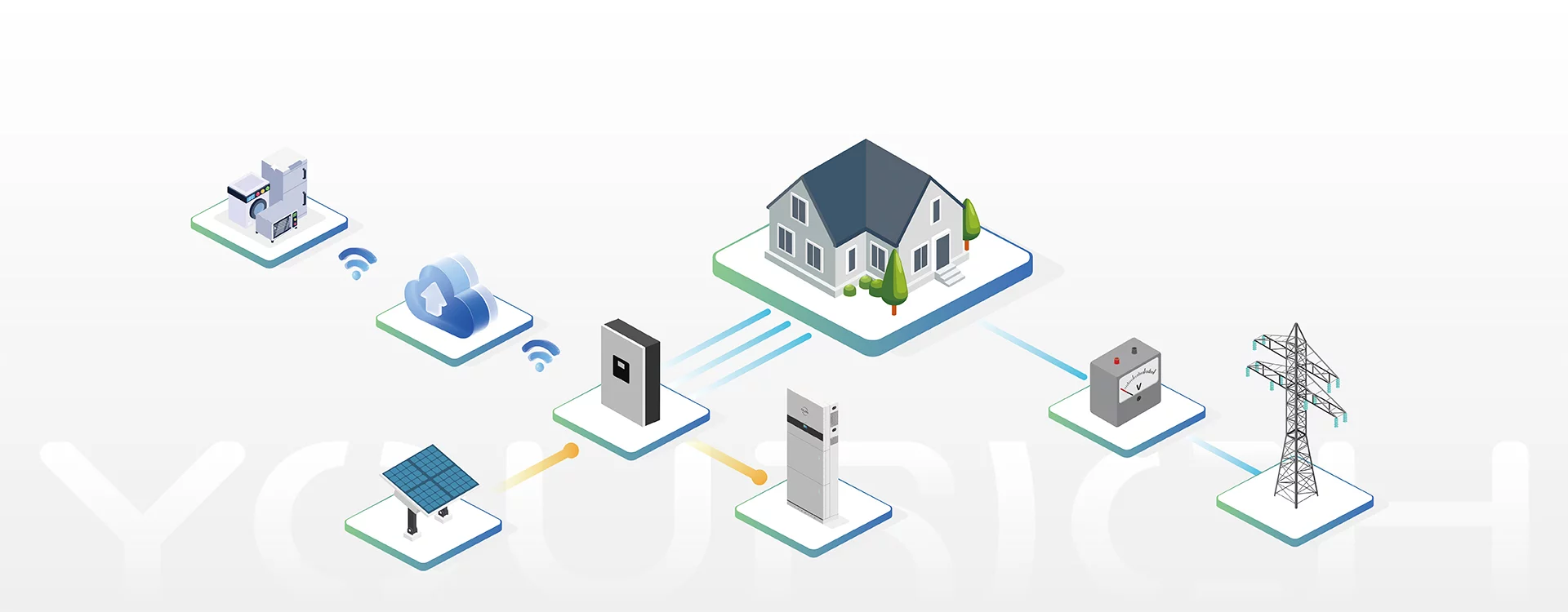
We did not lock the customer to one inverter model. We provided a matching direction so the final inverter can be selected through the distributor’s local availability, certification and service conditions.
For the confirmed hotel scope, we matched the battery to these inverter requirements:
- low-voltage hybrid inverter with a 51.2V battery-side voltage range;
- approximately 5kW-class continuous output for the defined room-level backup load;
- enough surge capability for the actual connected equipment;
- CAN or RS485 BMS communication supported by the selected inverter;
- documented battery protocol, port pinout and charge/discharge current limits;
- backup output that can isolate the defined essential-load circuit during an outage;
- PV input and operating modes suitable for storing solar energy for later self-consumption.
The battery and inverter must be verified as a pair. A voltage label such as “48V” does not prove that the communication protocol, current limits or control messages are compatible. Before the quotation is finalized, the distributor should obtain the inverter’s battery compatibility list, the approved communication protocol and the commissioning parameters.
For a broader reference across inverter brands, model ranges and communication protocols, see our inverter solutions guide. CVC can also coordinate the battery-inverter matching discussion with the relevant supplier and provide the technical document set for the selected configuration.
Why the Existing Grid-Connected Solar System Must Be Reviewed
The hotel previously used solar power directly through a grid-connected arrangement. Replacing that arrangement with storage is not simply a battery purchase. We reviewed the existing PV electrical path, the point where the battery system will connect and the essential-load distribution boundary.
The review needs to confirm:
- the existing PV inverter type and whether it can operate with the new storage architecture;
- the PV array voltage and power in relation to the replacement hybrid inverter;
- the location of the backup-load changeover or backup output;
- the protection, earthing and cable requirements;
- the operating mode for solar self-consumption, battery charging and outage backup.
Where the original grid-connected inverter cannot be integrated into the new architecture, the project may use a new hybrid inverter for the defined backup circuit while the PV side is reconfigured through the approved electrical design. The final topology belongs in the site design and commissioning documents, not only in the battery quotation.
Why a Multi-Module System Works Better for a Hotel Chain
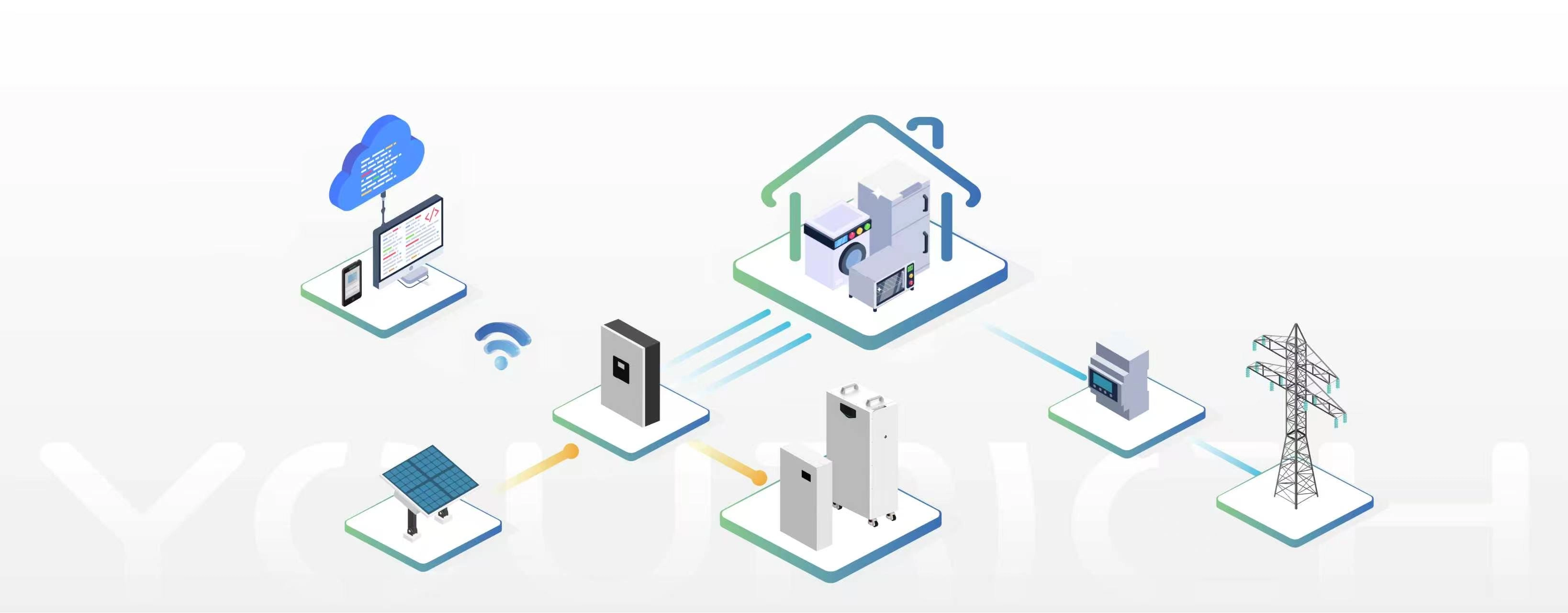
Each hotel receives one independent multi-module battery system. This structure matches the customer’s chain-wide rollout better than one oversized central battery because every hotel has its own electrical boundary, outage exposure and maintenance schedule.
A multi-module approach provides:
- repeatable procurement around one approved battery platform;
- capacity expansion through a documented module configuration;
- independent operation for each hotel;
- simpler site-by-site commissioning and maintenance;
- clearer stock planning for the distributor;
- a consistent training and spare-parts process across the chain.
The commercial configuration records the module quantity for each hotel, the inverter pairing, the BMS protocol and the essential-load boundary. This creates a usable project record for future replacement, expansion and repeat orders.
What CVC Contributes as a Trading Company
CVC is a trading company and supply-chain matchmaking partner. Our role in this project was not limited to forwarding a 10kWh price. We translated the hotel operator’s actual use case into a product and supplier brief, then coordinated the battery platform, inverter matching direction and documentation requirements.
For distributors and wholesalers, CVC can assist with:
- turning an end-customer scenario into a battery and inverter sourcing brief;
- matching suitable battery factories and product platforms;
- coordinating datasheets, manuals, warranty documents and compatibility information;
- comparing factory-brand and multi-brand supply options;
- arranging samples, quotations, packaging and export coordination;
- building a repeatable configuration for a hotel chain or regional channel;
- supporting communication between the buyer, factory and inverter supplier.
For other Thailand projects, we apply the same sequence: understand the customer’s operating scene, define the loads, match usable energy and power, verify the battery-inverter communication path, and record the items that still belong to site engineering or local certification.
What Buyers Should Provide Before Requesting a Similar Battery Solution
A distributor can receive a more accurate proposal by providing a short project brief with:
- hotel or property type and number of rooms;
- country, island or mainland location and installation room conditions;
- confirmed outage frequency and maximum outage duration;
- loads that must remain online and loads that will be disconnected;
- whether air conditioning, pumps, kitchen equipment or other high-power loads are included;
- existing PV inverter model, PV capacity and electrical single-line information;
- preferred backup output power and phase arrangement;
- local certification, grid-connection and service requirements;
- planned number of sites and repeat-order schedule.
With this information, CVC can coordinate a product shortlist and a supplier document package that reflects the actual project, rather than treating the nominal battery capacity as the complete requirement.
Final Recommendation
For the confirmed Thai island hotel project, a 5kWh battery is too small for the defined backup window. A nominal 10kWh unit is close to the calculated energy need but does not provide enough practical margin once conversion losses, reserve and daily solar self-consumption are considered.
We therefore recommended one independent multi-module system for each hotel, based on the M16S314BL-YV 16.076kWh LiFePO4 battery platform. The inverter reference is a 5kW-class low-voltage hybrid inverter with a 51.2V battery side and approved CAN or RS485 BMS communication. The system is designed for solar self-consumption and temporary backup of the defined room-level essential loads, with air conditioning outside the outage scope.
Frequently Asked Questions
Is a 10kWh battery enough for a 30-room hotel in Thailand?
For this confirmed case, 10kWh was not used as the final system size. The room-level planning calculation reached approximately 9kWh for a 3-hour outage before losses and reserves, so the 16.076kWh platform provided a more practical margin.
Why was air conditioning excluded?
The customer confirmed that air conditioning would not operate during grid outages. Excluding HVAC kept the backup scope aligned with essential room-level loads and prevented the battery from being sized as a full-hotel power system.
Does a 48V inverter automatically work with the M16S314BL-YV battery?
No. The inverter must support the battery’s 51.2V operating range, charge and discharge limits, BMS communication and approved protocol. Voltage alone does not prove compatibility.
Can one battery system serve several hotels?
The project uses one independent multi-module system per hotel. This keeps each property’s electrical boundary, backup operation and maintenance record separate while allowing repeatable procurement across the chain.
Can CVC supply the inverter as well as the battery?
CVC can coordinate battery and inverter sourcing as a trading and supply-chain matchmaking partner. For this project, we provided the inverter power and protocol direction; the final model is selected against local availability, certification, compatibility and service requirements.

Peter Yin
Discuss a Thailand hotel battery project
Share your hotel type, room count, outage pattern, backup loads, PV information and preferred battery or inverter platform.